本州岛上的富士山, 日本 Mount Fuji on Honshu Island, Japan (© phutthiseth thongtae/Getty Images)

本州岛上的富士山, 日本 Mount Fuji on Honshu Island, Japan (© phutthiseth thongtae/Getty Images)
天际线上的印记 Signature on the horizon
本州岛上的富士山, 日本
富士山是日本最高峰,海拔12,389英尺(约3700米),耸立于本州岛,位于东京西南约60英里(约97公里)处。这座近乎完美的锥形山峰是一座火山——自1707年12月最后一次喷发后便一直处于休眠状态,但仍被归类为活火山。那次大规模喷发被称为宝荣喷发,火山灰和其他火山碎屑喷涌而出,席卷日本东部,甚至远至江户(今东京)。除了地质学意义之外,富士山长期以来被视为神圣的景观和朝圣登山的目的地,这体现了日本自然、宗教和日常生活的交融。这种经久不衰的文化魅力也是它于2013年被联合国教科文组织列为世界遗产的原因之一,被誉为“神圣之地和艺术灵感的源泉”。众所周知,在晴朗的日子里,富士山从远处就能清晰可见,但这并非必然——云层可能在几分钟内将其遮蔽。无论您是徒步攀登,还是只是从火车车窗瞥见它,它依然是日本地平线上的标志性景观。
Mount Fuji on Honshu Island, Japan
Mount Fuji, Japan's highest mountain, rises to 12,389 feet on Honshu Island, about 60 miles southwest of Tokyo. Its near-perfect cone is a volcano—dormant since its last eruption in December 1707 yet still classed as active. That last major event is known as the Hōei eruption. It blasted ash and other tephra across eastern Japan, reaching Edo (today's Tokyo). Beyond geology, Fuji has long been treated as a sacred landscape and a destination for pilgrimage climbs, reflecting how nature, religion, and daily life overlap in Japan. That enduring cultural appeal is one reason it was designated a UNESCO World Heritage Site in 2013 as 'a sacred place and source of artistic inspiration.' Fuji is famously visible from far away on clear days but never guaranteed—clouds can hide it in minutes. Whether you hike it or just catch a glimpse from a train window, it still feels like Japan's signature on the horizon.
日出时分的富士山, 河口湖, 日本 Mount Fuji at sunrise, Lake Kawaguchi, Japan (© Twenty47studio/Getty Images)
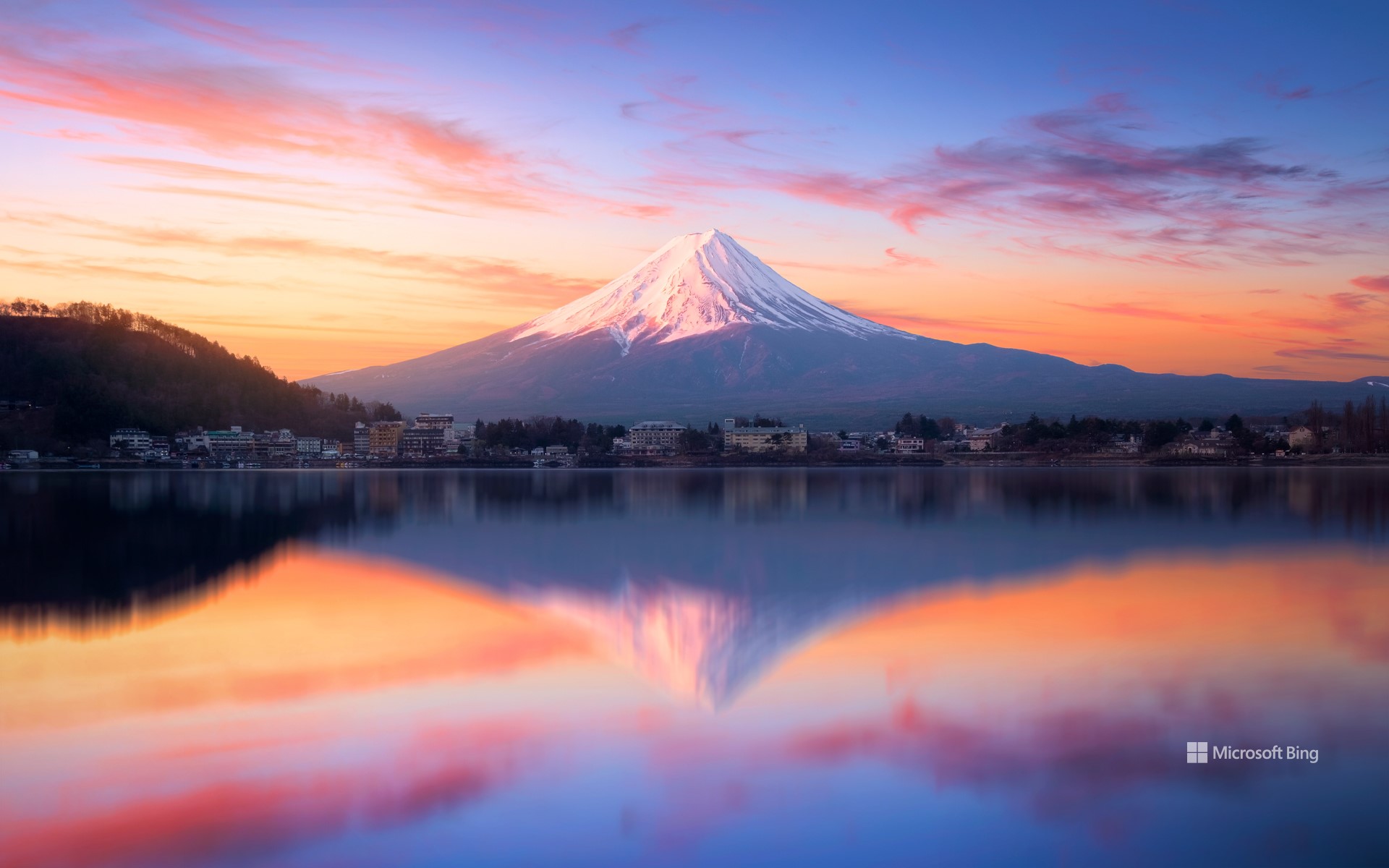
日出时分的富士山, 河口湖, 日本 Mount Fuji at sunrise, Lake Kawaguchi, Japan (© Twenty47studio/Getty Images)
清晨的美好精 Wind of Fuji, my souvenir from Edo
富士山,日本
在东京西南约 60 英里处,矗立着日本的文化象征之一:富士山。这座日本最高峰海拔近12,000英尺,其近乎完美对称的火山锥,每年约有五个月被积雪覆盖,形成壮丽景观。几个世纪以来,富士山一直被视为神圣之山。在神道信仰中,富士山被奉为本宫浅间大社的圣山,并在其视野范围内建有供奉它的神社。
Mount Fuji Day
Around 60 miles southwest of Tokyo stands one of Japan's cultural icons: Mount Fuji. The country's tallest mountain rises 12,000 feet above the surrounding landscape, with its near-symmetrical cone covered in snow for nearly five months each year. For centuries, Fujisan—as it is known in Japanese—has been worshiped as a sacred mountain. In the Shinto faith, Fuji is deified as Asama no Okami, and shrines dedicated to it are built within sight of the mountain.
February 23 is celebrated as Mount Fuji Day (富士山の日) because the word 'Fujisan' can be interpreted as '2, 2, 3.' Although it's not a national holiday, people often take the opportunity to learn more about this majestic peak. It's also a day to reflect on the future of the mountain, and how it can be preserved for future generations. Every year, more than 300,000 people climb Mount Fuji, and overtourism has become a real concern.
日本富士山 Mount Fuji in Japan (© The Asahi Shimbun/Getty Images)
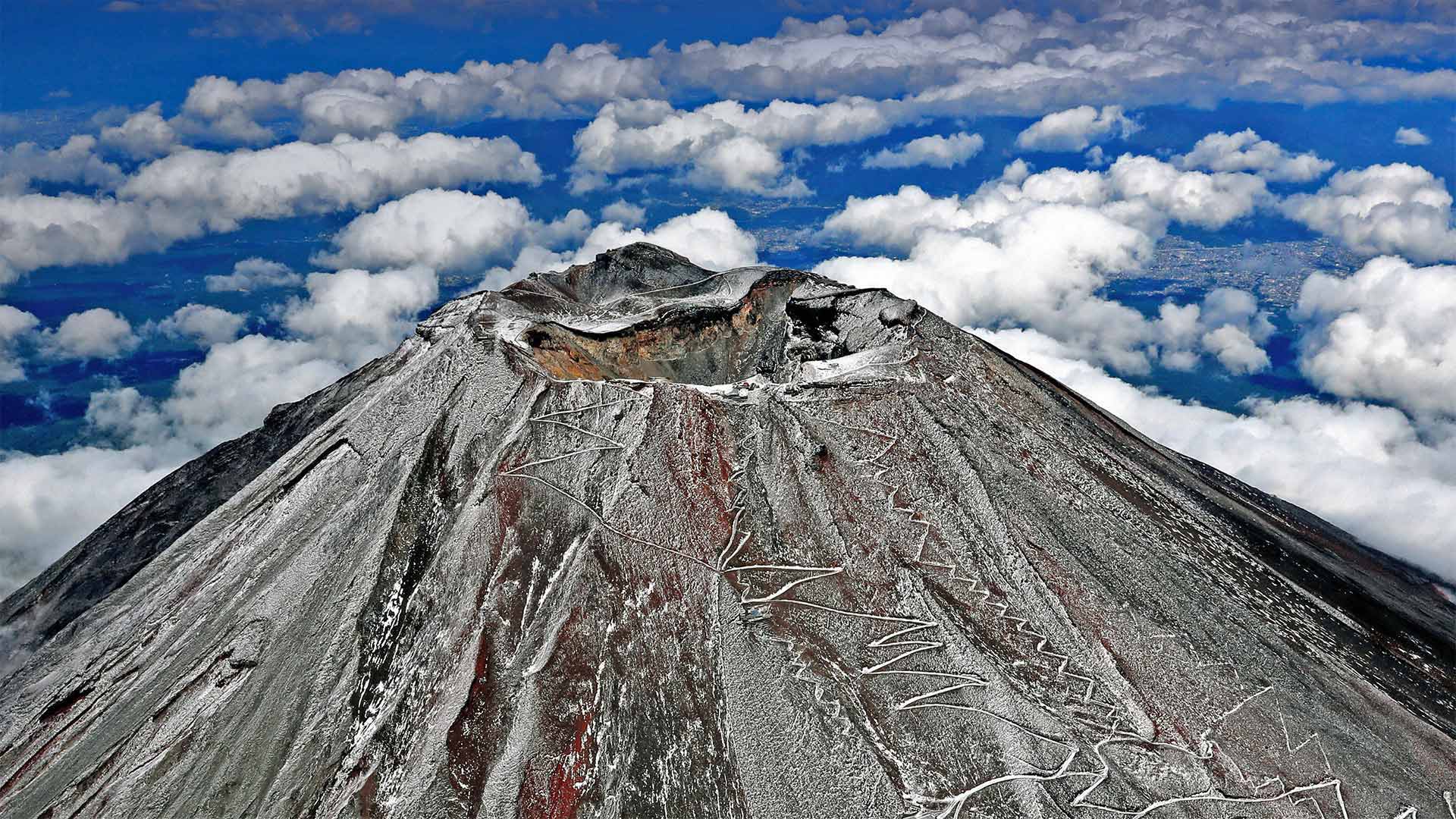
日本富士山 Mount Fuji in Japan (© The Asahi Shimbun/Getty Images)
The snows of Fuji
This shot of Mount Fuji's symmetrical cone was taken in September 2020, showcasing the first snow of the season. The dusting proved short-lived, melting off in just a couple of days. And snow wouldn't come again until the end of December—raising new concerns about decades of rising temperatures on Fuji's slopes.
As we tiptoe toward another winter, we're cheering on Mount Fuji for a snowier season. It just isn't the same without that iconic white top!
富士的雪
这张富士山对称圆锥体的照片拍摄于2020年9月,展示了该季节的第一场雪。灰尘般的雪是短暂的,在几天内就融化了。直到12月底才会下雪,这引起了人们对富士山坡数十年来气温不断上升的新担忧。
当我们蹑手蹑脚地走向另一个冬天时,我们正在富士山上为一个雪季欢呼。没有标志性的白色上衣就不一样了!
Mountain Fuji sunrise (© Juan Paulo Gutierrez/Getty Images)
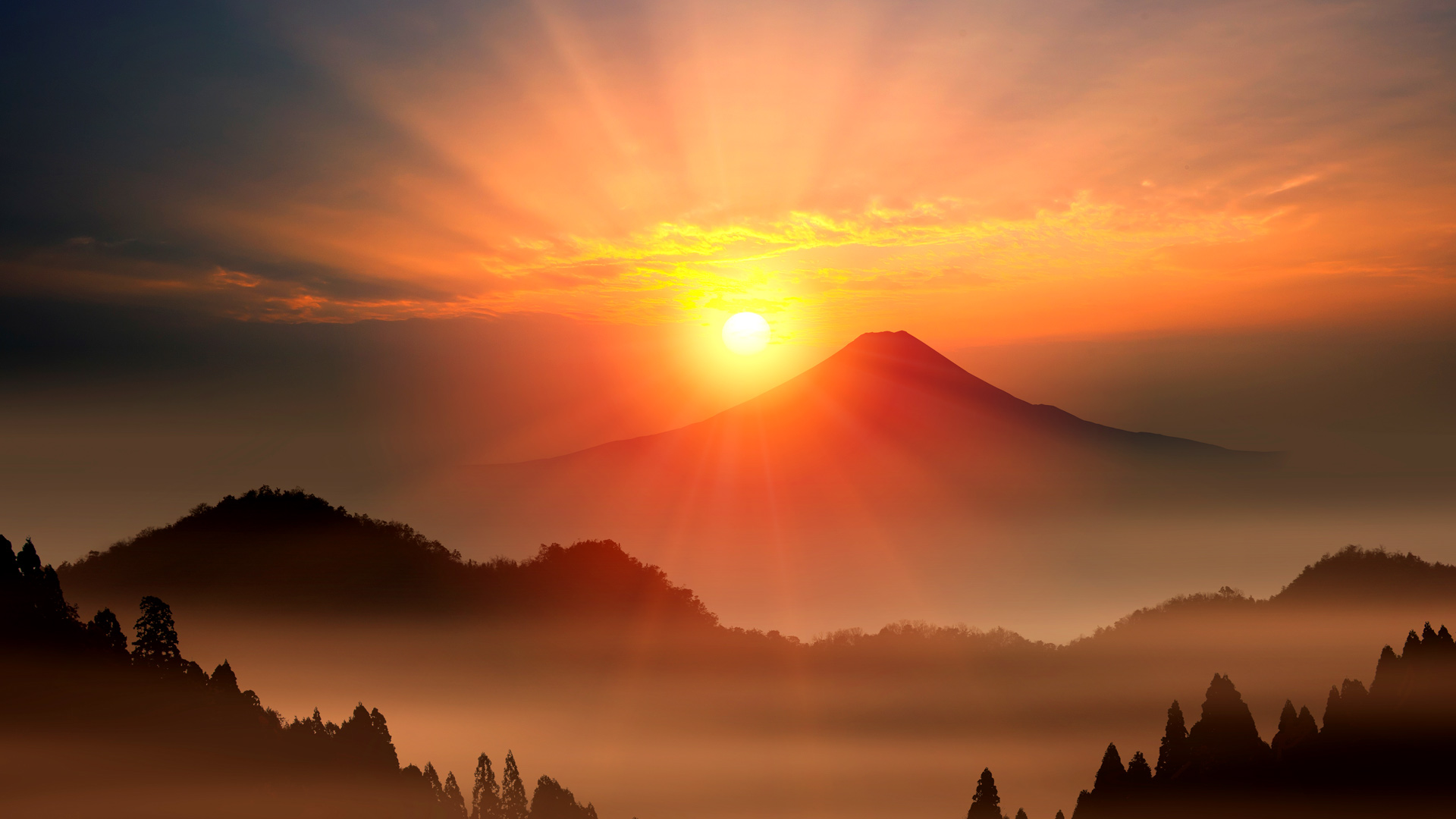
Mountain Fuji sunrise (© Juan Paulo Gutierrez/Getty Images)
Mount Fuji Sunrise for new year
Mount Fuji is one of Japan's "Three Holy Mountains". It is the highest volcano in Japan, the 2nd-highest volcano of an island in Asia, and the 7th-highest peak of an island in the world. It is an active stratovolcano that last erupted in 1707-1708. Mt.Fuji is also a Special Place of Scenic Beauty and one of Japan's Historic Sites.
By the way, the sunrise on New Year's Day is called "first sunrise" or "coming light", but these two are slightly different. "First sunrise" was the subject of religion, based on the legend that the new god descends with the first sunrise. "Gokumitsu" is originally a Buddhist term. It refers to worshiping the sunrise at the top of a high mountain and is actually a summer term.