瓜兹曼山口附近的秋日山杨林,犹他州,美国 Fall aspen trees near Guardsman Pass, Utah, USA (© Danita Delimont/Shutterstock)
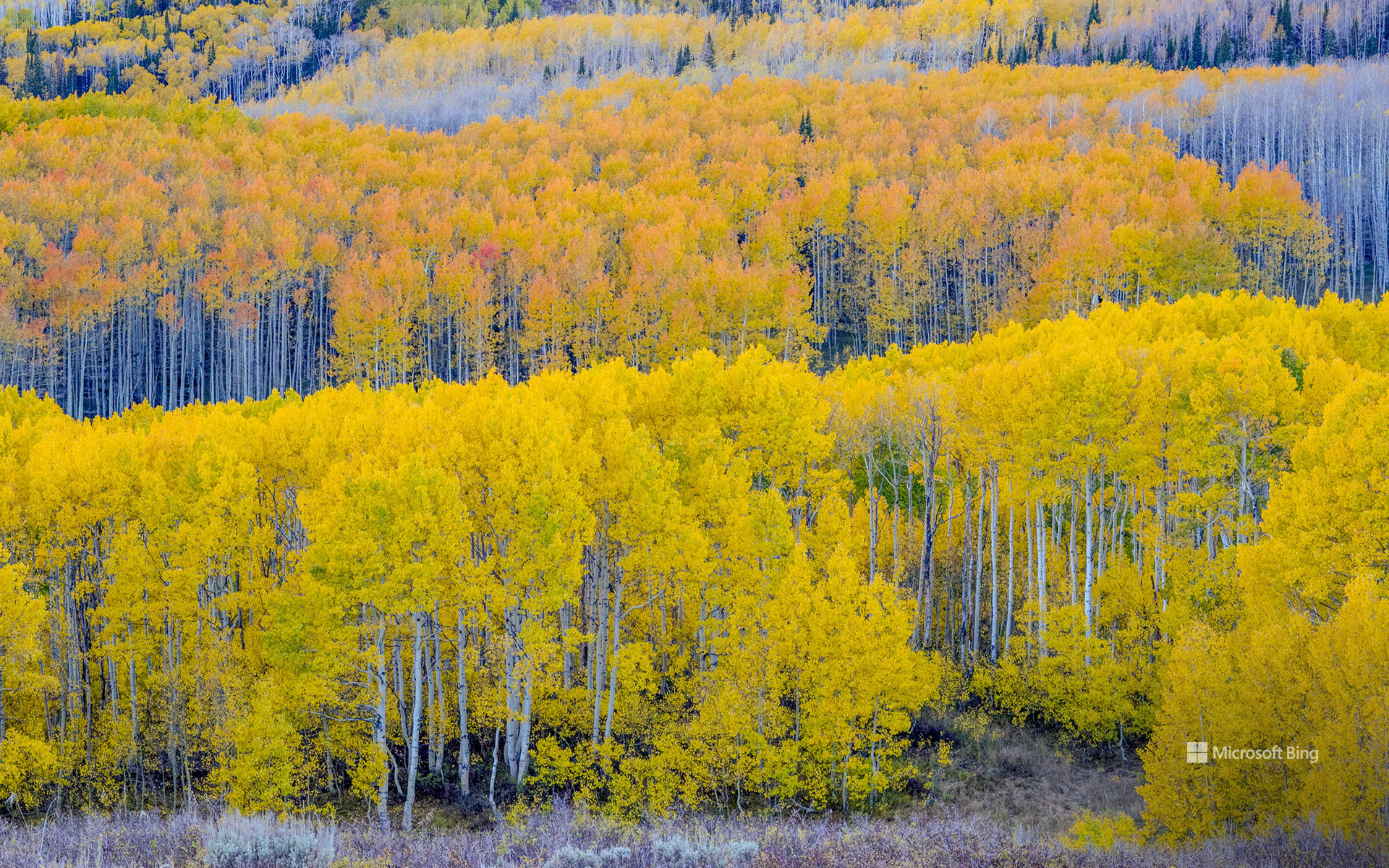
瓜兹曼山口附近的秋日山杨林,犹他州,美国 Fall aspen trees near Guardsman Pass, Utah, USA (© Danita Delimont/Shutterstock)
金色时节 The golden season
瓜兹曼山口,犹他州,美国
在犹他州瓜兹曼山口附近,季节的变化以金色写满山坡。为美国西部染上色彩的山杨中,有许多是美洲山杨——北美分布最广的本土树种。眼前看似由一棵棵独立树木组成的森林,往往有着截然不同的真相:许多山杨形成彼此相连的无性系群落,树干从共享的根系网络中长出,并与相邻树干拥有相同的遗传密码。
即使叶片变黄飘落,这个生物体仍有很大一部分在地下存活。山杨可以依靠根系熬过冬季,静静地为未来的生长做准备。秋分或许宣告夏季结束,但在这些非凡的林地中,生命从未真正停歇。
Autumn equinox
The autumn equinox marks a turning point in the Northern Hemisphere. Occurring each September, it is the moment when the sun crosses the equator heading south, and day and night are nearly equal in length. After this celestial balance, daylight gradually shrinks as the journey toward winter begins.
Near Guardsman Pass in Utah, the change is written across the mountainsides in gold. Many of the aspens coloring the American West are quaking aspens, the most widely distributed native tree species in North America. What appears to be a forest of individuals is often something else entirely: many aspens grow in connected colonies, with trunks emerging from a shared root network and carrying the same genetic code as their neighbors.
Even as their leaves turn yellow and fall, much of the organism remains alive below ground. Aspens can persist through winter via their root systems, quietly preparing for future growth. The autumn equinox may signal summer's end, but in these remarkable groves, life never truly pauses.
评论已关闭