杜拉通河谷中的Nuestra Señora de la Hoz老修道院,西班牙塞哥维亚 Nuestra Señora de la Hoz, an old monastery in the Duratón River gorge, Segovia, Castile and León, Spain (© Arco Images GmbH/Alamy)
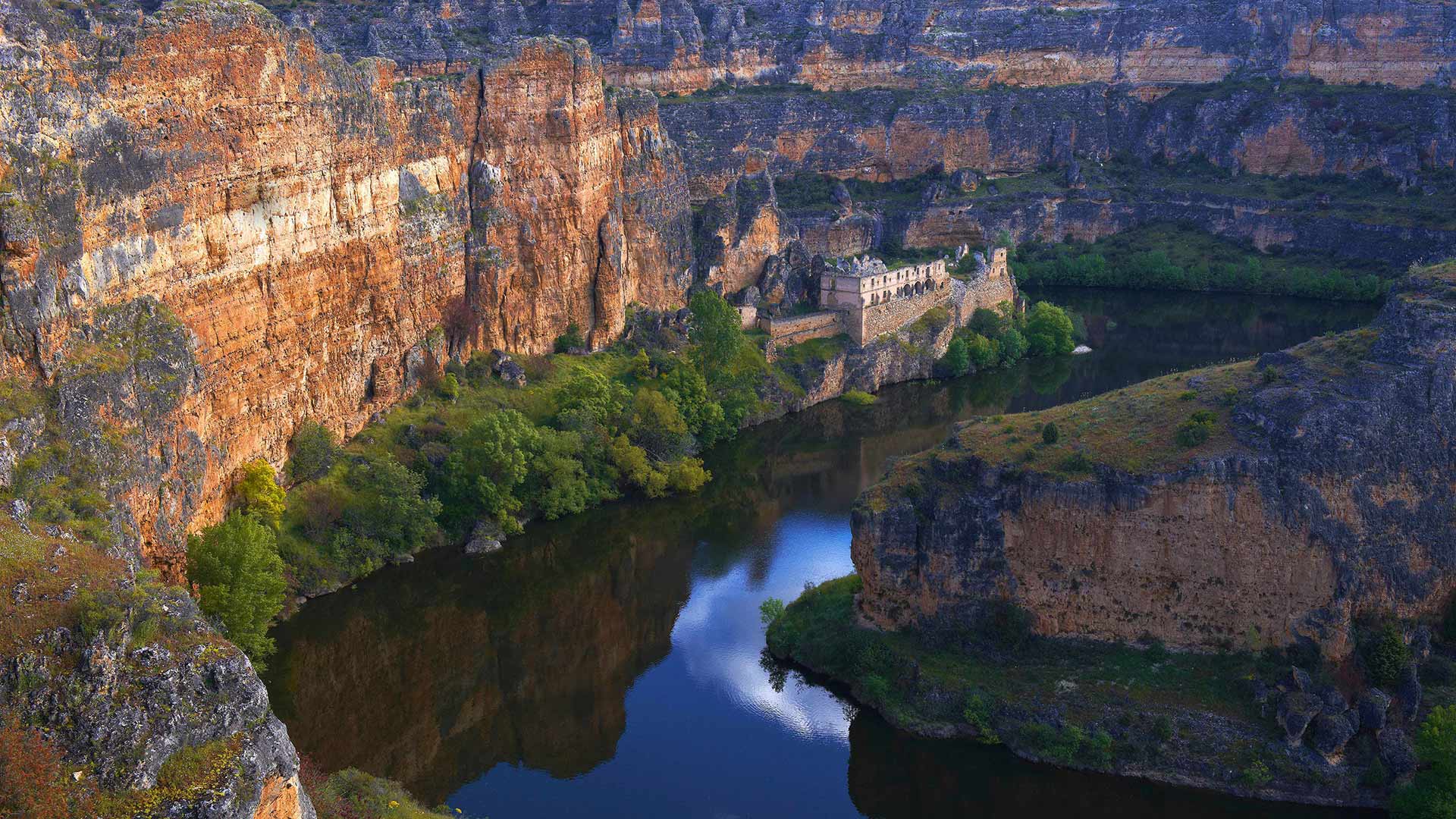
杜拉通河谷中的Nuestra Señora de la Hoz老修道院,西班牙塞哥维亚 Nuestra Señora de la Hoz, an old monastery in the Duratón River gorge, Segovia, Castile and León, Spain (© Arco Images GmbH/Alamy)
A gorge-ous spot for a monastery
Lace up your walking shoes and let’s head into the Hoces del Rio Duratón, in the Spanish region of Castile and León. This imposing 17-mile-long limestone gorge boasts towering vertical walls that can reach up to 100 metres high. The Duratón river which carved it meanders through a landscape rich in history and archaeological treasures.
Inside the cliffs are several caves with ancient paintings dating back to the Bronze Age, and a dark Visigothic grotto which is thought to be the first Christian temple in the region. Above one of the bends in the canyon sits a 12th century Romanesque church, just a few miles away from the ruins of the long-abandoned and isolated Franciscan monastery you see in our homepage image.
格加尔德修道院,亚美尼亚 Geghard Monastery, Armenia (© traumlichtfabrik/Getty Images)
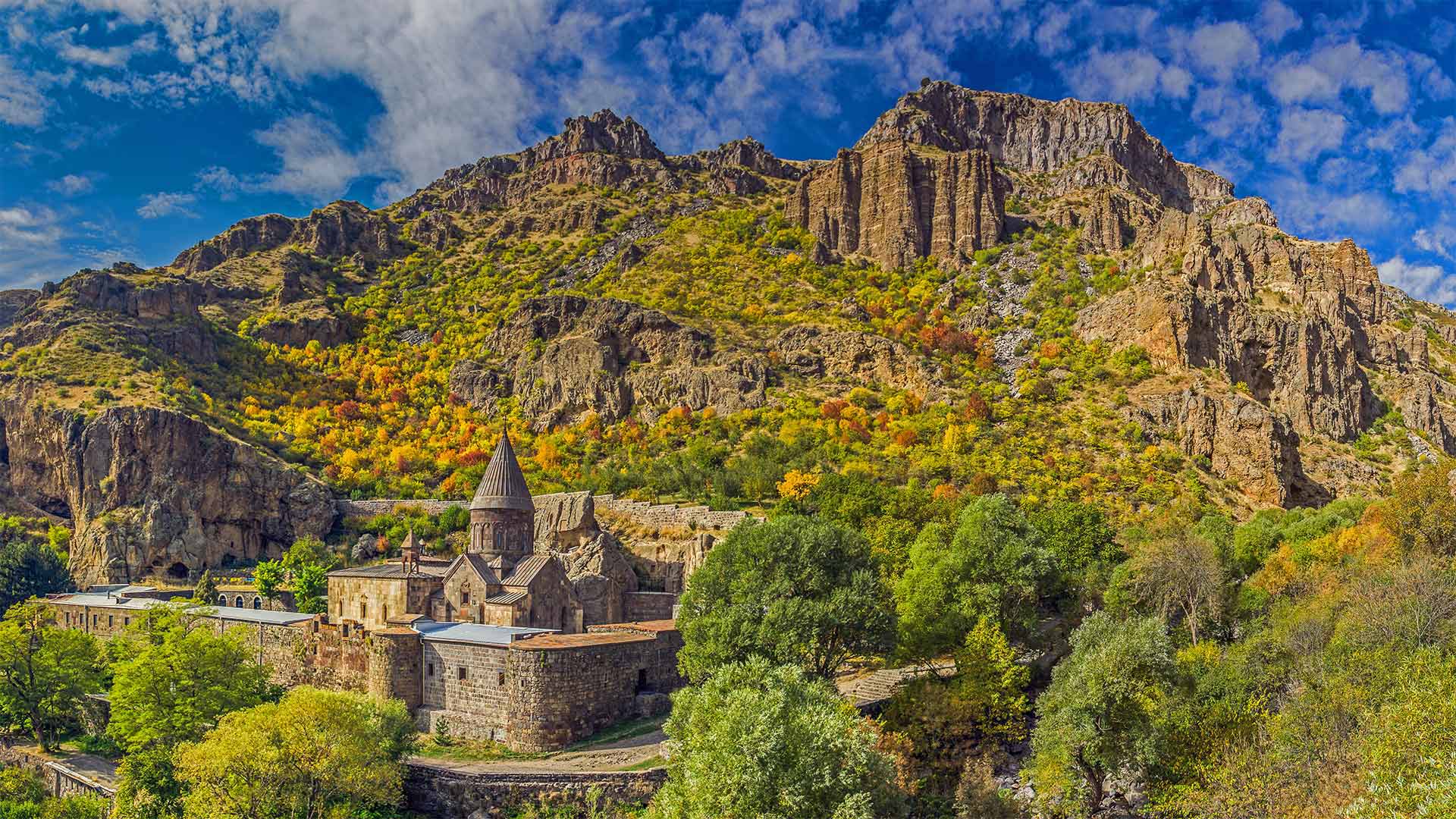
格加尔德修道院,亚美尼亚 Geghard Monastery, Armenia (© traumlichtfabrik/Getty Images)
A monastery in the mountain
Built into the side of a mountain in the Azat Valley of Armenia, Geghard Monastery is one of the most-visited tourist destinations in the country. The location of the monastery has been inhabited for millennia and venerated by locals since the pre-Christian era due to the spring which emanates from one of the caves in the mountainside. The monastery was originally founded in the 4th century by Saint Gregory the Illuminator—the patron saint of the Armenian church—though none of the original buildings survive.
The buildings comprising the existing complex were begun in the 13th century and are now regarded as some of the best-preserved examples of medieval Armenian architecture. But what really makes the complex unique are the monastic cells and chapels hewn directly into the mountain itself, with elaborate bas relief ornamentations and multiple exquisite examples of Armenian stone crosses, or 'khachkar,' throughout. Designated a UNESCO World Heritage Site, protections extend to both the monastery complex and the surrounding countryside, making a trip there an opportunity to step back into the medieval world.