泰德天文台上空的英仙座流星,加那利群岛,西班牙 Perseid meteors over Teide Observatory, Tenerife, Spain (© Westend61/Getty Images)

泰德天文台上空的英仙座流星,加那利群岛,西班牙 Perseid meteors over Teide Observatory, Tenerife, Spain (© Westend61/Getty Images)
许个愿吧 Make a wish
西班牙特内里费上空的英仙座流星雨
并非所有夏日传统都发生在地面。有些在数百英里高空上演,每次划过一颗流星。英仙座流星雨每年从7月中旬持续至8月下旬,并在8月12日至13日前后达到峰值。世界大部分地区都能看到它;在黑暗天空下,每小时往往会出现数十颗流星。想象自己抬头仰望,一道接一道亮光划过。数到多少颗时,你会忘记数目?每道亮光都来自斯威夫特-塔特尔彗星散落的碎屑,地球穿过其尘埃带时便形成流星。它们看起来像是从英仙座辐射而出。
今天的图片展示了流星雨掠过西班牙特内里费泰德天文台上空的景象。这处高海拔观测点坐落在约7,840英尺高处。海拔高、空气稀薄且光污染程度低,使这里成为观测夜空的绝佳地点。有些英仙座流星会留下持续数秒的发光尾迹,让观星者有足够时间欣赏这场奇观。那么,今年你准备去哪里观看英仙座流星雨?
Perseid meteor shower over Tenerife, Spain
Not every summer tradition happens on the ground. Some take place hundreds of miles overhead, one meteor at a time. The Perseids return every year from mid-July through late August, reaching their peak around August 12-13. Visible across much of the world, they often produce dozens of meteors per hour under dark skies. Picture yourself looking up. One streak appears after another. How many can you spot before you lose count? Each streak comes from debris shed by Comet Swift-Tuttle as Earth moves through its dust trail. The meteors appear to radiate from the constellation Perseus.
Today's image shows the shower above Teide Observatory in Tenerife, Spain. This high-altitude site sits about 7,840 feet above sea level. Its high elevation, thin air, and low levels of light pollution make it an excellent place to observe the night sky. Some Perseid meteors leave glowing trails that linger for several seconds, giving skywatchers just enough time to appreciate the spectacle. So, where will you watch the Perseids this year?
英仙座流星雨和一棵古老刺果松,大盆地国家公园,内华达州,美国 Perseid meteor shower and an ancient bristlecone pine, Great Basin National Park, Nevada, USA (© Wirestock Creators/Shutterstock)
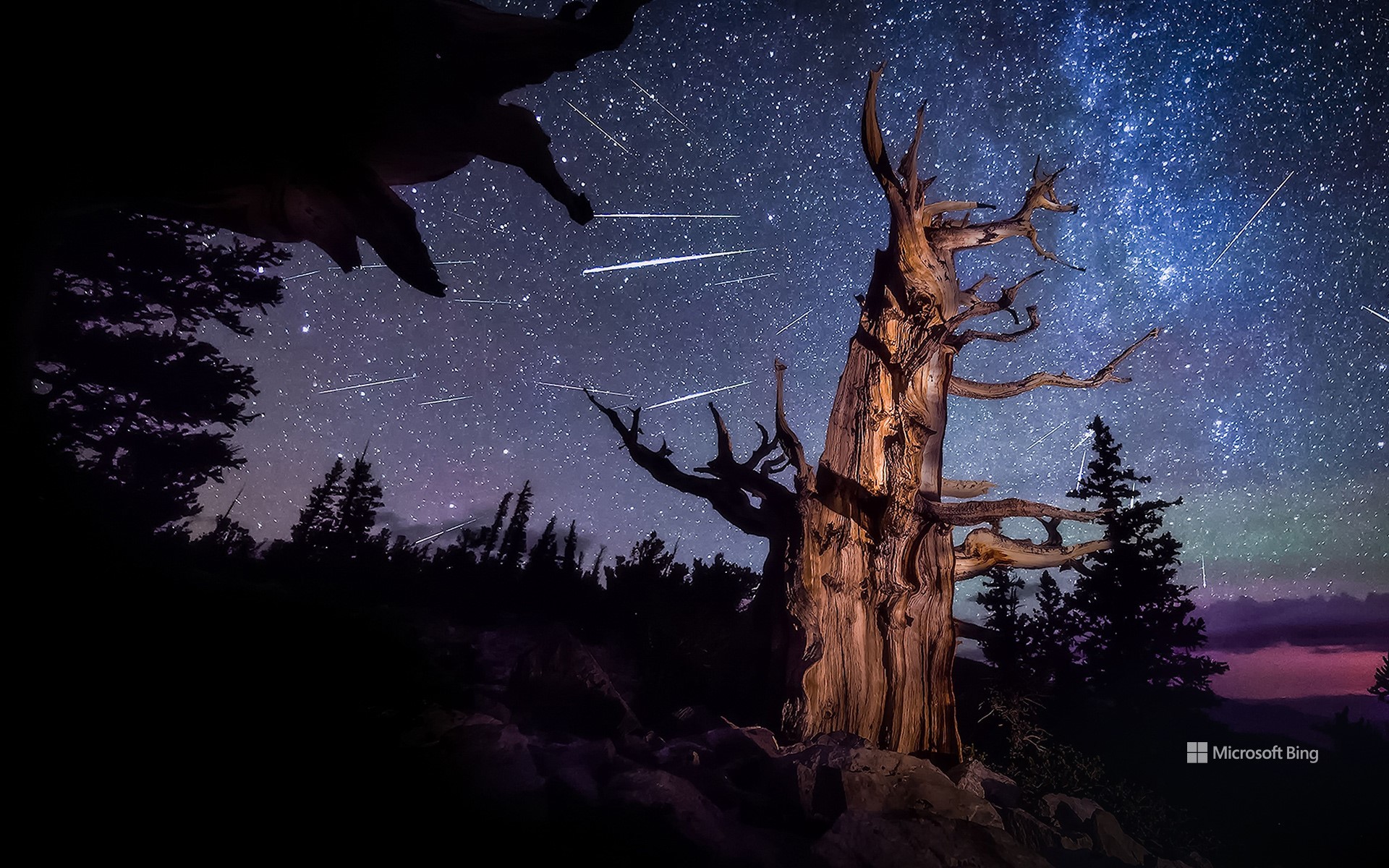
英仙座流星雨和一棵古老刺果松,大盆地国家公园,内华达州,美国 Perseid meteor shower and an ancient bristlecone pine, Great Basin National Park, Nevada, USA (© Wirestock Creators/Shutterstock)
永恒的光芒 Timeless glow
英仙座流星雨照亮内华达
准备迎接一年中最耀眼的天文奇观之一英仙座流星雨吧!该流星雨每年活跃期为7月中旬至8月下旬,而今年的峰值将于8月12日夜间至13日凌晨上演璀璨盛景。当地球穿越彗星斯威夫特-塔特尔留下的冰岩碎片轨道时,形成了这一流星雨。这颗彗星上一次接近地球是在1992年。当这些尘埃颗粒以高速进入地球大气层时,会因摩擦而燃烧,划出一道道明亮的光痕。
若想尽情欣赏这场天文盛宴,北半球至中南纬度地区是最佳观测地点。今日图片所示地点为美国内华达州的大盆地国家公园。这里栖息着地球上最古老的非克隆植物狐尾松。这些树木在风雪与雨水的雕琢下,顽强生存了数千年,年复一年地守候着夜空中这场流星雨的盛会。
Perseid meteor shower over Nevada
Get ready for one of the most dazzling celestial displays of the year—the Perseid meteor shower. Active from mid-July through late August, this year it reaches its spectacular peak on the night of August 12 and into the early hours of August 13. The Perseids light up the skies when Earth passes through a trail of icy and rocky debris left behind by Comet Swift–Tuttle, which last passed close to our planet in 1992. These meteors are called the Perseids because they appear to streak from the direction of the constellation Perseus.
For those hoping to catch a glimpse of this breathtaking show, the Perseid meteor shower is best viewed from the Northern Hemisphere, extending down to the mid-southern latitudes. One such vantage point is Great Basin National Park in Nevada, seen in today's image, where ancient bristlecone pines stand beneath a sky ablaze with shooting stars. These remarkable trees are the oldest non-clonal species on Earth. Shaped by relentless wind, snow, and rain, they've endured for millennia—witnessing ice ages, volcanic eruptions, and the rise and fall of civilizations.
英仙座流星雨,白杨木峡谷州立公园,俄勒冈州,美国 Perseid meteor shower, Cottonwood Canyon State Park, Oregon (© Joshua Meador/Tandem Stills + Motion)

英仙座流星雨,白杨木峡谷州立公园,俄勒冈州,美国 Perseid meteor shower, Cottonwood Canyon State Park, Oregon (© Joshua Meador/Tandem Stills + Motion)
抬头看,它来了 Look up, incoming…
英仙座流星雨
当我们的祖先看到安静的夜空突然下起流星雨,他们会是什么感受?是惊惧还是惊叹?好在现在的我们已经知道,这是一场年度“灯光秀”,被称为英仙座流星雨,活跃期一般在每年的7月中旬至8月下旬。英仙座流星雨是由地球穿过斯威夫特-塔特尔彗星留下的碎片造成的,当这些碎片撞击地球大气层,就会产生炽热的流星雨。今天正是英仙座流星雨的高峰期,月亮预计只有10%的亮度,今晚可千万别错过“赏雨”哦!
Perseid meteor shower over Oregon
What must our ancestors have thought when they saw meteors light up the night sky? Was it terrifying or an event of wonder? Thankfully, we now know that this celestial cascade is a harmless annual event. The Perseid meteor shower thrills stargazers from mid-July to late August and is due to peak today. The Perseids are caused by Earth passing through debris left behind by the Comet Swift-Tuttle. When the cosmic debris hits our atmosphere, it disintegrates in a colorful, fiery light display. It's a good night to catch the Perseids if you can—the moon is projected to only be 10% illuminated, so the meteors should really stand out against the dark sky.