斗兽场鸟瞰图,罗马,意大利 Aerial view of the Colosseum, Rome, Italy (© Nico De Pasquale Photography/Getty Images)

斗兽场鸟瞰图,罗马,意大利 Aerial view of the Colosseum, Rome, Italy (© Nico De Pasquale Photography/Getty Images)
条条大路通罗马 All roads lead to Rome
斗兽场,罗马,意大利
觉得现代体育赛事已经足够精彩了吗?在古罗马时代,观众们坐在斗兽场中目睹的表演要激烈得多。这座宏伟的圆形露天竞技场由罗马皇帝韦斯帕先于公元72年下令建造,其子提图斯于公元80年完工。与早期依山而建、借助地形支撑的剧场不同,罗马斗兽场完全独立矗立,是一座自成体系的建筑奇迹。斗兽场由石块与混凝土建成,拱门与穹顶结构支撑着可容纳多达5万名观众的竞技场。角斗士的搏斗、异国野兽的展示,甚至模拟海战,都令观众热血沸腾地下的升降机与暗门让场景转换瞬息万变,充满戏剧张力。
进入中世纪后,斗兽场被赋予了新的用途:曾一度被改作教堂,后来又成为堡垒。几个世纪以来,它经受了雷击、地震与污染的破坏。建筑中大量的石灰华与大理石被重新利用,修建宫殿、防御工事,甚至教堂。这种做法被称为“拆卸再利用”, 它让斗兽场的碎片真正融入了罗马这座不断演变的城市。直到19世纪,人们才开始对其进行系统的保护。如今,罗马斗兽场作为受保护的世界文化遗产,每年吸引近 700 万名游客,依然是意大利最具象征意义的地标之一,见证着古罗马的荣耀与永恒。
Colosseum, Rome, Italy
Think modern sports are dramatic? Ancient Romans had front-row seats to spectacles far more intense inside the Colosseum. Commissioned by the Flavian emperor Vespasian in 72 CE and finished by his son Titus in 80 CE, this amphitheater broke tradition with its predecessors that were built into hillsides for natural support. Instead, the Colosseum was a fully free-standing architectural giant. Crafted from stone and concrete, its arches and vaults supported an arena that could host up to 50,000 spectators. Gladiators, exotic animals, and even staged sea battles thrilled the crowds, while hidden elevators and trapdoors created sudden, dramatic appearances.
During the Middle Ages, the Colosseum found new purposes: first as a church, later as a fortress. Over the centuries, it endured damage from lightning strikes, earthquakes, and pollution. Much of its marble and travertine was also reused in palaces, fortifications, and even churches—a practice known as 'spolia,' which quite literally wove pieces of the structure into the evolving city of Rome. It wasn't until the 19th century that serious preservation began. Today, recognized as a protected monument and welcoming nearly 7 million visitors annually, the Colosseum remains one of Italy's most iconic landmarks.
古罗马斗兽场,西班牙桑蒂蓬塞镇的罗马古城遗迹 The Roman amphitheater of Itálica near Santiponce, Spain (© Amazing Aerial Agency/Offset by Shutterstock)
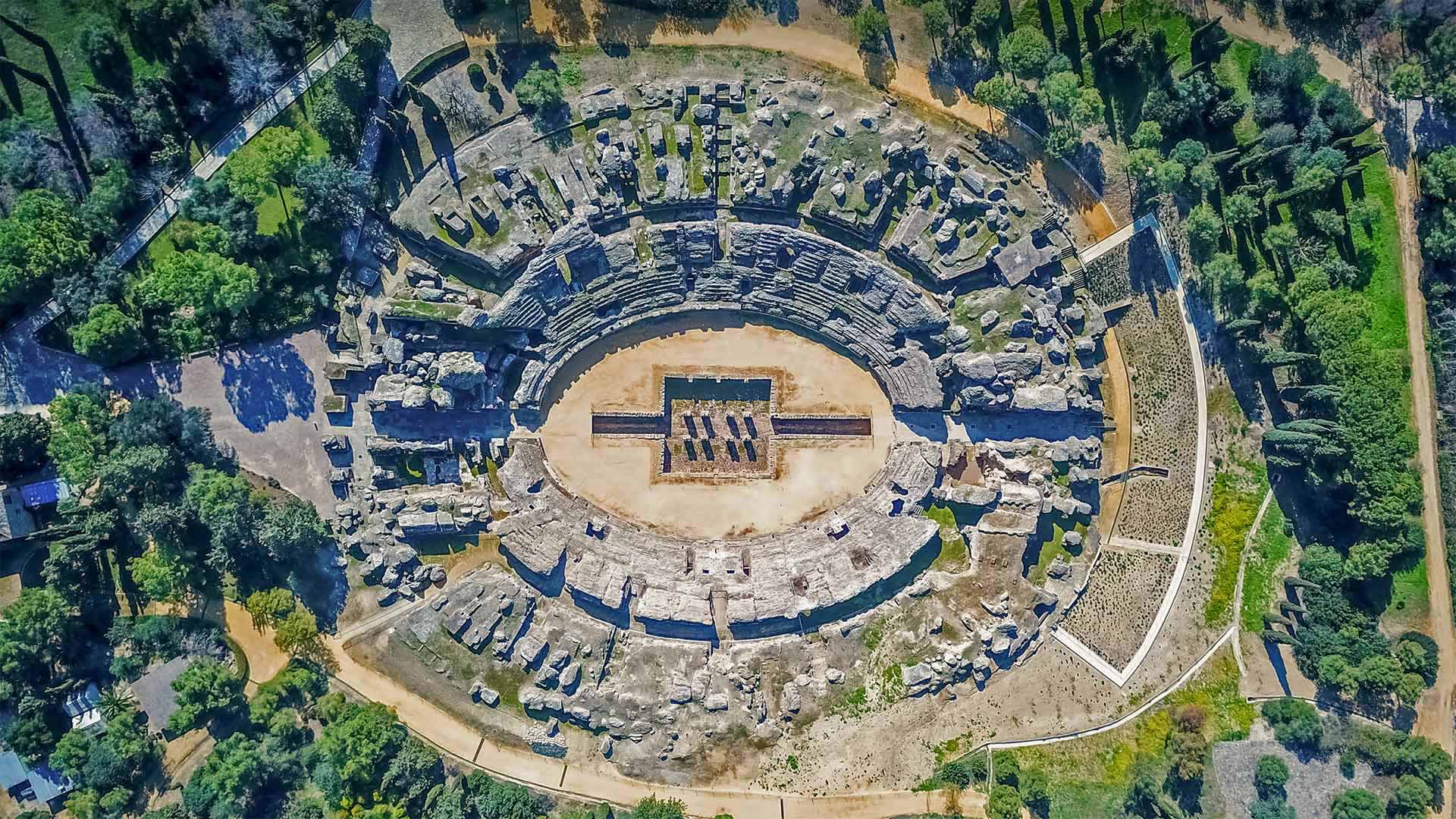
古罗马斗兽场,西班牙桑蒂蓬塞镇的罗马古城遗迹 The Roman amphitheater of Itálica near Santiponce, Spain (© Amazing Aerial Agency/Offset by Shutterstock)
Birthplace of Roman emperors
Just a few miles north of Seville, Spain, you'll find the ancient ruins of Itálica, the first Roman settlement in what is now Spain and the first Roman city outside of Italy. The city was founded in 206 BCE by the Roman general Scipio as a place to house veterans from the Second Punic Wars. Itálica was also the birthplace of at least two Roman emperors.
For centuries, Itálica was an elaborate urban center with a temple, a theater, public baths, gorgeous homes for the monied elite, and a population of about 8,000 residents. This aerial view is of the city's famous amphitheater, where thousands of spectators came from near and far to watch the bloody gladiator fights, hunts of wild beasts, and public executions. The 'entertainment' here was not for the faint of heart.
Today, the modern Spanish city of Santiponce has grown up around—and even atop—the ruins. Tourists come here to walk the preserved Roman streets, admire the mosaics, and imagine the scenes of life and death that happened in this amphitheater nearly 2,000 years ago.
罗马皇帝的出生地
在西班牙塞维利亚以北几英里的地方,你会发现古老的Itálica遗址,这是现在西班牙的第一个罗马定居点,也是意大利以外的第一个罗马城市。这座城市由罗马将军西皮奥于公元前206年建立,是第二次布匿战争退伍军人的住所。伊塔利卡也是至少两位罗马皇帝的出生地。
几个世纪以来,伊塔利卡一直是一个精心设计的城市中心,有寺庙、剧院、公共浴场、摩尼德精英的华丽家园,人口约8000人。这张鸟瞰图是该市著名的圆形剧场,数千名观众从四面八方赶来观看血腥的角斗士搏斗、野兽狩猎和公开处决。这里的“娱乐”不是为胆小鬼准备的。
今天,西班牙现代城市圣蒂蓬斯在废墟周围甚至在废墟上发展起来。游客们来到这里,是为了漫步保存完好的罗马街道,欣赏马赛克,想象2000年前发生在这个圆形剧场里的生死场景。