戈尔韦郡罗斯埃里利方济各会修道院遗址,康诺特省,爱尔兰 Ruins of Ross Errilly Friary, County Galway, Ireland (© Maria Janus/Shutterstock)
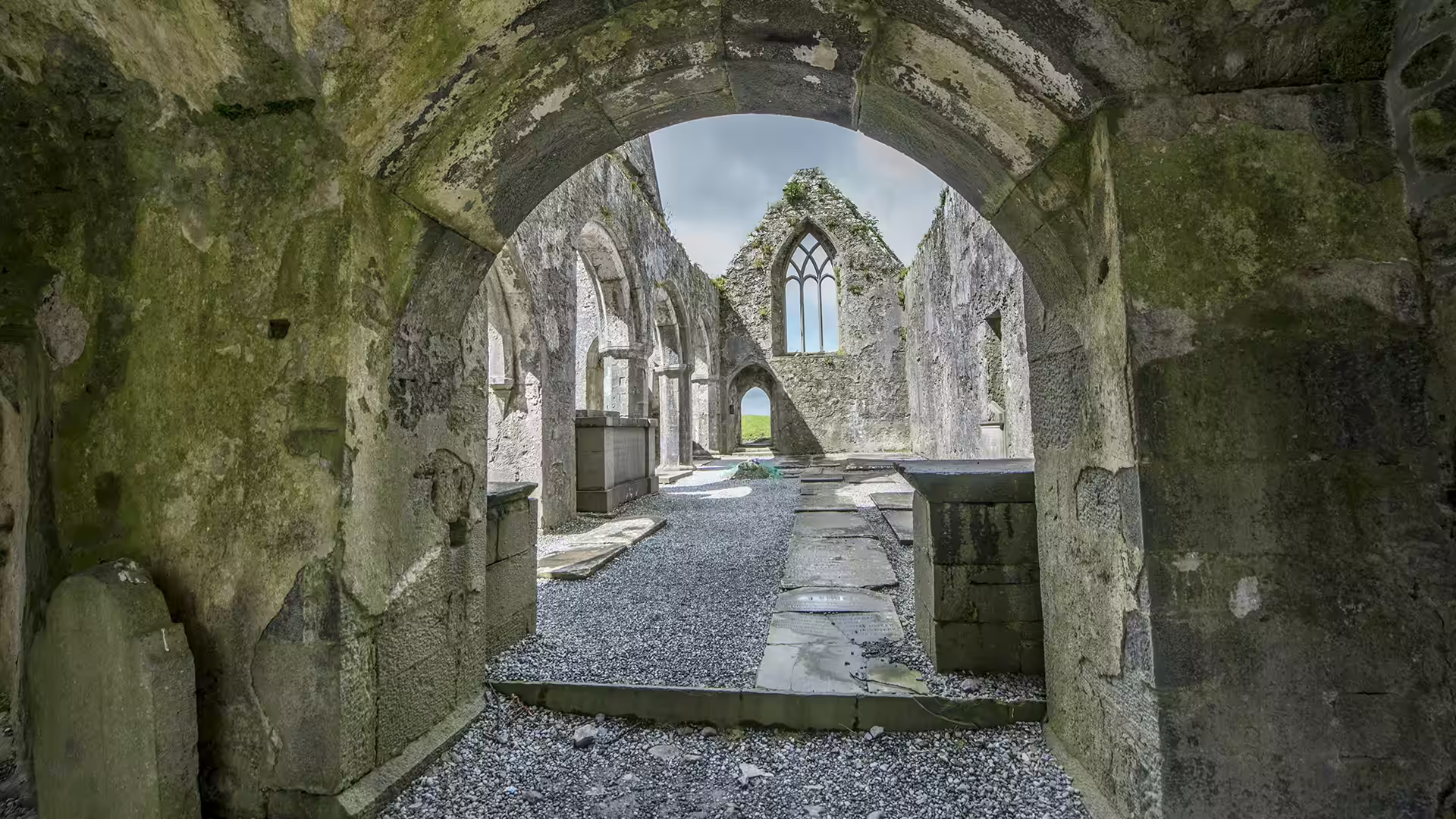
戈尔韦郡罗斯埃里利方济各会修道院遗址,康诺特省,爱尔兰 Ruins of Ross Errilly Friary, County Galway, Ireland (© Maria Janus/Shutterstock)
天鹅开启传奇之处 Where swans started a legend
罗斯·埃里利修道院遗址,戈尔韦郡,爱尔兰
天鹅、秘密藏身处和中世纪养鱼池有什么共同之处?它们都是罗斯埃里利方济各会修道院遗址故事的一部分。这座保存完好的爱尔兰方济各会修道院建于约1351年,常被称为罗斯修道院(俗称);不过它从未设过院长,因为它本就不是隐修院。
当地传说称,一位主教跟随三只嘴衔亚麻籽的天鹅来到这里,随后选定了院址。修道院日渐兴盛,最终增建了少见的第二座回廊,以容纳不断壮大的社群。中世纪厨房里甚至设有巧妙的活水石池,可让刚捕获的鱼一直存活到用餐时。
罗斯埃里利也熬过了数百年的宗教迫害。修士们在修道院屡次关闭后仍不断返回;克伦威尔时期,这里后来还庇护过天主教神职人员。修道院废弃后,墓葬活动仍持续很久,如今有些墓碑已成为步道的一部分。这里证明,历史确实会留下长久的足迹——有时还是字面意义上的足迹。
Ross Errilly Friary, County Galway, Ireland
What do swans, secret hideaways, and a medieval fish tank have in common? They're all part of the story of Ross Errilly Friary. Founded around 1351, this well-preserved Franciscan friary in Ireland is often called Ross Abbey, though it never had an abbot because it was never an abbey.
Local legend says a bishop chose the site after following three swans carrying flax seed in their beaks. The friary flourished, eventually adding a rare second cloister to accommodate its growing community. Its medieval kitchen even featured a clever running-water stone tank that kept freshly caught fish alive until mealtime.
Ross Errilly also weathered centuries of religious persecution. Friars returned despite repeated closures, and the site later sheltered Catholic clergy during the Cromwellian period. Burials continued long after the monastery was abandoned, with some tombstones now forming parts of its walkways. This site proves history can leave lasting footprints—sometimes quite literally.
萨克赛瓦曼遗址俯瞰图,库斯科,秘鲁 Aerial view of the ruins of Sacsayhuamán, Cusco, Peru (© Creative-Family/Getty Images Plus)

萨克赛瓦曼遗址俯瞰图,库斯科,秘鲁 Aerial view of the ruins of Sacsayhuamán, Cusco, Peru (© Creative-Family/Getty Images Plus)
坚如磐石的奇观 A rock-solid marvel
萨克塞华曼遗址俯瞰图在库斯科,秘鲁
萨克塞华曼(Sacsayhuamán)坐落于秘鲁库斯科的高处,通过石材展现了印加帝国的宏大雄心。这座宏伟的建筑群始建于15世纪,曾是印加帝国神圣都城的一部分。从高空俯瞰,其布局清晰呈现:梯田、开阔的广场以及塔楼遗迹,共同构成了一座经过精密规划的卫城。其中最为壮观的墙体由巨型石块砌成,至今依然屹立不倒。部分石材高度超过 27 英尺(约 8.2 米),且在未使用灰浆的情况下实现了极度精确的无缝拼接,这使得该结构历经数百年的地震仍完好无损。
考古学家认为,萨克塞华曼遗址兼具祭祀与战略双重用途,既是举办祭祀印加太阳神“因蒂”(Inti)等集会与仪式的场所,也承担着俯瞰并守卫下方城市的作用。其名称源于克丘亚语(Quechua),通常译为“心满意足的猎鹰”,体现了猛禽在安第斯信仰中的重要地位。如今,这处遗址仍是印加工程技术的有力见证——其设计、象征意义以及庞大的规模,从任何角度审视都令人叹为观止。
Aerial view of the ruins of Sacsayhuamán, Cusco, Peru
Set high above Cusco in Peru, Sacsayhuamán reveals the ambition of the Inca Empire in stone. Built in the 15th century, this vast complex once formed part of the sacred capital of the Incas. From above, the layout becomes clear: terraces, open plazas, and the remains of towers forming a carefully planned citadel. The largest walls, built from enormous blocks, still stand strong today. Some stones rise more than 27 feet tall and were fitted together so precisely—without mortar—that the structure has endured centuries of earthquakes.
Archaeologists believe Sacsayhuamán served both ceremonial and strategic purposes, hosting gatherings and rituals dedicated to Inti, the Inca sun god, while also overlooking the city below. Its name comes from Quechua, often translated as 'Satisfied Falcon,' reflecting the importance of birds of prey in Andean belief. Today, the site remains a powerful reminder of Inca engineering—where design, symbolism, and sheer scale continue to impress from every angle.
邓塞弗里克城堡遗址, 安特里姆郡, 北爱尔兰 Ruins of Dunseverick Castle, County Antrim, Northern Ireland (© Krzysztof Rogalski/Getty Images)

邓塞弗里克城堡遗址, 安特里姆郡, 北爱尔兰 Ruins of Dunseverick Castle, County Antrim, Northern Ireland (© Krzysztof Rogalski/Getty Images)
最后一堵墙矗立着 The last wall standing
北爱尔兰邓塞弗里克城堡遗址
在邓塞弗里克城堡,历史仿佛就悬挂在原地——确切地说,就悬挂在原地。残垣断壁依附在大西洋上方的玄武岩峭壁上,证明即使是废墟也能屹立不倒。两千年前,这里是爱尔兰五大道路之一——斯莱格·米德卢赫拉(Slige Midluachra)的终点,这条道路连接着通往塔拉山(Hill of Tara)王室的旅人。据说,公元5世纪,圣帕特里克曾到访此地,并为当地居民奥尔坎(Olcán)施洗。传说中,用于为爱尔兰国王加冕的“命运之石”(Lia Fáil)就是从这片海岸被带往苏格兰的。
维京人在9世纪末袭击了这里。1642年,苏格兰陆军军官罗伯特·芒罗将军破坏了城堡,后来在克伦威尔征服爱尔兰期间,城堡又遭到进一步破坏。然而,一座小塔楼一直屹立到1978年,最终被海水吞没。
如今,在国民信托的管理下,这里免费开放,保留着原始风貌,令人耳目一新——距离巨人堤道仅几步之遥。没错,这里是一处遗址——但它拒绝悄然消逝。
阿尼遗址的圣格雷戈里教堂,卡尔斯省,土耳其 St. Gregory Church in Ani Ruins, Kars, Türkiye (© Kenan Talas/Getty Images)

阿尼遗址的圣格雷戈里教堂,卡尔斯省,土耳其 St. Gregory Church in Ani Ruins, Kars, Türkiye (© Kenan Talas/Getty Images)
一座比城市更悠久的教堂 The church that outlived a city
阿尼遗址的圣格雷戈里教堂,卡尔斯省,土耳其
在土耳其东部与亚美尼亚接壤的边境地带,一片风吹草低的台地上,阿尼古城遗址在荒野中清晰浮现。千年前,这里是丝绸之路上的繁华都城,城墙巍峨,街市喧闹,商旅往来不息,文化在此交汇。如今,风声取代了人声,但那沧桑的轮廓,仍默默诉说着昔日的辉煌。
这张照片展现了圣格雷戈里教堂,它是阿尼最具震撼力的遗迹之一。深色火山岩筑成的圆塔,依旧挺立,仿佛延续着昔日的精工细作。阿尼曾因“千座教堂之城”闻名,拱门、穹顶与立面的革新,曾在历史中掀起波澜,后来影响了哥特式建筑传统。即便在一片废墟中,其设计仍清晰可辨。
阿尼的衰落,源于地震、入侵和贸易路线的转移,但这座城市从未真正消失。考古学家仍在不断发掘新的细节,保护工作也在与侵蚀和时间抗争。漫步于此,感觉不像是在探访废墟,更像是在遇见一座执意守护自己故事的城市。
St. Gregory Church in Ani Ruins, Kars, Türkiye
On a windswept plateau in eastern Türkiye, along the border with Armenia, the ruins of the ancient city of Ani rise from the landscape with striking clarity. A millennium ago, Ani was a thriving Armenian capital on a major Silk Road route, its fortifications and busy streets shaping trade and culture across the region. Today, the city is quiet, but its outline still carries the weight of its past.
The image shows the Church of St. Gregory, one of Ani's most striking survivors. Built from dark volcanic stone, its tall cylindrical tower stands over the plateau with the same precision that once defined the city. Ani was known as the 'City of 1,001 Churches,' and its architects pushed new ideas in arches, domes, and facades that later influenced Gothic tradition. Even in ruin, the design remains deliberate and unmistakable.
Ani's decline unfolded through earthquakes, invasions, and shifting trade routes, yet the city never fully disappeared. Archaeologists continue to find new details, and conservation work fights erosion and time. Walking here feels less like exploring a ruin and more like meeting a city determined to keep its story alive.
西尔布利山的新石器时代遗址,蒂尔斯黑德,威尔特郡,英国 Neolithic site of Silbury Hill, Tilshead, Wiltshire, England (© dbstockphotoa/Getty Images)

西尔布利山的新石器时代遗址,蒂尔斯黑德,威尔特郡,英国 Neolithic site of Silbury Hill, Tilshead, Wiltshire, England (© dbstockphotoa/Getty Images)
那座铭记往昔的山丘 The hill that remembers
国际考古日
每年十月的第三个星期六是国际考古日,它鼓励我们“深入地表”,探索尘封的历史与文明的根源。该纪念日由美国考古学会(AIA)于2011年设立,如今世界各地通过举办活动、组织参观和亲身体验挖掘等方式来庆祝。
一些遗址,如图中所示,能与周围环境浑然天成地融为一体:乍看之下,英国威尔特郡的锡尔伯里山或许只是乡间一道普通的斜坡。然而它却隐藏着一个距今约4500年的新石器时代谜团。自公元前2400年左右起,当地人开采白垩岩,经世代人力层层搬运堆砌,最终建成这座欧洲最高的史前土丘——它完全依靠人力堆砌而成,高约129英尺。
它究竟是祭祀场所、宇宙标记,还是社群象征?这座山丘的原始用途至今仍是谜题,而对考古学而言,这些疑问往往比答案更珍贵。当文字记载缺失时,大地诉说着自己的故事。锡尔伯里山保存着这些沉默的记忆,提醒我们探究过往的意义何在——它重塑我们对历史的认知,放大被掩盖的声音,并昭示着历史永无终结。
Silbury Hill for International Archaeology Day
Each year, International Archaeology Day—observed on the third Saturday of October—invites us to literally look beneath the surface. Established in 2011 by the Archaeological Institute of America (AIA), it's celebrated worldwide through events, tours, and hands-on excavations.
Each year, International Archaeology Day—observed on the third Saturday of October—invites us to literally look beneath the surface. Established in 2011 by the Archaeological Institute of America, it's celebrated worldwide through events, tours, and hands-on excavations.
Was it a ceremonial site, a cosmic marker, a symbol of community? Its original purpose remains elusive, and for archaeology, the questions can be as valuable as the answers. Where written records fail, the land tells its story. Silbury Hill preserves these tales, reminding us why studying our past matters: it rewrites what we thought we knew, amplifies silenced voices, and shows us that history is never finished.
库斯科附近的萨克塞华曼印加遗址,秘鲁 Inca ruin of Sacsayhuamán near Cusco, Peru (© SL_Photography/Getty Images)
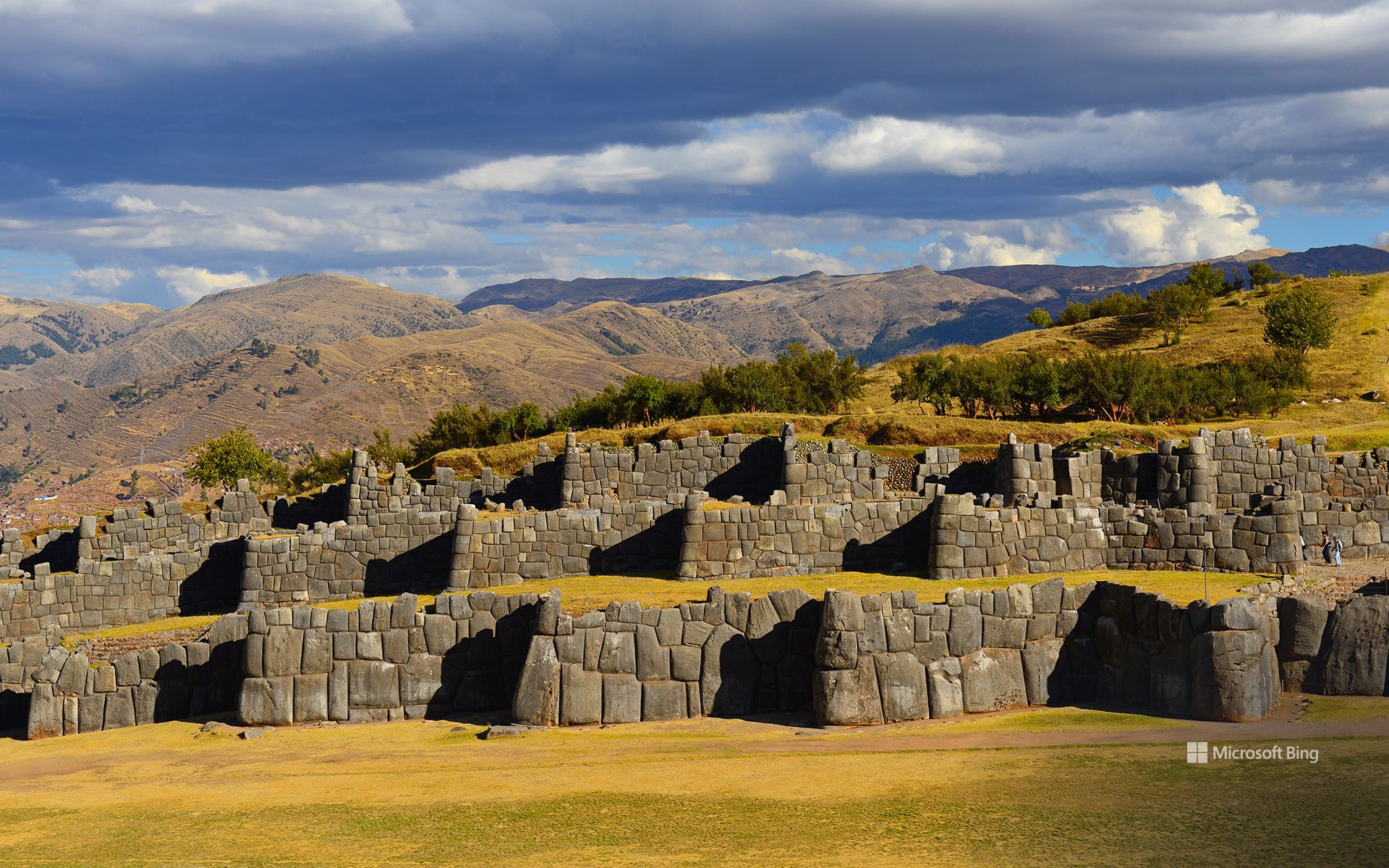
库斯科附近的萨克塞华曼印加遗址,秘鲁 Inca ruin of Sacsayhuamán near Cusco, Peru (© SL_Photography/Getty Images)
弘扬土著文化 Celebrating Indigenous culture
世界土著人民国际日
今天,我们为世界各地土著居民的遗产和文化而庆祝。从萨摩亚和格陵兰到新西兰和尼泊尔,全世界90个国家中约有5000种土著文化。他们面临的主要挑战之一是语言的消失:据估计,在全世界4000种土著语言中,约有2600种面临灭绝的危险。
在秘鲁的库斯科城,萨克塞华曼的石墙(如图所示)低声诉说着强大的印加文明的故事。在克丘亚语中,石墙的名字“Sacsayhuamán”的意思是 “让鹰感到满足的地方”。城堡的城墙建于公元15世纪,绵延1000多英尺。用来建造城墙的巨石是雕刻而成的,没有使用砂浆。1536年,印加帝国在这里的一场战役中战败后,西班牙人拆除了萨克塞华曼,余下的建筑被泥土覆盖。1934 年,人们在挖掘遗址时重新发现了它。在这一天,让我们在向土著人民致敬的同时,了解保护土著文化和智慧的重要性。
International Day of the World's Indigenous Peoples
Today we are celebrating the heritage and culture of Indigenous populations worldwide. There are some 5,000 Indigenous cultures in 90 countries around the world, from Samoa and Greenland to New Zealand and Nepal. One of the major challenges they face is the loss of their languages: It's estimated that of the 4,000 Indigenous languages in the world, around 2,600 are in danger of becoming extinct.
In the city of Cusco, Peru, the stone walls of Sacsayhuamán, seen in today's image, murmur tales of the mighty Inca civilization. The citadel's walls, which extended over 1,000 feet, were built in the 15th century. The boulders used to make them were carved and placed without mortar. After the Inca Empire was defeated in a battle here in 1536, Sacsayhuamán was dismantled by the Spanish. The rest of the structure was covered in earth until 1934, when it was rediscovered during an excavation. Today is a good day to discover more about Indigenous peoples, and the importance of preserving their cultures for future generations.
卡塞里格石圈,湖区国家公园 ,坎布里亚,英国 Castlerigg Stone Circle near Keswick, Lake District National Park, Cumbria, United Kingdom (© John Finney Photography/Getty Images)
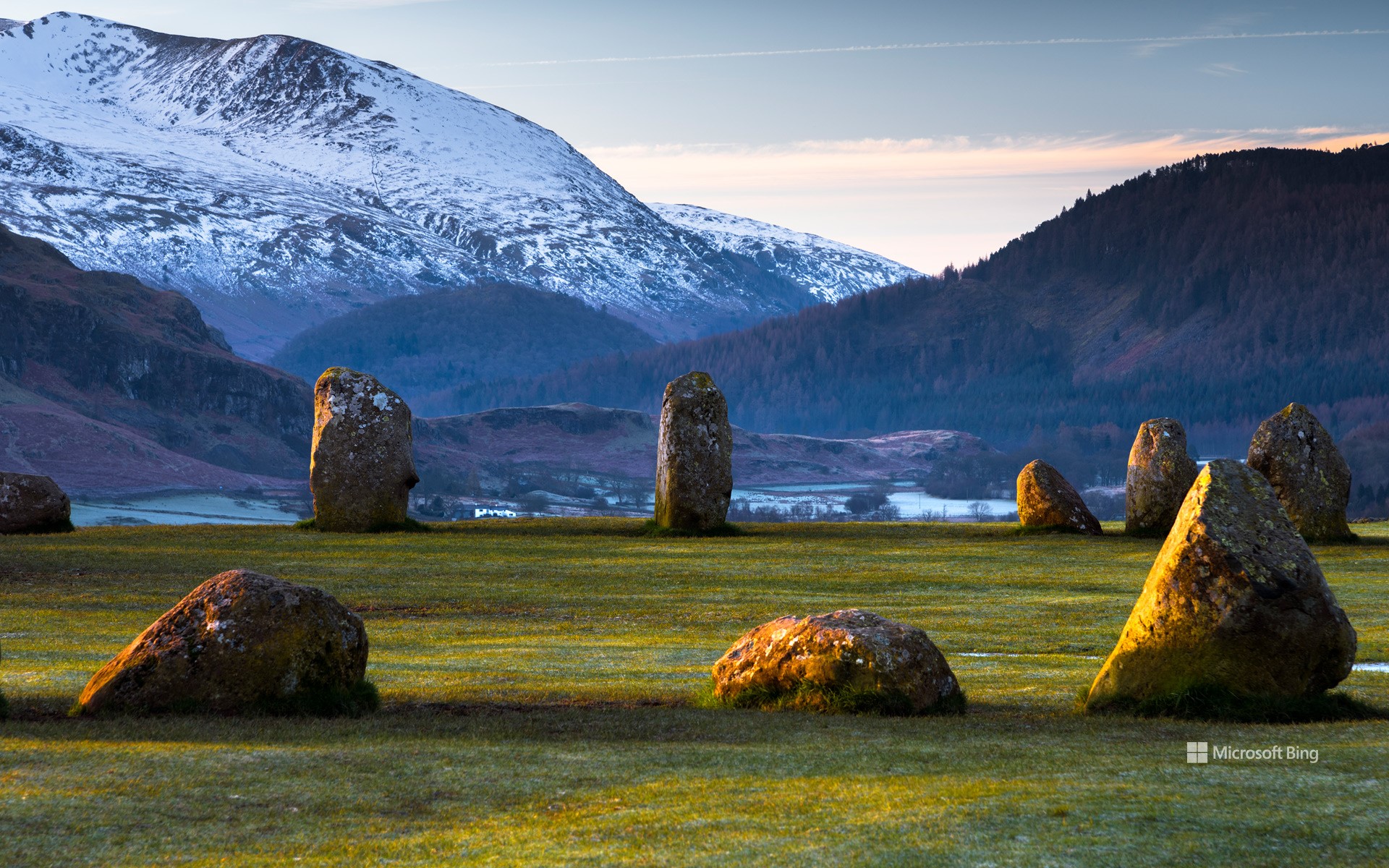
卡塞里格石圈,湖区国家公园 ,坎布里亚,英国 Castlerigg Stone Circle near Keswick, Lake District National Park, Cumbria, United Kingdom (© John Finney Photography/Getty Images)
古石圈 ancient stone circle
卡塞里格石圈
考古学家认为,古代文明排列石圈是为了让石头与月亮和太阳的位置保持一致。图中这个位于英格兰西北部湖区的卡塞里格石圈的就是这样的一个遗址。这个新石器时代的纪念碑有40块石头,呈圆形排列,其历史可以追溯到公元前3000年。虽然卡塞里格石圈的排列方式在某些方面仍然是个谜,但在几个世纪以来,其古典的魅力一直吸引着游客。
蒂卡尔的玛雅遗址,危地马拉 Mayan ruins in Tikal, Guatemala (© THP Creative/Getty Images)
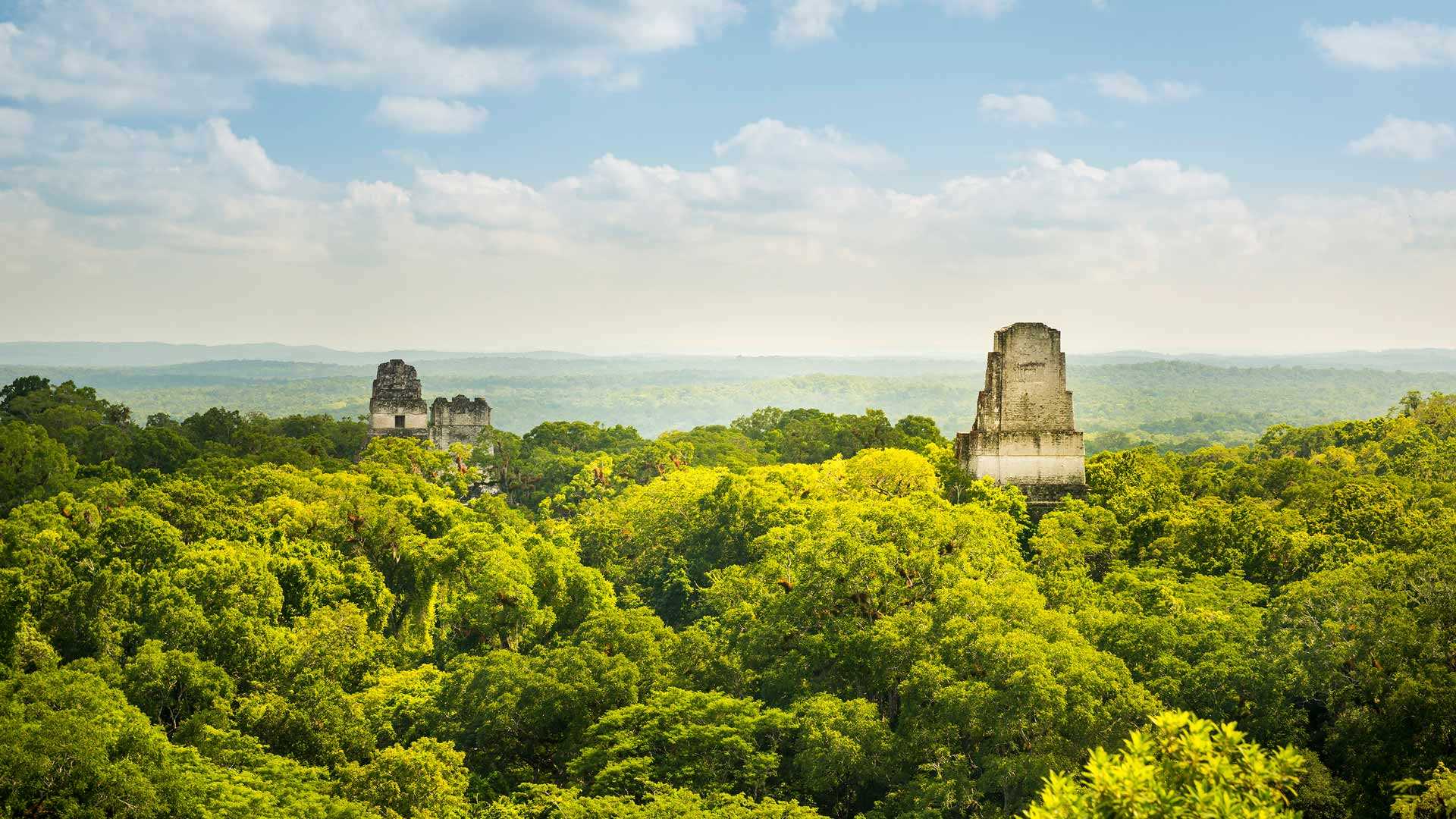
蒂卡尔的玛雅遗址,危地马拉 Mayan ruins in Tikal, Guatemala (© THP Creative/Getty Images)
原力与你同在 May the 4th be with you
星球大战日
原力与你同在!星战宇宙在几十年来一直牵动着影迷的想象力,今天是纪念星球大战的影响力的日子,就像原力一样,在我们身边随处可见。1977年上映的首部星球大战电影将我们带到了一个遥远的星系,让我们认识了一群令人难忘的角色、以及原力光明面和黑暗面之间扣人心弦的战斗。星球大战已经扩展到了电视剧、书籍、漫画、游乐园以及你可以想象到的任何一种产品。
影迷可能会觉得危地马拉的蒂卡尔古城玛雅遗迹和《星球大战:新希望》中的亚汶四号卫星的反叛军基地非常像。这些现实中的神庙就是电影中亚汶战役的取景地。亚汶战役在星战故事线中有着转折性的意义,星战宇宙中的历法被分为ABY和BBY,也就是亚汶战役前和亚汶战役后。
Star Wars Day
May the Fourth be with you! The 'Star Wars' universe has captured the imagination of fans for decades and its impact, like the 'Force,' is all around us. The original 1977 film introduced us to a galaxy far, far away, a cast of unforgettable characters, and a gripping battle between good and evil. Its reach has since extended to television, books, comics, theme parks, thousands of products, and a day of its own to celebrate the much-loved sci-fi franchise.
Fans might recognize today's image of the Mayan ruins in Tikal, Guatemala, as the rebel base on Yavin 4 from 'Star Wars: A New Hope.' These real-life temples served as a key setting in the cinematic Battle of Yavin, a fight so pivotal in the 'Star Wars' storyline that calendar years in the universe are called ABY or BBY: After the Battle of Yavin or Before the Battle of Yavin.
纳克什鲁斯塔姆遗址,伊朗波斯波利斯 Naqsh-e Rustam archaeological site near Persepolis, Iran (© mshirani/Shutterstock)
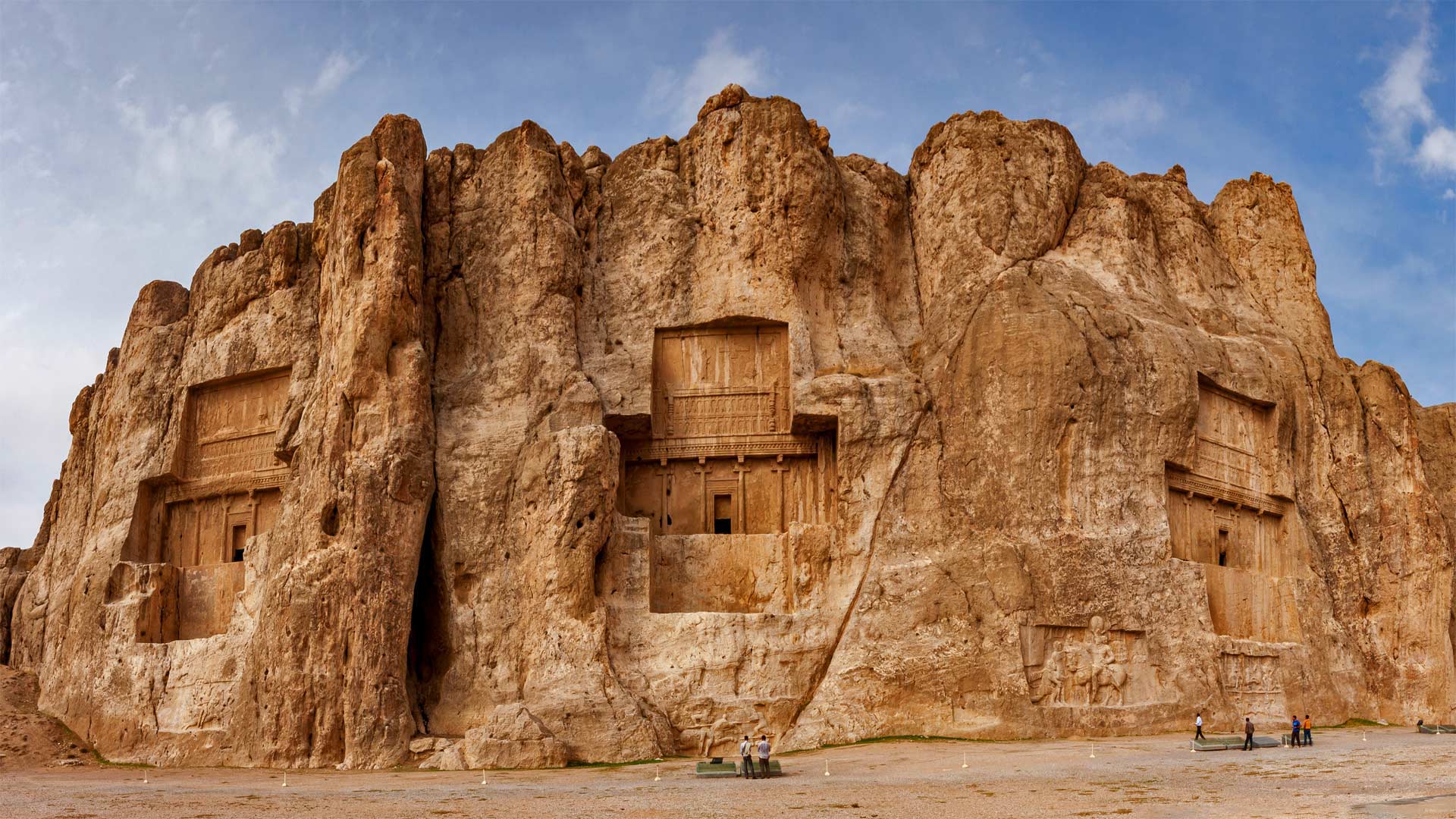
纳克什鲁斯塔姆遗址,伊朗波斯波利斯 Naqsh-e Rustam archaeological site near Persepolis, Iran (© mshirani/Shutterstock)
国际考古日 International Archaeology Day
国际考古日
Naqsh-e Rostam是一座雕刻在伊朗西南部山区的古代墓地,是古代波斯最早繁荣的文明之一的门户。四位阿契美尼德国王的陵墓(你可以在这里看到其中三位)以高高地雕刻在悬崖表面的岩石浮雕为标志。这个遗址及其周围地区对伊朗及其人民的历史具有重大意义。它们也是考古学在理解我们的过去方面所起作用的光辉范例。每年10月的第三个星期六,我们都会停下来庆祝并表彰考古学家作为人类历史解释者的贡献。
墓地是由坟墓和墓地组成的综合体,字面意思是“死者之城”这家离法尔斯省的西拉市很近。其中一座坟墓被铭文确定为大流士一世(又名大流士大帝)的安息之地,其他坟墓被认为是大流士的儿子薛西斯一世、阿尔塔克西斯一世和大流士二世的坟墓,这些人是公元前522-330年阿契美尼德王朝的领导人。纳什赫·罗斯坦也是描绘后来萨珊帝国国王的浮雕之乡,萨珊王朝是7世纪和8世纪穆斯林征服之前的最后一个伊朗帝国。只有几百码远的地方是被称为Naqsh-e Rajab的考古遗址,更多的石雕描绘了三位萨珊王朝国王和一位大祭司。虽然这些文明已经消亡,但它们创造的东西是人类历史的永久记录。
International Archaeology Day
Naqsh-e Rostam is an ancient necropolis carved into the mountains of southwestern Iran, a porthole into one of the earliest civilizations to flourish in ancient Persia. The tombs of four Achaemenid kings (you can see three of them here) are marked by rock reliefs carved high above the ground into the cliff face. This site and the area around it are of huge significance to the history of Iran and its people. They're also a shining example of the role archaeology plays in understanding our past. On the third Saturday of every October, we pause to celebrate and recognize the contributions of archaeologists as interpreters of human history.
A necropolis is a complex of tombs and burial plots, literally translated as a 'city of the dead.' This one is close to the city of Shiraz in Fars Province. One of the tombs is identified by an inscription as being the resting place of Darius I, aka Darius the Great, and the others are believed to be the tombs of Darius' son, Xerxes I, Artaxerxes I, and Darius II, leaders during the Achaemenid dynasty from 522-330 BCE. Naqsh-e Rostam is also home to relief carvings depicting kings of the later Sassanian Empire, the last Iranian empire before the Muslim conquests of the 7th and 8th centuries. Only a few hundred yards away is the archaeological site known as Naqsh-e Rajab, with more rock carvings depicting three Sassanid kings and a high priest. While these civilizations have faded, what they created endures as a permanent record of human history.
被丛林包围着的玛雅古城卡拉克穆尔遗址,墨西哥坎佩切 Ruins of the ancient Mayan city of Calakmul surrounded by the jungle, Campeche, Mexico (© Alfredo Matus/Shutterstock)
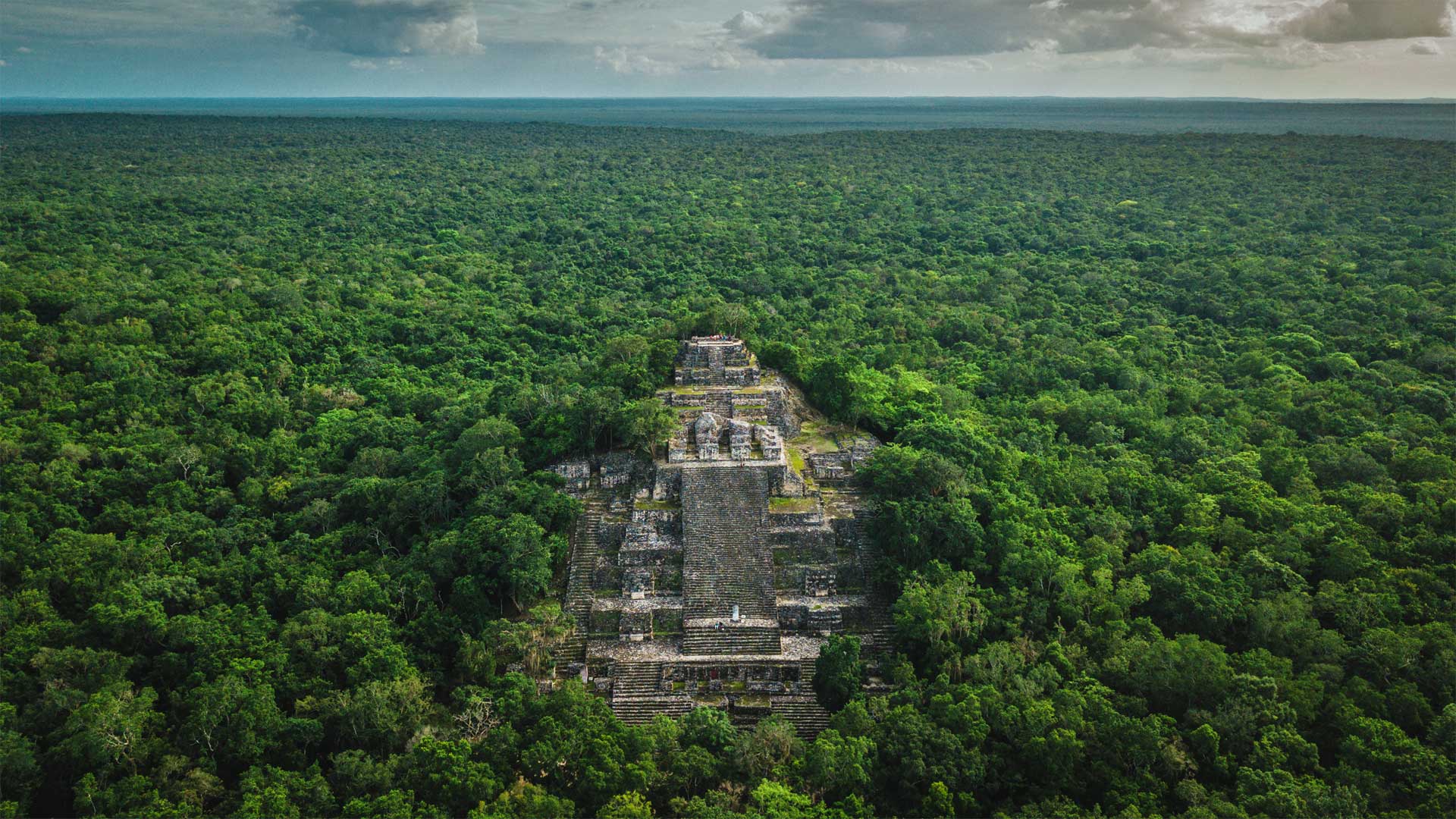
被丛林包围着的玛雅古城卡拉克穆尔遗址,墨西哥坎佩切 Ruins of the ancient Mayan city of Calakmul surrounded by the jungle, Campeche, Mexico (© Alfredo Matus/Shutterstock)
The ruins of a Mayan superpower
Deep in the jungle of southern Mexico lay the ruins of a city that thrived for centuries before it was abandoned more than 1,000 years ago. Calakmul was once one of the two dueling superpowers—along with Tikal—of the Classical Mayan civilization. At its height, around 1,200 years ago, the city of Calakmul had a population of about 50,000 people, but the kingdom as a whole numbered more than 1.5 million. Archaeologists have uncovered 6,750 structures here—the largest is this pyramid temple, called, simply, 'Structure 2.' It's one of the tallest and most massive remaining structures from that highly advanced culture. The ruins of the city proper cover nearly eight square miles in the jungle and the kingdom once ruled over settlements as far as 90 miles away.
All the more amazing, then, that it was apparently lost to history until an American botanist named Cyrus L. Lundell discovered it when flying over the jungle on a survey of the area in December 1931. A few expeditions were sent to explore it over the next few years, but it went largely unstudied until the 1980s. Calakmul is now recognized as one of the most important archeological sites in southern Mexico.
玛雅超级大国的废墟
在墨西哥南部的丛林深处,有一座城市在1000多年前被遗弃之前,已经繁荣了几个世纪。卡拉克穆尔曾是古典玛雅文明的两个决斗超级大国之一,与提卡尔一起。大约1200年前的鼎盛时期,卡拉克穆尔市的人口约为5万人,但王国整体人口超过150万。考古学家在这里发现了6750座建筑——最大的是这座金字塔神庙,简单地说,叫做"结构2"。它是高度先进文化中最高和最具大规模剩余结构之一。这座城市的废墟覆盖了丛林中近8平方英里的面积,王国曾经统治着90英里外的定居点。
更令人惊奇的是,它显然被历史所遗忘,直到1931年12月一位名叫赛勒斯·伦德尔的美国植物学家在一次对该地区的勘测中飞越丛林时发现了它。在接下来的几年里,一些探险队被派去探索它,但直到20世纪80年代它才被广泛研究。卡拉克穆尔现在被认为是墨西哥南部最重要的考古遗址之一。卡拉克穆尔现在被公认为墨西哥南部最重要的考古遗址之一。