樱花盛开的弘前城,弘前,日本 Hirosaki Castle with cherry blossoms, Hirosaki, Japan (© Glenn Waters/Getty Images)

樱花盛开的弘前城,弘前,日本 Hirosaki Castle with cherry blossoms, Hirosaki, Japan (© Glenn Waters/Getty Images)
芬芳四月 Where power resides
弘前,日本
想象一下17世纪初的日本北部:城堡矗立在政治、贸易与行政的交汇点上,是权力与治理的重要中心。随着时间推移,这些城堡不仅见证了紧张与冲突的历史,也记录了坚守、变迁以及人们的日常生活。每年4月6日庆祝的日本城堡日正是为了让人们关注这段多层次的历史。这一天的日期来自一个有趣的日语谐音:“shi”(4)和“ro”(6)**组合成 “Shiro-no-Hi”,因为 “shiro” 在日语中意为“城堡”。
Castle Day Japan
Picture northern Japan in the early 1600s. Castles stood at the crossroads of politics, trade, and governance. Across generations, they came to reflect not only moments of tension, but also endurance, adaptation, and everyday life. Castle Day, celebrated on April 6, was created to highlight that layered past. The day uses a simple phonetic link—shi (4) and ro (6)—to form Shiro-no-Hi, because 'shiro' means castle in Japanese. It's a reminder that castles had serious jobs long before they had cinematic appeal.
Today's image features Hirosaki Castle, completed in 1611 under the Tsugaru clan, an influential Japanese samurai family. Fires, repairs, and rebuilding reshaped it, but the castle remained in use until the feudal system ended in the 19th century. Rather than a relic, it endures as evidence of local rule and Edo-period design—a past that remained present as aesthetics moved toward minimalism.
汤姆·麦考尔滨水公园的樱花,波特兰,俄勒冈州,美国 Cherry blossoms at Tom McCall Waterfront Park, Portland, Oregon, USA (© Eric Vogt/Tandem Stills + Motion)

汤姆·麦考尔滨水公园的樱花,波特兰,俄勒冈州,美国 Cherry blossoms at Tom McCall Waterfront Park, Portland, Oregon, USA (© Eric Vogt/Tandem Stills + Motion)
城市花开 Urban blooms
汤姆·麦考尔滨水公园,波特兰,俄勒冈
汤姆·麦考尔滨水公园位于俄勒冈州波特兰威拉米特河畔,占地36英亩,是这座城市最受欢迎的绿地之一。每年春季——通常从3月中旬到4月初——公园会被粉色与白色的樱花覆盖,仿佛置身花海。沿着风景优美的步道漫步,这些充满生机的樱树为城市中心提供了一片宁静的休憩空间。公园内还有多处著名景点,如萨蒙街喷泉(Salmon Street Springs),一个拥有众多水柱的互动喷泉,以及波特兰周六市场(Portland Saturday Market),是当地居民和游客喜爱的热门去处。
沿着公园的步道,游客可以欣赏到威拉米特河全景、波特兰的各座桥梁,以及晴朗天气下远处耸立的胡德山。汤姆·麦考尔滨水公园将自然之美与都市魅力完美融合。无论是在樱花树下悠闲漫步,还是探索开阔的绿地空间,它都象征着波特兰与自然和社区的深厚联系,为游客提供了一片远离城市喧嚣的清新天地。
Cherry blossoms at Tom McCall Waterfront Park, Portland, Oregon
Tom McCall Waterfront Park, a 36-acre urban oasis along the Willamette River in Portland, Oregon, is one of the city's most beloved green spaces. Each spring—typically from mid-March to early April—it transforms into a sea of soft pink and white as cherry blossoms bloom. These vibrant trees along scenic walking paths offer a peaceful escape in the heart of the city. The park also features notable landmarks like Salmon Street Springs, an interactive fountain with numerous water jets, and the Portland Saturday Market, a favorite local destination.
From the park's paths, visitors can enjoy panoramic views of the river, Portland's bridges, and, on clear days, Mount Hood rising in the distance. Tom McCall Waterfront Park combines natural beauty with urban charm. Whether you're relaxing under the cherry blossoms or exploring its open spaces, it is a symbol of Portland's deep connection to nature and community, offering visitors a refreshing break from the bustle of city life.
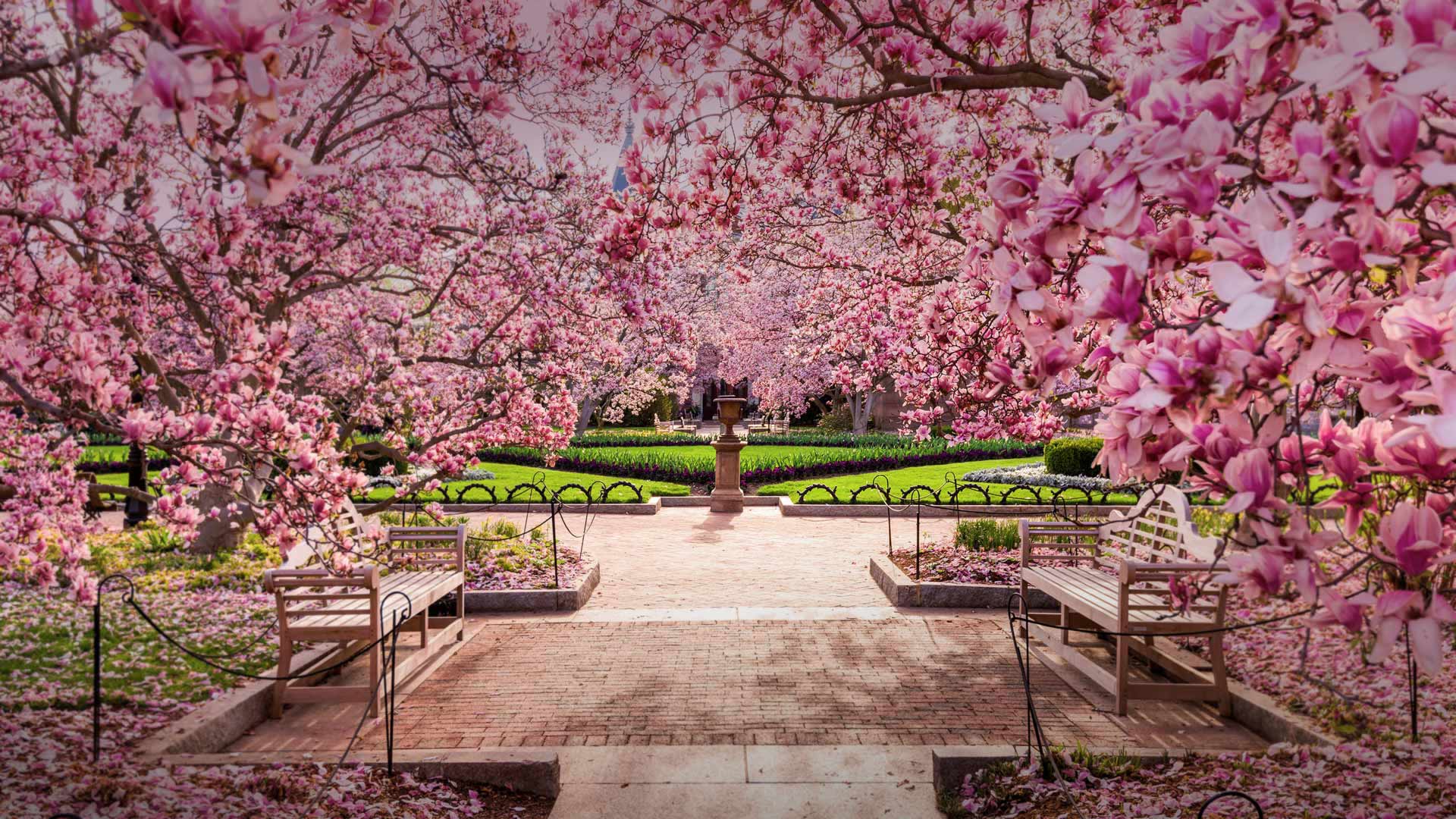
上海的樱花,中国 Cherry blossoms in Shanghai, China (© Yaorusheng/Getty Images)
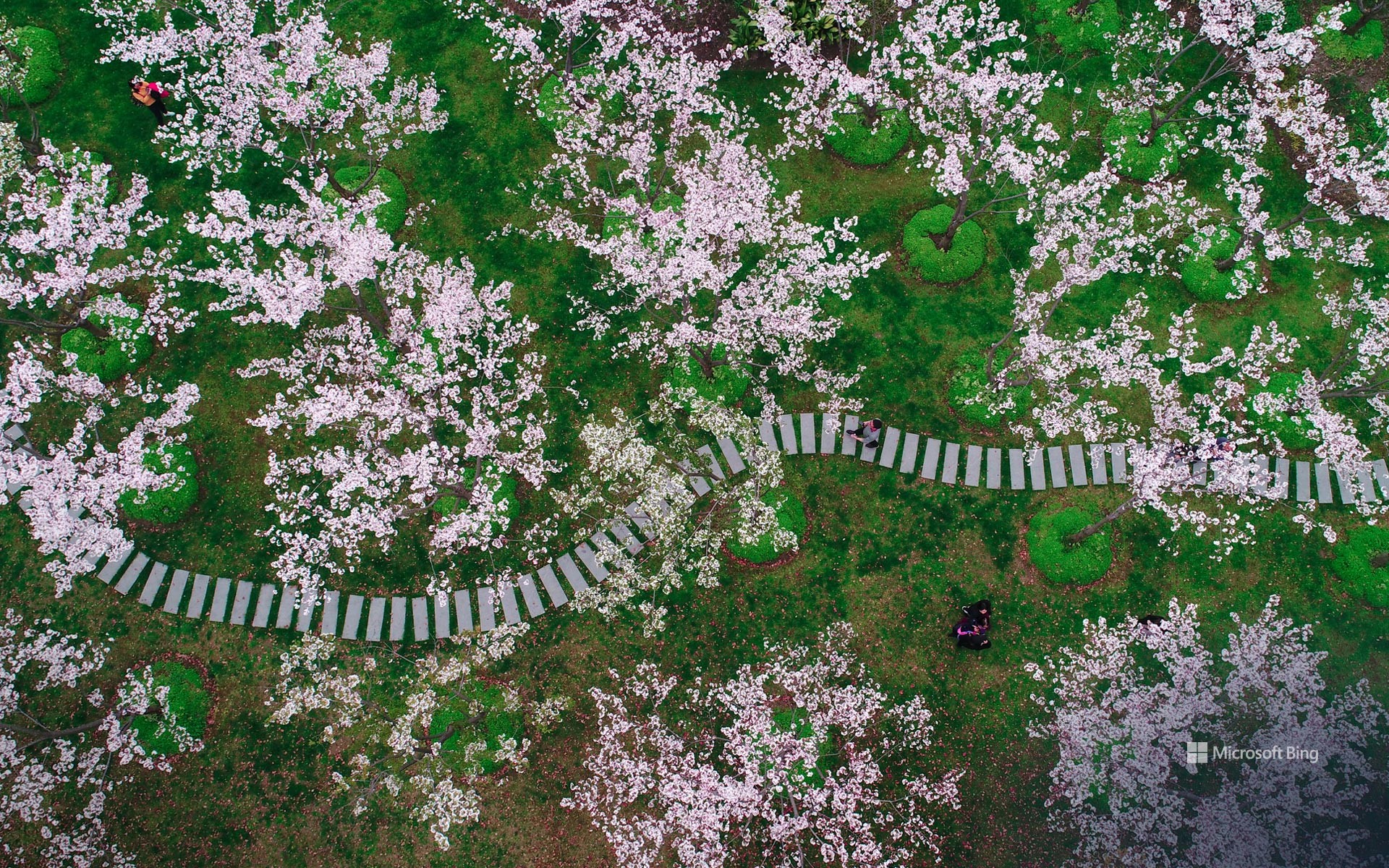
上海的樱花,中国 Cherry blossoms in Shanghai, China (© Yaorusheng/Getty Images)
花香满径 A path through the petals
上海的樱花,中国
春天,大自然展现出勃勃生机,樱花盛开标志着一个季节的开始。在全球范围内,从日本到美国,这一奇观吸引了数百万人的目光。在中国,樱花从3月下旬开到4月下旬,粉色和白色的樱花点缀着一幅幅美景。这些脆弱的花瓣在中国人的传统中有着深远的意义,象征着新生、希望和生命的短暂。中国有很多赏樱地点,包括武汉的东湖樱花公园、上海的顾村公园和鲁迅公园,以及北京的玉渊潭公园。樱花看起来与梅花相似,但区分两者的一个简单方法是看它们的花瓣。樱花的花瓣末端有分叉,而梅花没有。
Cherry blossoms in Shanghai, China
In spring, nature puts on a vibrant display, marking the start of the season with the bloom of cherry blossoms. Around the globe, from Japan to the United States, this spectacle captivates millions of hearts. In China, cherry blossoms, known as 'Yinghua,' bloom from late March to late April, adorning landscapes with delicate hues of pink and white. Revered for centuries by the Chinese, these fragile petals hold profound significance in their traditions, symbolizing renewal, hope, and the transient nature of life. Among popular places to see them are Wuhan's East Lake Cherry Blossom Park, Lu Xun Park in Shanghai, and Beijing's Yuyuantan Park. Cherry blossoms look similar to plum blossoms, but an easy way to distinguish between the two is to look at their petals. Cherry blossom petals have split ends, but plum blossoms don't.
太湖边盛开的樱花,无锡 Cherry blossoms at Tai Lake at Wuxi, China (© Eric Yang/Getty Images)
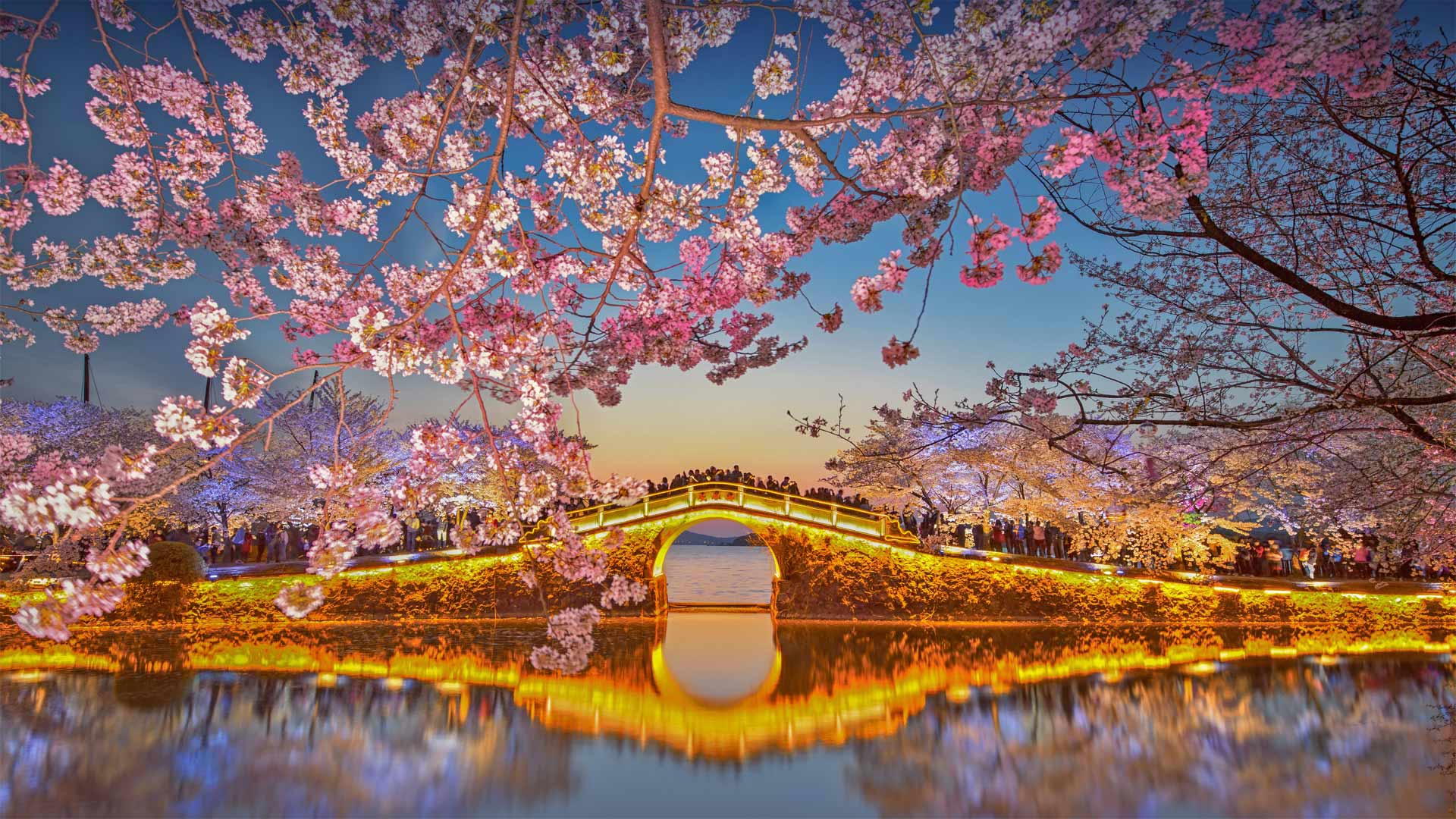
太湖边盛开的樱花,无锡 Cherry blossoms at Tai Lake at Wuxi, China (© Eric Yang/Getty Images)
太湖畔的春天 Spring on the shores of Lake Tai
Cherry trees bloom at Lake Tai in Wuxi, China
The tranquil appearance of Lake Tai belies its location within Wuxi, China, a metropolis of 7.5 million people in the southern Jiangsu province. A short distance to the east is the megacity of Shanghai. But city life feels a world away here at China's third-largest freshwater lake. m More than 20 miles across in places Lake Tai provides a needed retreat from urban life, drawing locals and tourists to its picturesque shores.
There is no more popular time to visit Lake Tai, also known as Lake Taihu, than when its 30,000 cherry trees bloom on Turtle Head Isle, a peninsula that helps form a cove at the north end of the shallow lake. Turtle Head is the perfect launching point for a visit to the lake, where visitors can stroll through scenic trails, formal gardens, bridges, and overlooks.
The cherry trees bloom for about 10 days, usually starting in late March and early April. If the scene evokes thoughts of Japan, you're on the right track as the viewing of blossoms is a long-standing tradition in Japan. In fact, the trees of Lake Tai were a gift from Japanese visitors who helped plant them in Wuxi. Now, there is no doubt when spring arrives.
中国无锡太湖樱花盛开
太湖宁静的外观掩盖了它在中国无锡的位置。无锡是江苏省南部一个拥有750万人口的大都市。往东不远就是上海这座特大城市。但在中国第三大淡水湖,城市生活感觉像是一个世界。在20多英里宽的地方,太湖为人们提供了远离城市生活的必要去处,吸引了当地人和游客来到风景如画的海岸。
游览太湖最受欢迎的时间莫过于它的3万棵樱花在龟头岛上盛开,龟头岛是一个半岛,有助于在浅水湖的北端形成一个海湾。龟头湖是游览该湖的最佳出发点,游客可以在这里漫步穿过风景优美的小径、正式的花园、桥梁和远眺。
樱桃树开花约10天,通常从3月底到4月初开始。如果这个场景让人想起了日本,那么你就走上了正确的道路,因为观赏鲜花是日本的一项长期传统。事实上,太湖的树木是日本游客在无锡帮助种植的礼物。现在,毫无疑问,春天什么时候到来。
金门公园中日本茶园里盛开的樱花,加州旧金山 Cherry blossoms in bloom at the Japanese Tea Garden in Golden Gate Park, San Francisco, California (© luisascanio/iStock/Getty Images)
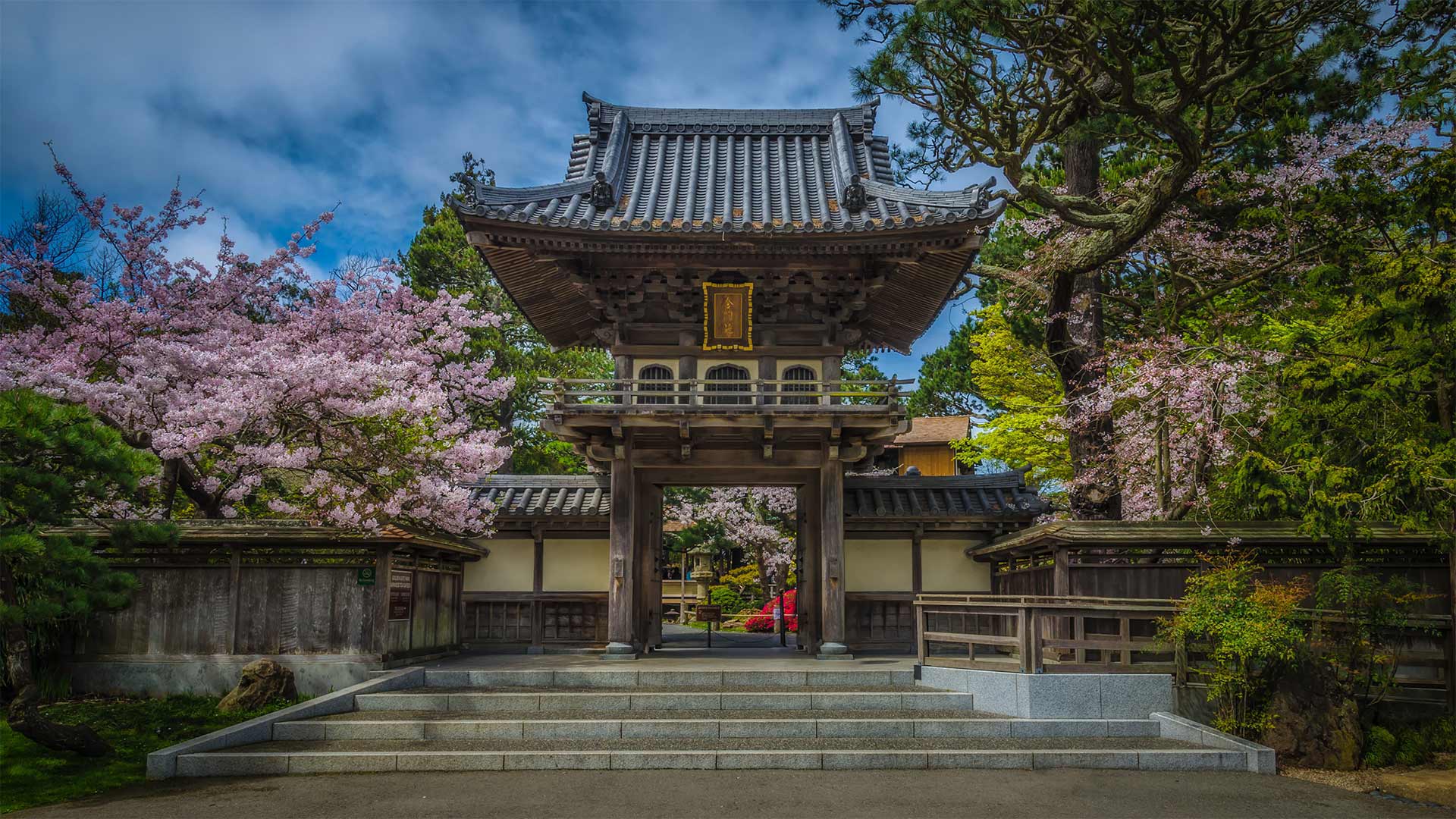
金门公园中日本茶园里盛开的樱花,加州旧金山 Cherry blossoms in bloom at the Japanese Tea Garden in Golden Gate Park, San Francisco, California (© luisascanio/iStock/Getty Images)
It's Asian American and Pacific Islander Heritage Month
With Asian American and Pacific Islander Heritage Month kicking off today, we're visiting the Japanese Tea Garden in San Francisco's Golden Gate Park. Originally designed as a temporary exhibit in the 1894 World's Fair, the gardens became a permanent fixture in the park, overseen by landscape designer Makoto Hagiwara.
Hagiwara poured his money, passion, and talents into giving visitors to the garden an authentic taste of Japanese horticulture. Visitors then and today cross bridges over koi ponds and wander through pagodas and gardens full of native Japanese plants and trees. Hagiwara died in 1925, but his family remained in the house he built on the property until they were sent to an internment camp during World War II and the gardens were renamed 'Oriental Garden.' Once the war was over, the original name returned, but the family did not. Hagiwara's vision lives on in the gardens, and as one example of the millions of Asian and Pacific Islander Americans who've helped build and beautify our nation.
今天是亚裔美国人和太平洋岛民遗产月
今天,随着亚裔美国人和太平洋岛民遗产月的开幕,我们将参观旧金山金门公园的日本茶园。最初设计为1894年世界博览会的临时展览,花园成为公园的永久固定设施,由景观设计师Makoto Hagiwara监督。
Hagiwara倾注了他的金钱、热情和才华,让游客们能真正体验到日本园艺的味道。当时和今天的游客都会跨过锦鲤池塘上的桥梁,漫步在充满日本本土植物和树木的宝塔和花园中。哈吉瓦拉于1925年去世,但他的家人仍住在他在这片土地上建造的房子里,直到他们在二战期间被送到一个拘留营,这些花园被改名为“东方花园”。战争结束后,原名又回来了,但家人没有。哈吉瓦拉的愿景永存于花园之中,是数百万亚太岛民帮助建设和美化我们国家的一个例子。
盛开的樱花和姬路城,日本姬路 Cherry blossoms and Himeji Castle in Himeji, Japan (© Tororo/Getty Images)
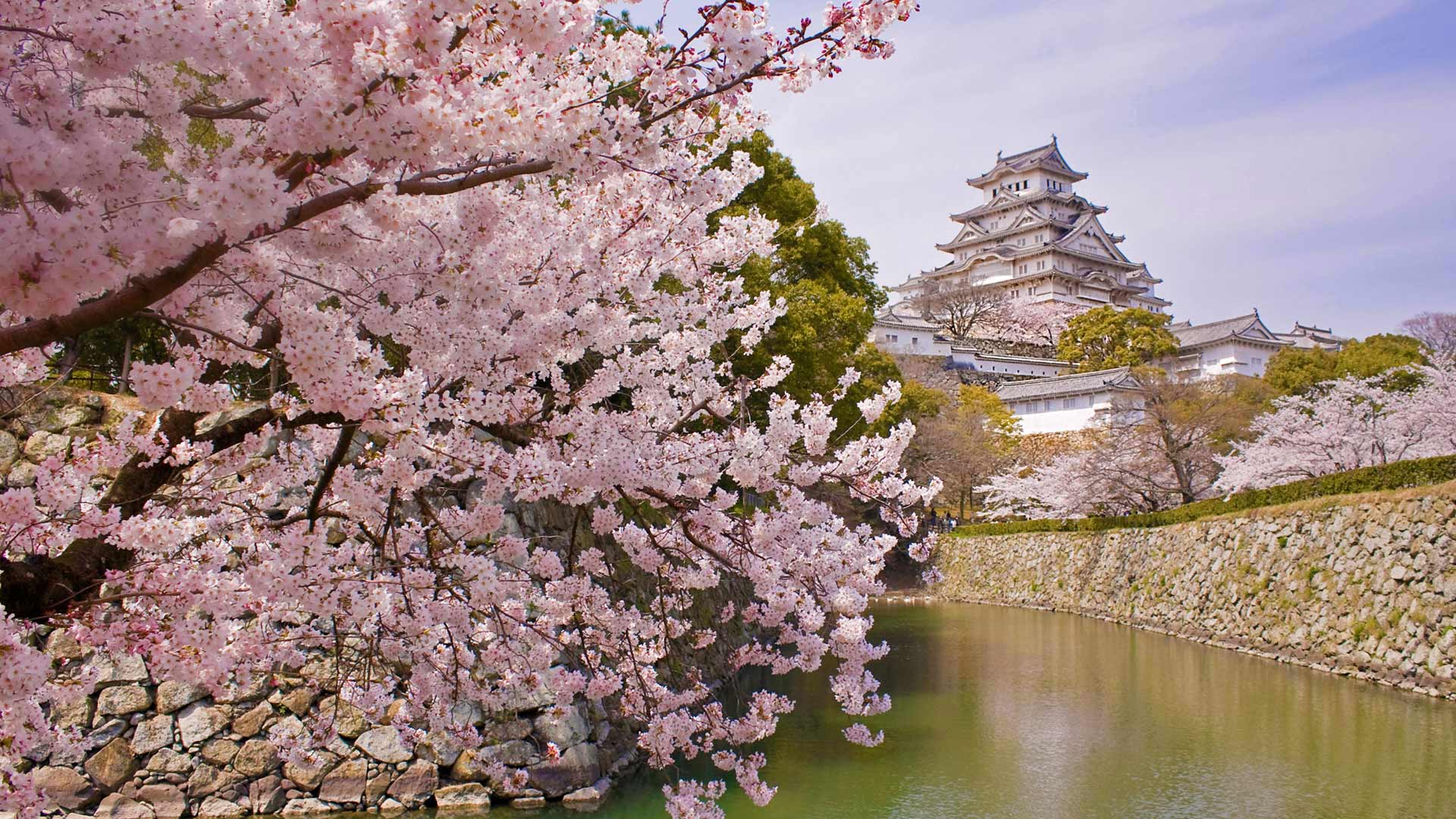
盛开的樱花和姬路城,日本姬路 Cherry blossoms and Himeji Castle in Himeji, Japan (© Tororo/Getty Images)
Castle on a hill
In honor of Castle Day in Japan, we're featuring Himeji Castle—one of the most pristine examples of traditional Japanese castle architecture, and a UNESCO World Heritage Site. Castle Day is on April 6 (or 4/6) because the Japanese character for castle (城) is read as 'shiro,' and the Japanese pronunciation of 'four' is 'shi' and 'six' is 'ro.' Samurai warrior Akamatsu Norimura built Himeji Castle in 1333 as a fortress. Over the years, the structure has undergone many remodels, and several buildings were added as it changed hands. The castle even survived WWII unscathed while surrounding areas were bombed mercilessly.