地坛公园秋日美景,北京,中国 Beijing autumn ditan park view beautiful fall (© by Wei/Adobestock)
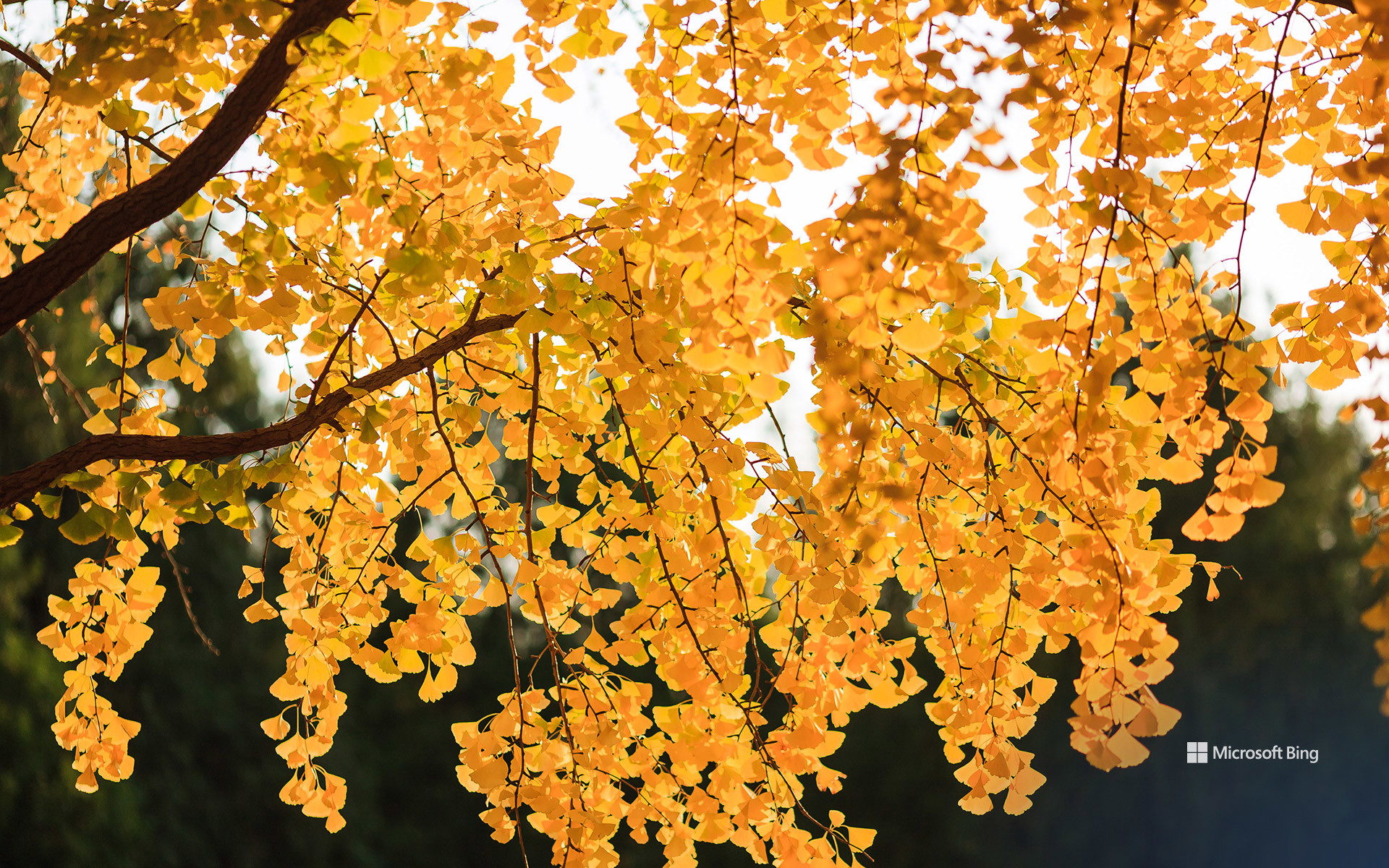
地坛公园秋日美景,北京,中国 Beijing autumn ditan park view beautiful fall (© by Wei/Adobestock)
金秋平分,地坛染黄 Golden leaves of the Autumn Equinox
地坛公园银杏大道,北京,中国
金色地毯通常只出现在童话世界里,但在金秋时节的北京,它们却铺展在你的脚下。地坛公园(方泽坛)著名的银杏大道汇聚了200多株历史悠久的银杏树。每当秋风掠过,数以万计的扇形金叶翩翩飘落,将这座古老的皇家坛庙铺垫成一片如梦似幻的金黄海洋。
地坛始建于明代嘉靖九年(1530年),曾是明清两代帝王在秋分时节祭祀“皇地祗”神明的地方。如今,当太阳直射赤道、昼夜再次平分,这座庄严的皇家坛庙不再只有岁月的肃穆,而是在光影与斑斓色彩中蜕变为自然与历史交融的避风港,静静诉说着古都数百年的时空变迁。
在清晨和煦的秋阳下,朱红的宫墙、古朴的黛瓦与熠熠生辉的金叶交相辉映,勾勒出绝美的高古意境。正如文学大师史铁生在《我与地坛》中所描绘的那样,地坛始终守护着这份宁静与包容,倾听着风吹落叶的沙沙响声,邀请每一位游人在喧嚣的现代都市深处放慢脚步,体味岁月留下的温润与悠长。
元宵节期间悬挂的宫灯,北京自贡灯会现场,北京,中国 Palace lanterns hung during the Lantern Festival, Zigong Lantern Festival in Beijing, Beijing, China (© Grisha Bruev/Shutterstock)

元宵节期间悬挂的宫灯,北京自贡灯会现场,北京,中国 Palace lanterns hung during the Lantern Festival, Zigong Lantern Festival in Beijing, Beijing, China (© Grisha Bruev/Shutterstock)
花灯映月,团圆吉祥 Happy and reunited days
元宵节
元宵节是中国农历新年的重要节日,通常在正月十五庆祝。人们会吃汤圆(象征团圆)并欣赏各式灯笼,寓意团圆、幸福与吉祥。节日期间,家庭聚会、赏灯和灯谜活动都非常受欢迎,是春节庆祝活动的延续。
北京自贡灯会是元宵节期间最具特色的灯会之一,汇集了丰富多彩的宫灯、动物灯和民俗灯组。每一盏灯都巧妙设计、栩栩如生,为观众呈现一场视觉盛宴。灯会不仅展示精湛工艺,也传递了节日的喜庆与吉祥氛围。
雪中的故宫,中国北京 The Forbidden City in Snowfall, Beijing, China (© Ian.CuiYi/Getty Images)

雪中的故宫,中国北京 The Forbidden City in Snowfall, Beijing, China (© Ian.CuiYi/Getty Images)
雪落下的声音 The sound of snow falling
大雪节气
今天是中国传统二十四节气中的大雪节气。大雪的到来预示着气温将逐渐降低,冬季降水量也将增加。大雪期间,中国大部分地区已进入严冬,北方部分地区的气温甚至会降至零度以下。北方大地呈现出“万里冰封”的壮丽景象,而南方则展现出“雪花飘舞,万物银装素裹”的迷人景色。
今日照片中的紫禁城,在飘雪时分显得格外有韵味。宫墙披上银装,屋檐斗拱更显恢弘。雪花轻柔飘落,宛若纤柔的飞舞花瓣,营造出极致浪漫的意境。斑驳的光影让每个角落都成为绝美的画卷。
国家游泳中心, 中国北京 The National Aquatics Center in Beijing, China (© Han Haidan/China News Service via Getty Images)
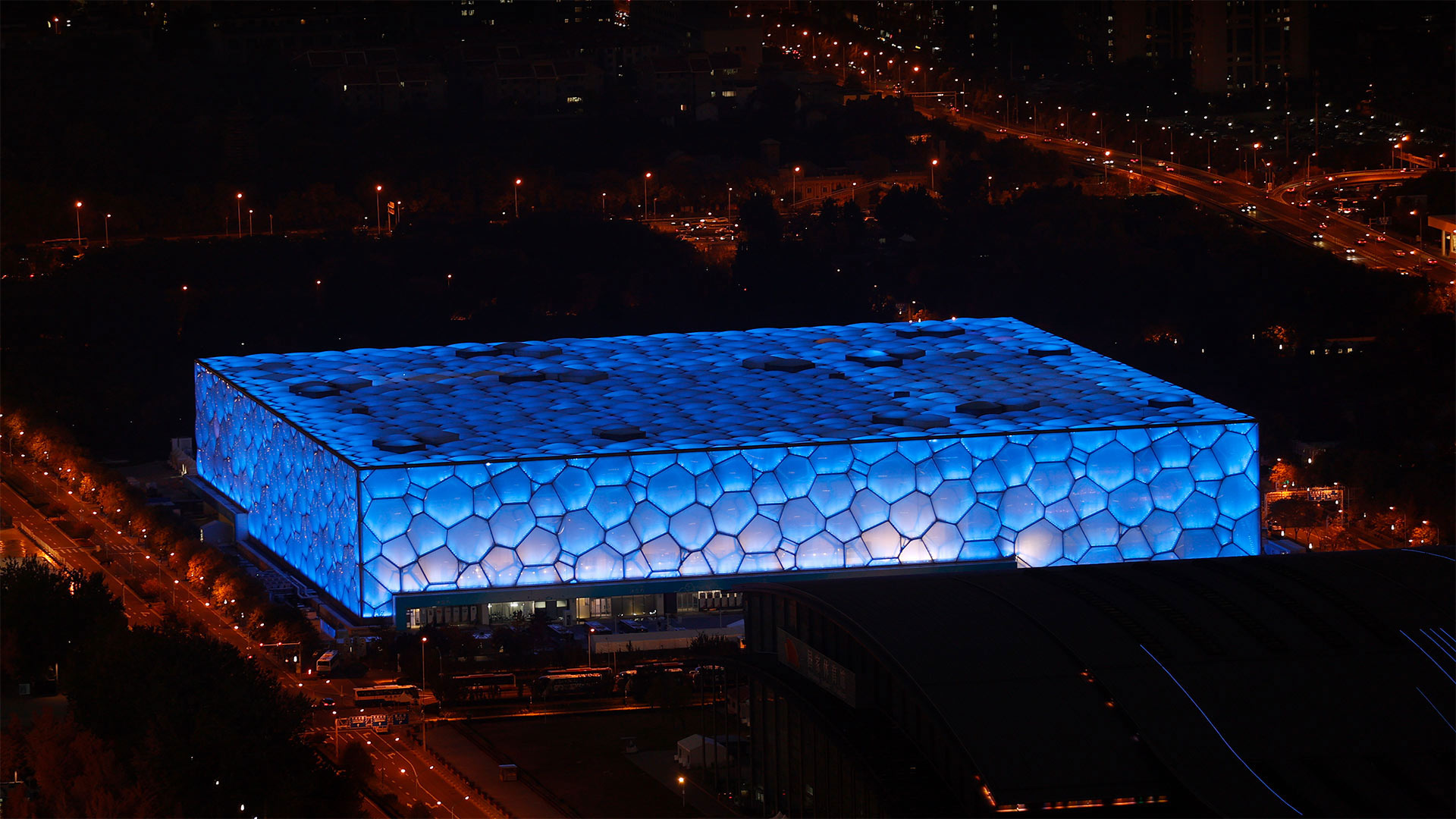
国家游泳中心, 中国北京 The National Aquatics Center in Beijing, China (© Han Haidan/China News Service via Getty Images)
Beijing's winter bubble 北京的冬季泡沫
2022 Winter Paralympics
The 2022 Winter Paralympics begins today in Beijing, as the Chinese capital becomes the first city to host both the summer and winter editions of the Paralympic Games. Over the next 10 days, about 600 athletes will compete in 78 different events across six sports—alpine skiing, cross-country skiing, biathlon, snowboarding, para ice hockey, and wheelchair curling. All the events will take place in a strict Covid 'bubble' system to ensure a safe and successful Games.
Speaking of bubbles, today we're looking at the National Aquatics Center, a box-shaped building that will host the wheelchair curling events. The design of the bubble-wrapped façade—made from a thin, transparent material called ETFE—is based on the Weaire–Phelan geometric structure, which is derived from the natural pattern of bubbles in soap lather. The venue was originally constructed to host the swimming, diving, and synchronized swimming competitions at the 2008 Summer Olympics and Paralympics. But its pool has been turned into an ice rink for the winter events, making it the first sports arena in the world that can switch between water and ice.
2022年冬季残奥会
2022年冬季残奥会今天在北京开幕,中国首都成为第一个举办夏季和冬季残奥会的城市。在接下来的10天里,大约600名运动员将参加78个不同项目的比赛,包括高山滑雪、越野滑雪、冬季两项、单板滑雪、para冰球和轮椅冰壶。所有活动都将在严格的新冠病毒“泡沫”系统中进行,以确保安全和成功的奥运会。
说到泡泡,今天我们来看看国家游泳中心,这是一座长方形的建筑,将举办轮椅冰壶比赛。泡沫包裹立面的设计是基于Weaire–Phelan几何结构,由一种称为ETFE的薄透明材料制成,该几何结构源自肥皂泡中气泡的自然图案。该场馆最初用于举办2008年夏季奥运会和残奥会的游泳、跳水和花样游泳比赛。但它的游泳池已经变成了冬季赛事的溜冰场,成为世界上第一个可以在水和冰之间切换的运动场。
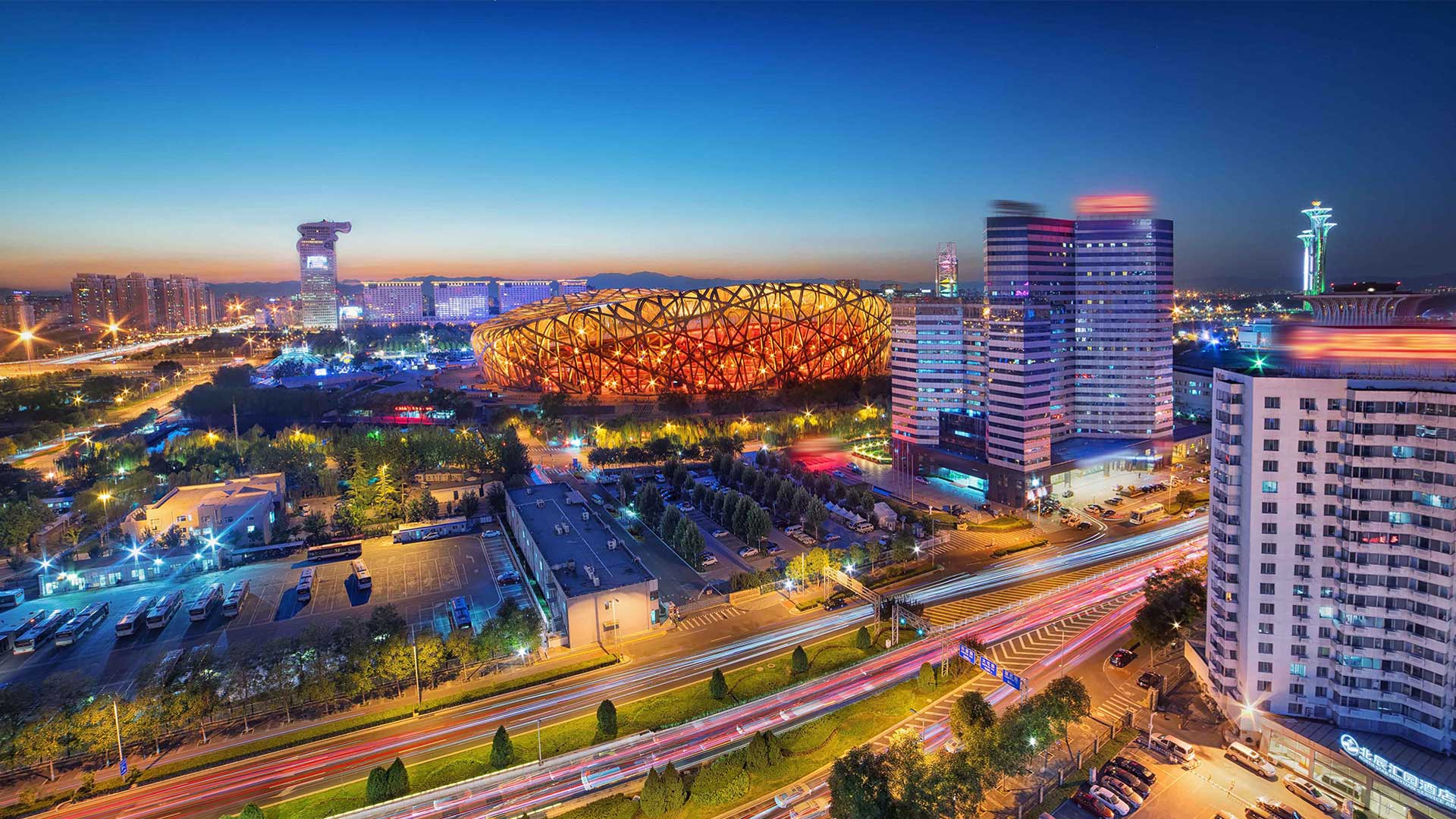
亚运村夜景,北京 (© ViewStock/Getty Images)
石林峡风景区玻璃观景台, 中国北京平谷 Glass sightseeing platform in Shilinxia Scenic Area, Pinggu District of Beijing, China (© STR/AFP via Getty Images)
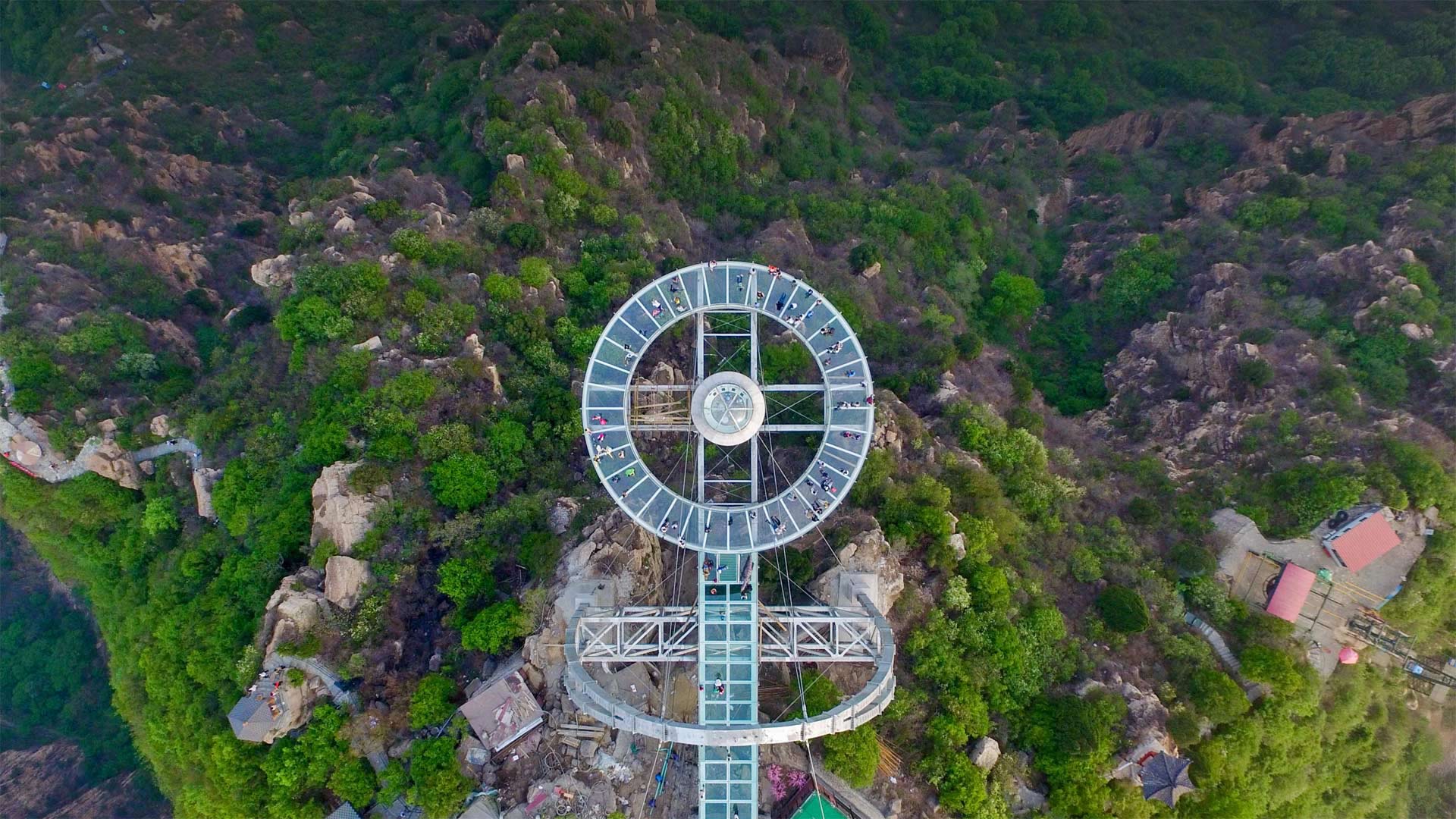
石林峡风景区玻璃观景台, 中国北京平谷 Glass sightseeing platform in Shilinxia Scenic Area, Pinggu District of Beijing, China (© STR/AFP via Getty Images)
Spectacular views below!
When residents of the bustling metropolis of Beijing, China, need a break from their daily grind, many will head about 45 miles north of the city to take in the sights at the Shilinxia Scenic Area. Meaning 'Gorge of Stone Forest,' Shilinxia is a protected 7-and-a-half mile gorge which, since 2016 has featured an amazing main attraction—one of the world's largest glass sightseeing platforms.
If you're scared of heights, this platform may not be for you, as it sits roughly 1,300 feet above the valley floor and juts out nearly 108 feet from the tallest point in the gorge. But don't worry: Even though it may inspire a bit of vertigo and has been known to sway a bit with the wind, the platform is perfectly safe—the glass floor is reinforced by titanium alloys. Once out on the platform, viewers can look down through glass into the rugged sandstone rocks and forest of the Shilinxia gorge below. It's easy to also catch a glimpse of some local landmarks, including the nearby Huangsongyu reservoir, Diaowo Village, and the Shilin River.
下面是壮观的景色!
当中国北京这座繁华都市的居民需要从日常工作中休息一下时,许多人将前往北京以北45英里处的石林峡风景区游览。石林峡的意思是“石林峡谷”,是一个受保护的7.5英里长的峡谷,自2016年以来,石林峡一直是世界上最大的玻璃观光平台之一。
如果你怕高,这个平台可能不适合你,因为它坐落在大约1300英尺以上的谷底和突出近108英尺的最高点在峡谷。但别担心:尽管它可能会引起一点眩晕,而且已知会随风摇摆一点,但平台是完全安全的——玻璃地板由钛合金加固。一旦登上月台,观众可以透过玻璃俯瞰下面石林峡崎岖的砂岩和森林。也很容易看到一些当地的标志性建筑,包括附近的黄松峪水库、刁窝村和石林河。
北京颐和园昆明湖上的十七孔桥,中国 The Seventeen-Arch Bridge over Kunming Lake in Beijing Summer Palace, China (© Jia Wang/Getty Images)
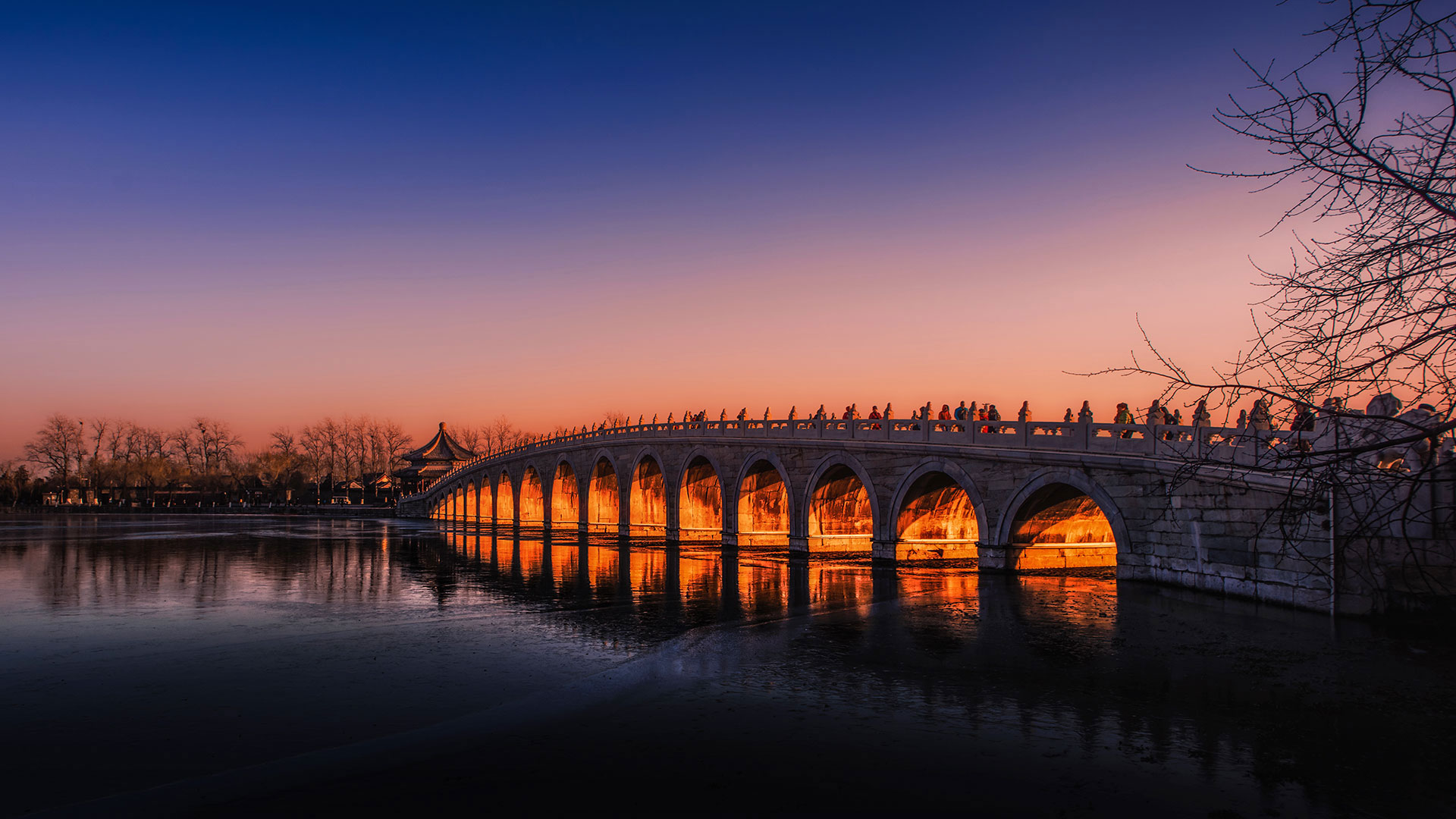
北京颐和园昆明湖上的十七孔桥,中国 The Seventeen-Arch Bridge over Kunming Lake in Beijing Summer Palace, China (© Jia Wang/Getty Images)
Seventeen arches at sunset
When it's winter solstice time in the Northern Hemisphere, the setting sun shines under the Seventeen-Arch Bridge of the Summer Palace in Beijing, causing this romantic glow. In the 18th century, during the reign of the Qing dynasty of China, Emperor Qianlong ordered the construction of this 1.1 square mile collection of gardens, lakes, and various structures including temples and small palaces. Today it's one of Beijing's premier attractions and will be crowded today with visitors headed to the bridge in time for sunset.
An aerial view of Daxing International Airport in Beijing (© Xinhua/Alamy)
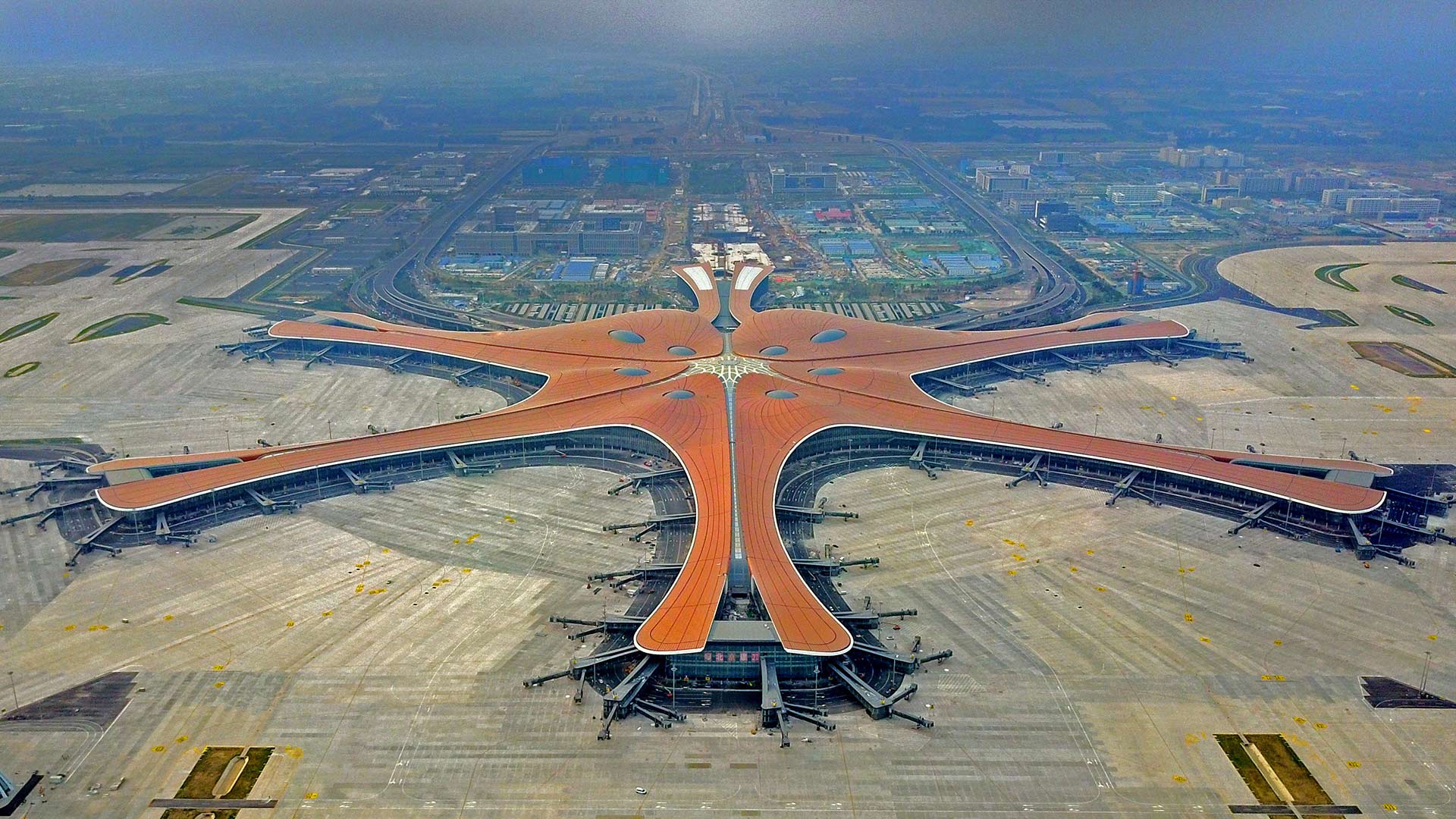
An aerial view of Daxing International Airport in Beijing (© Xinhua/Alamy)
Wheels up in Beijing
Last Wednesday, September 25, China officially opened the world's largest airplane terminal, Beijing Daxing International Airport. Constructed to alleviate pressure on the city's existing airport, Beijing Capital International, the bright orange starfish look-alike took more than four years to construct. And travelers, hold on to your hats, because Daxing International will connect to China's capital city—about 30 miles away—with a high-speed train that travels at top speeds of more than 200 mph.
Sitting on 18 square miles of land, the massive terminal was designed by legendary architect Zaha Hadid, who also masterminded China's Guangzhou Opera House. In a nod to traditional Chinese architecture, the building consists of a central hub with six curved spokes—bringing organization to the interconnected spaces around a central courtyard and minimizing the building's environmental footprint. Inside, passengers will feel like they're in anything but an airport with dark, polished-stone floors and white ceilings that open intermittently to big, beautiful skylights.