在纳瓦霍族保留地的纪念碑谷,亚利桑那州,美国 Monument Valley, Navajo Nation, Arizona, USA (© Westend61/Adobe Stock)

在纳瓦霍族保留地的纪念碑谷,亚利桑那州,美国 Monument Valley, Navajo Nation, Arizona, USA (© Westend61/Adobe Stock)
旷野无声,活态传承之境 A landscape of living heritage
纪念碑谷在纳瓦霍族保留地,亚利桑那州,美国
在纳瓦霍族保留地,亚利桑那州与犹他州交界处,美国,有些景观举世闻名,而纪念碑谷则堪称传奇。这一沙漠奇观横跨州界,其地貌由高耸的砂岩孤峰塑造而成,这些孤峰从谷底拔地而起,高度可达1000英尺。在纳瓦霍语中,该地区被称为 Tsé Bii' Ndzisgaii(意为“岩石之谷”),它将壮丽的地质构造与鲜活的民族文化完美融合。
山谷标志性的红色源于砂岩中蕴含的氧化铁与锰;而纳瓦霍传说则讲述了另一个故事:著名的米滕孤峰——这些标志性的砂岩地貌——是巨人在一场大战后散落在地上的双手。自导演约翰·福特在《关山飞渡》和《搜索者》等经典影片中将其作为取景地后,纪念碑谷便成为了好莱坞公认的“西部荒野”背景。如今,游客可以驻足于“约翰·福特点”,这是该地区最著名的取景地之一。
一条17英里长的自驾景观路揭示了山谷的标志性地标,而由纳瓦霍人向导带领的深度游则提供了进入私人领地和获取更深层文化洞察的机会。在这里,每一处岩石地貌都承载着属于自己的独特故事。
Monument Valley, Navajo Nation, Arizona
Some landscapes are famous. Monument Valley is legendary. Straddling the Arizona–Utah border within the Navajo Nation, this desert wonder is shaped by towering sandstone buttes that rise as much as 1,000 feet above the valley floor. Known in Navajo as Tsé Bii' Ndzisgaii—'valley of the rocks'—the region blends dramatic geology with living culture.
The valley's iconic red hue comes from iron oxide and manganese in the sandstone, while Navajo legend tells a different story: the famous Mitten Buttes—iconic sandstone formations—are the hands of a giant scattered across the Earth after a great battle. Monument Valley became Hollywood's go-to Wild West backdrop after director John Ford featured it in classics such as 'Stagecoach' and 'The Searchers.' Today, visitors can stop at John Ford's Point, one of the area's most photographed viewpoints.
A self-guided, 17-mile scenic drive reveals the valley's landmarks, while Navajo-led tours provide access to hidden sites and deeper cultural insights. Here, every rock formation carries its own story.
2015年4月4日摄于Tear Drop Arch附近的月全食,犹他州纪念碑谷 The total lunar eclipse of April 4, 2015, taken from near Tear Drop Arch, in western Monument Valley, Utah (© Alan Dyer/Alamy)
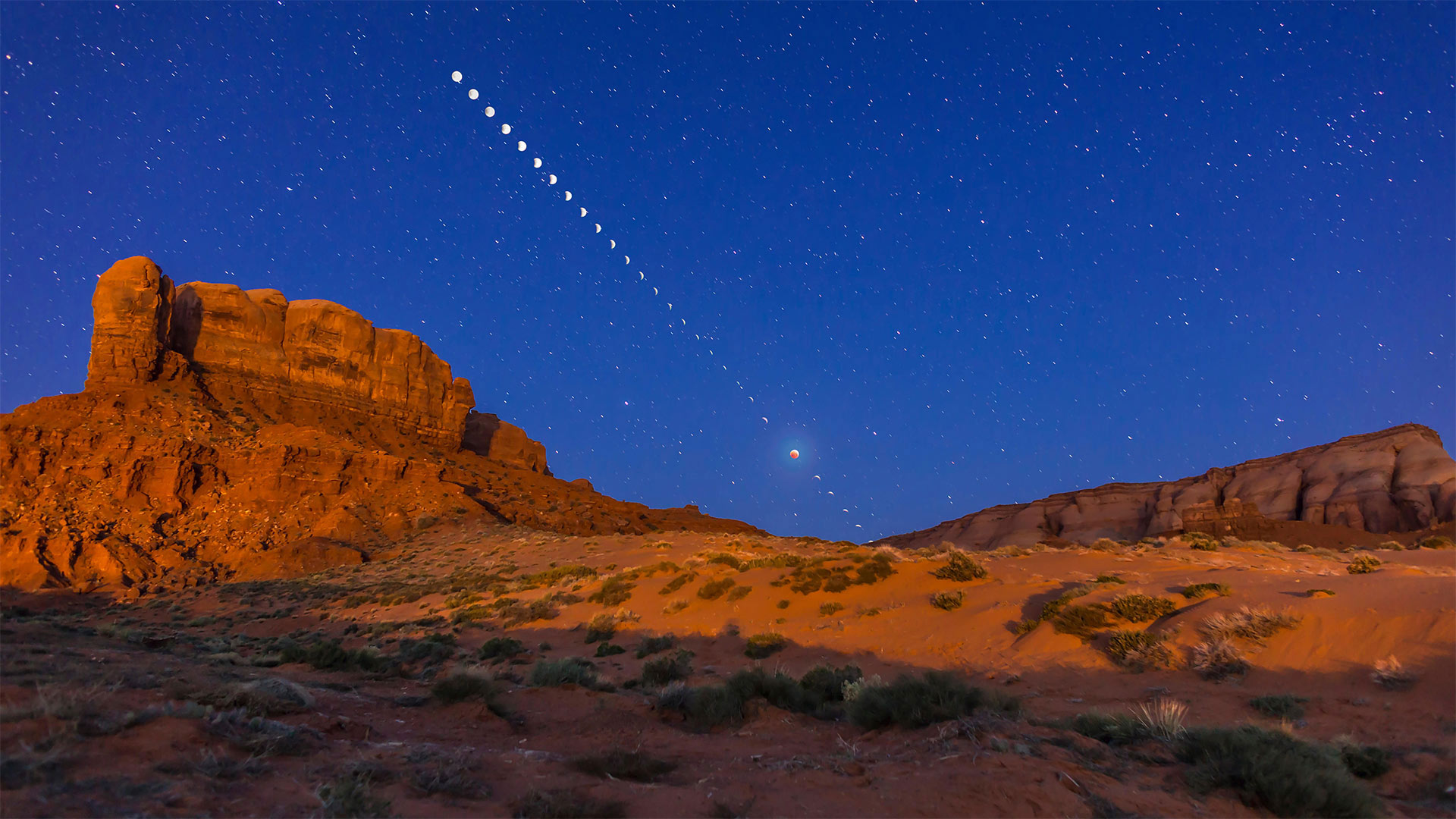
2015年4月4日摄于Tear Drop Arch附近的月全食,犹他州纪念碑谷 The total lunar eclipse of April 4, 2015, taken from near Tear Drop Arch, in western Monument Valley, Utah (© Alan Dyer/Alamy)
Behold the blood moon
We've heard the phrase 'many moons,' but never took it this literally. We're looking at 28 merged photos of our one and only moon over Utah's Monument Valley: 26 snapshots of its partial phases, plus two layered exposures of the eclipsing moon at center.
If the weather's agreeable tonight, folks in the US and many other parts of the world are in for a total 14-minute eclipse of the full moon similar to this one from 2015. The lunar eclipse is sometimes called a blood moon for the crimson shadow Earth casts on the lunar surface, and tonight's show carries a little extra gravity: The eclipse will occur as the moon takes its closest pass to Earth this year, making it appear large in the sky and giving it the ominous title of Super Blood Moon.
看血月
我们听过“许多月亮”这句话,但从来没有这样的字面意思。我们正在看28张合并后的照片,这是犹他州纪念碑谷上空我们唯一的一个月亮:26张部分相位的快照,加上两层日食月亮的中心曝光。
如果今晚天气宜人,美国和世界其他许多地方的人们将迎来一次14分钟的满月全食,与2015年的这次月食相似。月食有时被称为血月,因为地球在月球表面投下了深红色的阴影,今晚的节目还有一点额外的引力:今年月亮离地球最近的时候会发生月食,使它在天空中显得很大,并给它一个不祥的称号“超级血月”。
从亨茨梅萨俯瞰纪念碑谷,亚利桑那州与犹他州之间纳瓦霍族保留地 A view of Monument Valley Navajo Tribal Park from Hunts Mesa, Navajo Nation, between Arizona and Utah (© AWL Images/Danita Delimont)
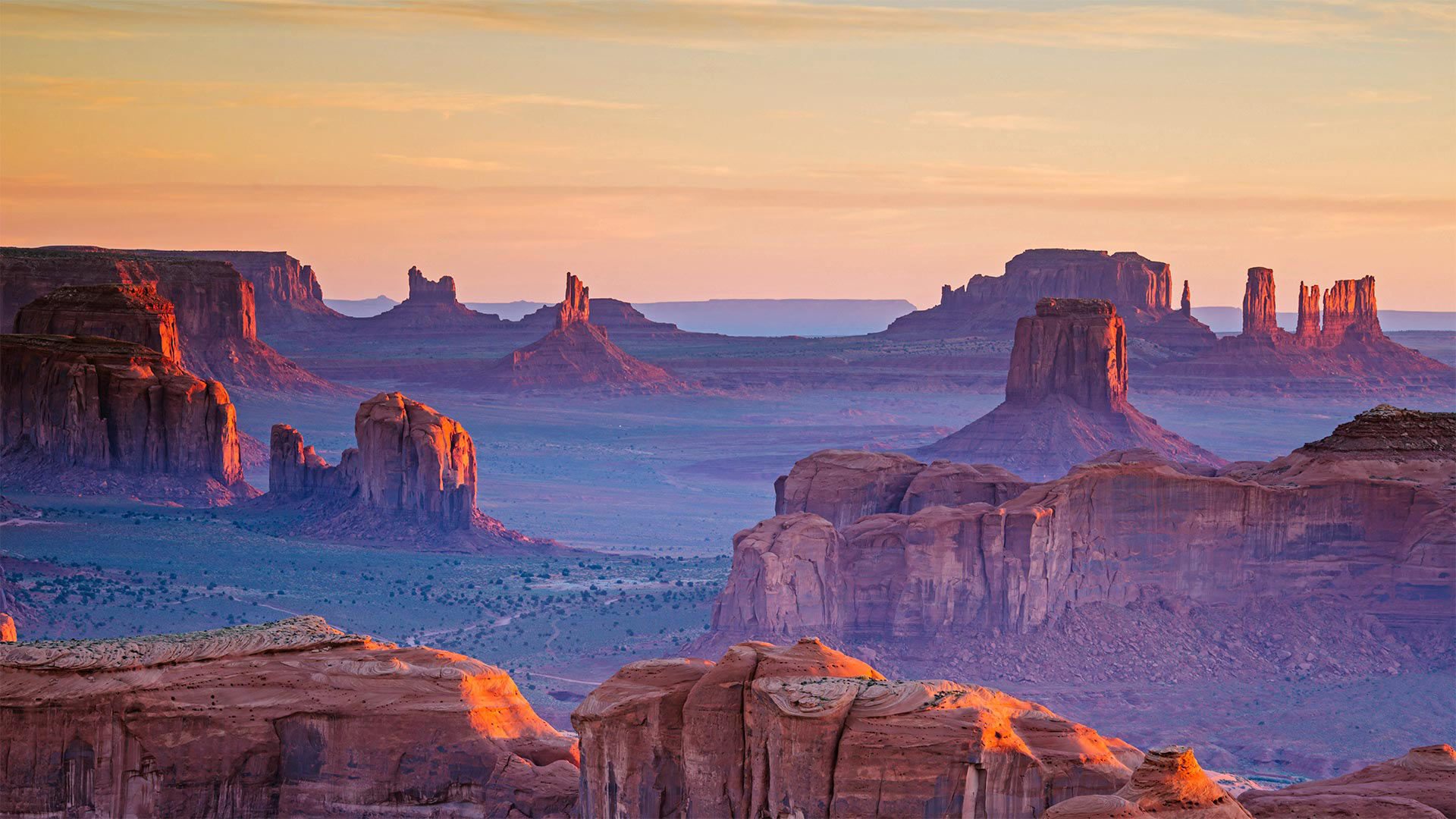
从亨茨梅萨俯瞰纪念碑谷,亚利桑那州与犹他州之间纳瓦霍族保留地 A view of Monument Valley Navajo Tribal Park from Hunts Mesa, Navajo Nation, between Arizona and Utah (© AWL Images/Danita Delimont)
A monumental view of 'Tsé Biiʼ Ndzisgaii'
This expansive and iconic view, taken from Hunts Mesa in the Navajo Nation, is none other than Monument Valley, also known as the Valley of the Rocks when translated from the Navajo language (Tsé Biiʼ Ndzisgaii). The red sandstone formations are synonymous with the American Southwest and have stunned moviegoers for nearly a century. The largest of American Indian territories, Navajo Nation covers more than 27,000 square miles and reaches into portions of Arizona, Utah, and New Mexico.
During World War II, an elite team of Navajos left their homes to join the US Marine Corps and solve a communications challenge. In the Pacific, many of the US combat codes had been cracked by the Japanese army and navy, leaving US troops vulnerable to attack by Axis forces. But in 1942, the first 29 Navajo recruits helped develop a new undecipherable code. They used common words and phrases from their tribal language to convey some messages and created special codes to describe military terms; for instance, various weapons of war were assigned Navajo bird names. Code Talkers could encode, send, and decode a three-line English message text—without error—in roughly 20 to 150 seconds. It took machines of the day at least 30 minutes, sometimes longer, to do the same thing.
Some say the US would not have prevailed at the fiercely fought Battle of Iwo Jima had it not been for the Navajo Code Talkers' contributions. And yet, their contributions would go unknown until the program was finally declassified in 1968. Navajo Code Talkers Day was established on August 14, 1982 to commemorate the elite team as well as other Native Americans and First Nations people who had developed codes used in other conflicts. It's a fascinating history that you can learn more about by taking our quiz.