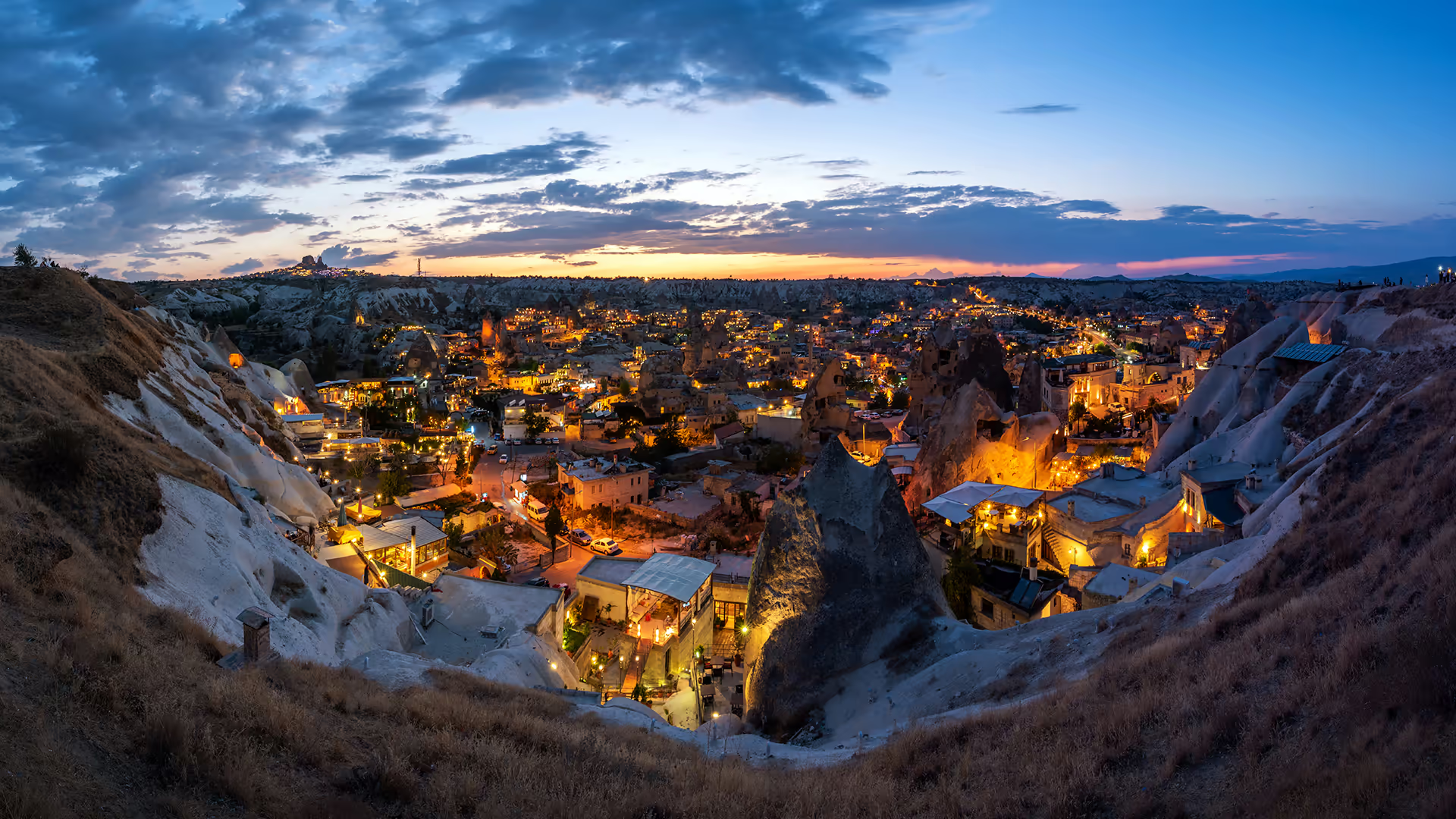
格雷梅的傍晚, 卡帕多西亚, 土耳其 Evening over Göreme, Cappadocia, Türkiye (© ONNAJA/Getty Images)
格雷梅的傍晚, 卡帕多西亚, 土耳其 Evening over Göreme, Cappadocia, Türkiye (© ONNAJA/Getty Images)
古老岩石,现代灯光 Ancient rocks, modern lights
格雷梅的傍晚, 卡帕多西亚, 土耳其
黄昏时分,卡帕多西亚格雷梅地区的地貌逐渐显现。这片区域隶属于格雷梅国家公园与卡帕多西亚岩石遗址,1985年入选世界遗产名录。“精灵烟囱”等地貌源自安那托利亚火山喷发形成的火山灰层,随后经风与水长期侵蚀,雕刻出石柱、山脊与谷地。
这些地貌承载着数千年的人类居住史。自晚期古代开始,人们顺着岩石可塑、保温的特性,直接凿刻出住宅、教堂与修道院。不少遗址仍留存10至11世纪的拜占庭壁画,反映出该地区延续已久的宗教生活。画面中灯火通明的小镇凸显了古今交织的景象。今天,格雷梅仍是进入卡帕多西亚步道、观景平台与岩刻遗产的重要入口,这片土地由地质演化与人类坚韧共同塑成。
Evening over Göreme, Cappadocia, Türkiye
As evening settles over the town of Göreme in the heart of the Cappadocia region of Türkiye, dusk reveals a landscape forged by nature and centuries of human presence. This scene is part of Göreme National Park and the Rock Sites of Cappadocia, a UNESCO World Heritage Site inscribed in 1985 for its exceptional combination of early cultural history and geological formations. These formations, often called 'fairy chimneys' or hoodoos, began as layers of volcanic ash that hardened into soft stone following eruptions of ancient Anatolian volcanoes. Over time, wind and water carved the pillars, ridges, and valleys that define the region today.
People have lived among these landforms for millennia. From Late Antiquity onward, residents carved homes, chapels, and monasteries directly into the rock, taking advantage of the stone's workable texture and natural insulating qualities. Many of these structures still contain 10th‑ and 11th‑century Byzantine frescoes, reflecting the region's long-standing tradition of religious life. The illuminated town in today's image highlights how past and present coexist. Today, Göreme remains a gateway to Cappadocia's trails, viewpoints, and rock‑cut heritage—an experience sculpted by geological forces and human resilience.
评论已关闭