盛开的桃树, 谢萨, 穆尔西亚, 西班牙 Peach trees in bloom, Cieza, Murcia, Spain (© Juan Maria Coy Vergara/Getty Images)

发布于 , 468 次浏览

 盛开的桃树, 谢萨, 穆尔西亚, 西班牙 Peach trees in bloom, Cieza, Murcia, Spain (© Juan Maria Coy Vergara/Getty Images)

一个美好的春天 A peachy keen spring

谢萨的桃树,穆尔西亚, 西班牙

在谢萨,春天的到来别具一格。它并非缓缓展开,而是色彩缤纷,绚烂夺目。每年二月至三月,这座位于西班牙穆尔西亚地区的小城便成为“花期”(La Floración)的中心,也就是桃树盛开的季节。短短几天内,超过12000英亩的土地——西班牙最大的城市桃园——便会变成我们今天看到的这片色彩斑斓的海洋。

桃子是切萨镇不可或缺的一部分。这里的农民沿袭古罗马的种植技艺,年复一年地精益求精。他们的辛勤耕耘结出了丰硕的果实?便是远近闻名的切萨桃,这种桃子皮薄如天鹅绒,香气扑鼻,饱含着这片土地的阳光、土壤和历史。

在短短几周的盛花期里,缤纷的色彩和芬芳的气息吸引着游客走进果园,带动了当地市场、农业旅游以及“花卉节”等庆祝活动。随着花朵凋谢,它们留下了丰收的希望,以及一种持续到春天之后的甜蜜。

Peach trees in Cieza, Murcia, Spain

Spring hits differently in Cieza. It doesn't gently unfold—it erupts with color. Between February and March, this small city in Spain's Murcia region is the epicenter of 'La Floración,' the flowering of peach trees. In a matter of days, more than 12,000 acres—Spain's largest municipal peach production—transform into the sea of color we see in today's image.

Peaches are woven into Cieza's identity. Here, farmers build on ancient Roman techniques, refining the craft season after season. The fruit of their effort? The renowned Cieza Peach, a velvet-skinned, fragrant fruit that carries the sun, soil, and history of the land.

For a few intense weeks, color and scent pull visitors into the orchards, fueling local markets, agritourism, and celebrations like the 'Fiesta de la Floración.' As the blossoms fade, they leave behind the promise of harvests to come—and a sweetness that lingers well beyond spring.

赫韦拉韦利尔的布拉赫维尔地热池, 冰岛 Geothermal blue pool Bláhver at Hveravellir, Iceland (© Juan Maria Coy Vergara/Getty Images)

发布于 , 1127 次浏览

赫韦拉韦利尔的布拉赫维尔地热池, 冰岛 Geothermal blue pool Bláhver at Hveravellir, Iceland (© Juan Maria Coy Vergara/Getty Images)

霜下之火 Fire under frost

布拉赫维尔, 赫韦拉韦利尔, 冰岛

你是否曾好奇,当火焰、冰霜和时间交汇于同一片土地,会发生什么?冰岛的赫韦拉韦利尔地热田或许能解答你的疑问。在这片高地热点地区,地球内部的能量与冰冷的地表相遇,引发了压力、温度和岩石之间一场激烈的对话。喷气孔嘶嘶作响,蒸汽袅袅升腾,大地被染成硫磺白、铁锈红和赭黄——这不仅是艺术,更是极端高温驱动的化学反应。在今天的照片中,布拉赫韦尔天然温泉呈现出耀眼的电光蓝。这种颜色源于富含矿物质和二氧化硅的泉水反射光线。

赫韦拉韦利尔位于两座巨大的冰川——朗格冰川和霍夫斯冰川之间,是冰岛冰封核心地带一块不可思议的温暖绿洲。几个世纪以来,旅行者们在此驻足休息,以求平安度过接下来的旅程。由于与世隔绝,这片土地至今仍保持着原始的野性,骄傲地展现着维持地球运转的原始力量。

Bláhver, Hveravellir, Iceland

Have you ever wondered what happens when fire, ice, and time negotiate the same territory? Iceland's Hveravellir geothermal field has the answer. In this highland hotspot, energy from the Earth's interior meets the icy surface, triggering a volatile dialogue between pressure, temperature, and stone. Fumaroles hiss, steam curls into the air, and the ground paints itself with sulfur whites, rust reds, and ochre yellows—not only artistry, but chemical reactions driven by extreme heat. In today's image, Bláhver, a natural hot spring, dazzles in electric blue. Its color comes from mineral- and silica-rich waters that reflect light on the surface.

Hveravellir lies between two massive glaciers, Langjökull and Hofsjökull, an improbable island of warmth in Iceland's frozen core. For centuries, travelers paused here to rest and survive the crossing. Preserved by its isolation, the land remains unfinished and restless, proudly displaying the raw forces that keep the planet awake.

乌尔姆市政厅的天文钟, 德国 Astronomical clock at Town Hall of the City of Ulm, Germany (© Tomekbudujedomek/Getty Images)

发布于 , 466 次浏览

乌尔姆市政厅的天文钟, 德国 Astronomical clock at Town Hall of the City of Ulm, Germany (© Tomekbudujedomek/Getty Images)

节约日光的艺术 The art of saving daylight

夏令时

每年三月,美国大部分地区开始实行夏令时,时钟拨快以最大限度地利用日光。这一想法可以追溯到1784年,当时本杰明·富兰克林曾幽默地建议人们早起以节省蜡烛的使用。美国在第一次世界大战期间,于1918年正式采用夏令时,作为一项节能措施。经过多年执行不一之后,1966年的《统一时间法案》确立了全国范围内季节性时钟调整的标准。虽然如今大多数州都实行夏令时,但夏威夷州和亚利桑那州(纳瓦霍族保留地除外)不实行,理由是日光变化幅度很小,且出于气候方面的考虑。此外,美国的一些属地全年也保持标准时间。

今天的图片展示的是德国乌尔姆市政厅上的天文钟。这座天文钟安装于16世纪,它追踪的是太阳和月亮的周期,而不是法定时间,提醒我们日光本身是由天文规律决定的,而不是由根据现代时间表调整的时钟决定的。

Daylight Saving Time

Every March, Daylight Saving Time begins in most of the United States, shifting clocks forward to maximize daylight. The idea can be traced back to 1784, when Benjamin Franklin humorously suggested earlier rising to conserve candle use. The US adopted Daylight Saving Time much later in 1918 as an energy-saving measure during World War I. After years of uneven observance, the Uniform Time Act of 1966 established a nationwide standard for seasonal clock changes. While most states observe Daylight Saving Time today, Hawaii and Arizona (with the exception of the Navajo Nation) do not, citing minimal daylight variation and climate concerns. Several US territories also remain on standard time year-round.

Today's image shows the astronomical clock on Ulm's Town Hall in Germany. Installed in the 16th century, it tracks solar and lunar cycles rather than legal time, reminding us that daylight itself is governed by astronomy—not by clocks adjusted for modern schedules.

布罗肯峰的日出, 哈尔茨国家公园, 德国 Sunrise on the Brocken, Harz National Park, Germany (© imageBROKER/AVTG/Getty Images)

发布于 , 386 次浏览

BrockenSunrise_ZH-CN4930790850_1920x1080.avif

布罗肯峰的日出, 哈尔茨国家公园, 德国 Sunrise on the Brocken, Harz National Park, Germany (© imageBROKER/AVTG/Getty Images)

治愈、宁静且充满希望 A legendary sunrise

布罗肯,哈尔茨国家公园,德国

想象一下,你登上了德国哈尔茨国家公园的布罗肯山(Brocken)。云雾在山脊间缓缓流动,阳光从你身后照来,前方是翻涌的薄雾——突然,一个被光环包围的巨大影子出现在云雾之中。你是否好奇,为什么过去的登山者会对这一景象感到害怕?这种现象被称为布罗肯幽灵(Brocken spectre),是一种神秘的自然光学现象:当阳光从背后照射时,人的影子会被投射到前方的云层或雾气上,并被放大,同时常常伴随着一圈彩色光环。布罗肯山海拔约 1141 米,是德国北部最高的山峰。这里长期以来激发了丰富的民间传说,其中最著名的便是瓦尔普吉斯之夜(Walpurgis Night)女巫在此集会的故事。云雾缭绕的山顶与神秘的光影,使这座山在历史与想象中都充满了奇幻色彩。

这座山后来也在历史中扮演了十分现实而重要的角色。德国分裂时期,布罗肯山山顶曾被划为冷战时期的限制区域,成为东德与苏联情报机构的重要监视与侦察站点。德国统一之后,这里重新向公众开放,并被纳入哈尔茨国家公园的一部分。该国家公园于 2006 年由原有保护区合并建立,总面积约 247 平方公里。公园保护着大片云杉森林、高地泥炭沼泽以及湍急的山地溪流,同时通过一系列生态恢复计划,重新引入了欧亚猞猁等本土物种。如今,蒸汽动力的登山小火车仍然沿着山坡缓缓攀登,在森林与云雾之间穿行,把这座山的古老传说与现代自然保护巧妙地连接在一起。

The Brocken, Harz National Park, Germany

Imagine reaching the Brocken in Harz National Park, Germany, as clouds slide across the ridge. With the sun behind you, mist ahead—then a giant, haloed shadow forms. Ever wondered why climbers once feared this sight? The phenomenon, called the Brocken spectre, is an eerie natural optical effect that occurs when sunlight projects a person's shadow onto cloud or fog. Rising about 1,141 metres, the Brocken is the highest peak in northern Germany and has long inspired folklore, including tales of witches gathering here during Walpurgis Night.

The mountain later played a very real strategic role. During Germany's division, the summit became a restricted Cold War surveillance site used by East German and Soviet intelligence. After reunification, it reopened and became part of Harz National Park, established jointly in 2006 and covering roughly 247 square kilometres. The park protects spruce forests, upland peat bogs and fast-flowing streams, while conservation programmes have reintroduced species such as the Eurasian lynx. Steam-powered trains still climb the slopes, linking past legend with present-day protection.

波浪住宅楼, 瓦埃勒, 丹麦 The Wave residential building, Vejle, Denmark (© Frank Bach/Alamy)

发布于 , 541 次浏览

波浪住宅楼, 瓦埃勒, 丹麦 The Wave residential building, Vejle, Denmark (© Frank Bach/Alamy)

混凝土中铸造的波浪 Waves cast in concrete

波浪住宅楼, 瓦埃勒, 丹麦

建筑融合了艺术与科技,并通过建筑形式得以展现。虽然许多设计主要侧重于功能,但也有一些建筑同样重视视觉冲击力。丹麦韦勒的“波浪”建筑群就是一个绝佳的例子,它将雕塑般的造型设计与实用的居住空间完美结合。

由亨宁·拉森建筑事务所设计,该项目由五座波浪形住宅塔楼组成,沿韦勒峡湾边缘拔地而起。每栋建筑都以波浪起伏的序列展开,形成连绵不断的韵律。它们优美的曲线轮廓与环绕城市的绵延山丘遥相呼应,也映照着身旁波光粼粼的水面。该建筑群坐落于水岸之上,无论从陆地还是海上都能清晰可见。

“海浪”不仅仅是一个住宅项目,它还重新定义了韦勒的海岸线。公共步道和码头将这片区域与城市连接起来,鼓励居民和游客在水边休闲放松。如今,“海浪”已成为一座现代地标,也是当代丹麦建筑与自然环境完美融合的象征。

The Wave, Vejle, Denmark

Architecture blends art and technology, expressed through the built form. While many designs focus primarily on function, some buildings give equal weight to visual impact. A strong example is The Wave building complex in Vejle, Denmark, where sculptural design and practical housing come together seamlessly.

Designed by Henning Larsen Architects, it comprises five wave‑shaped residential towers rising along the edge of Vejle Fjord. Each building unfolds in an undulating sequence, creating a continuous rhythm. Their curved silhouettes echo the rolling hills surrounding the city and mirror the constant motion of the water beside them. Positioned directly on the waterfront, the complex is visible from both land and sea.

More than a housing project, The Wave has helped redefine Vejle's shoreline. Public walkways and a pier connect the complex to the city, encouraging both residents and visitors to spend time by the water. Today, The Wave stands as a modern landmark and a symbol of contemporary Danish architecture rooted in its natural setting.

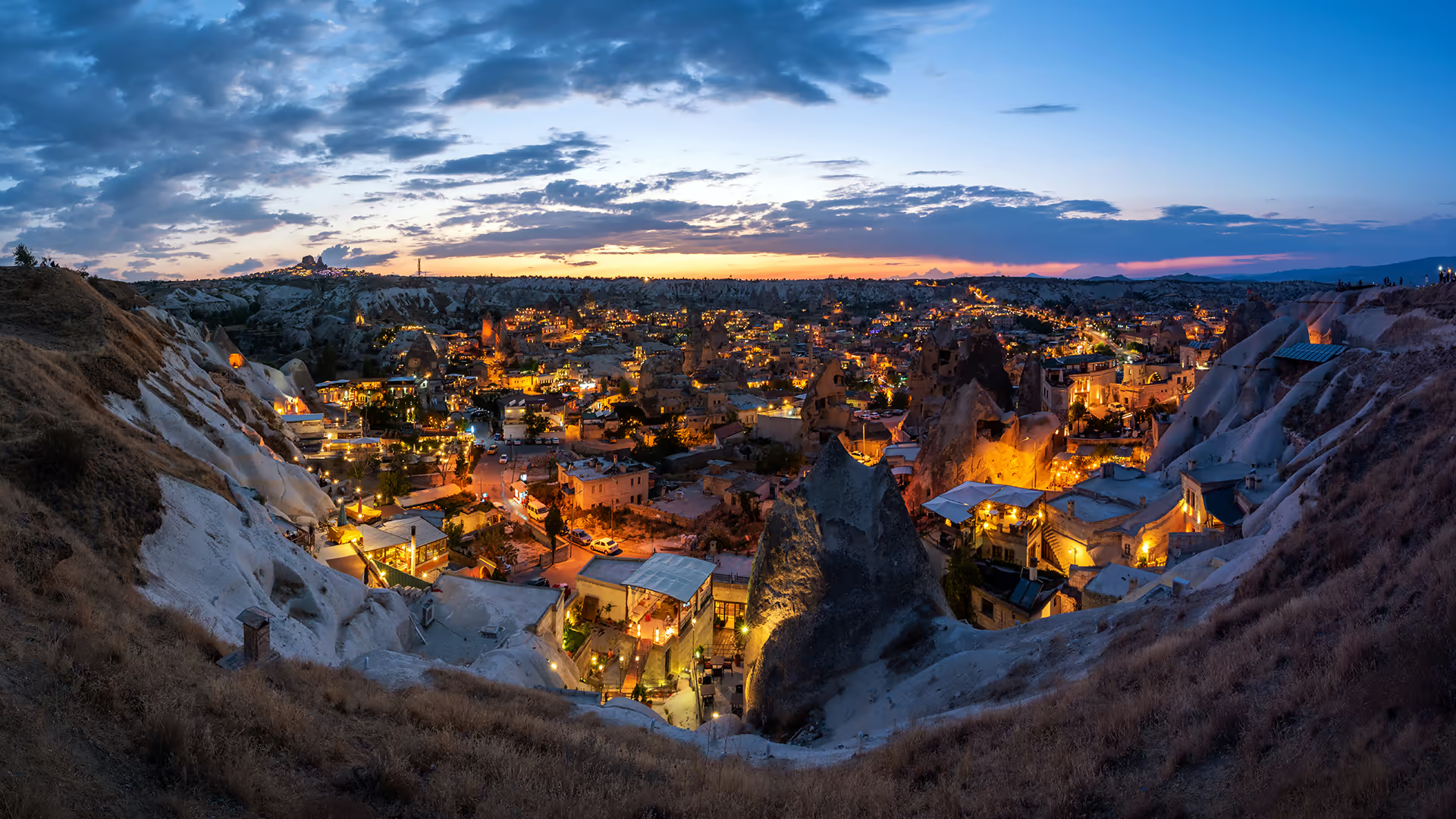
格雷梅的傍晚, 卡帕多西亚, 土耳其 Evening over Göreme, Cappadocia, Türkiye (© ONNAJA/Getty Images)

发布于 , 475 次浏览

格雷梅的傍晚, 卡帕多西亚, 土耳其 Evening over Göreme, Cappadocia, Türkiye (© ONNAJA/Getty Images)

古老岩石,现代灯光 Ancient rocks, modern lights

格雷梅的傍晚, 卡帕多西亚, 土耳其

黄昏时分,卡帕多西亚格雷梅地区的地貌逐渐显现。这片区域隶属于格雷梅国家公园与卡帕多西亚岩石遗址,1985年入选世界遗产名录。“精灵烟囱”等地貌源自安那托利亚火山喷发形成的火山灰层,随后经风与水长期侵蚀,雕刻出石柱、山脊与谷地。

这些地貌承载着数千年的人类居住史。自晚期古代开始,人们顺着岩石可塑、保温的特性,直接凿刻出住宅、教堂与修道院。不少遗址仍留存10至11世纪的拜占庭壁画,反映出该地区延续已久的宗教生活。画面中灯火通明的小镇凸显了古今交织的景象。今天,格雷梅仍是进入卡帕多西亚步道、观景平台与岩刻遗产的重要入口,这片土地由地质演化与人类坚韧共同塑成。

Evening over Göreme, Cappadocia, Türkiye

As evening settles over the town of Göreme in the heart of the Cappadocia region of Türkiye, dusk reveals a landscape forged by nature and centuries of human presence. This scene is part of Göreme National Park and the Rock Sites of Cappadocia, a UNESCO World Heritage Site inscribed in 1985 for its exceptional combination of early cultural history and geological formations. These formations, often called 'fairy chimneys' or hoodoos, began as layers of volcanic ash that hardened into soft stone following eruptions of ancient Anatolian volcanoes. Over time, wind and water carved the pillars, ridges, and valleys that define the region today.

People have lived among these landforms for millennia. From Late Antiquity onward, residents carved homes, chapels, and monasteries directly into the rock, taking advantage of the stone's workable texture and natural insulating qualities. Many of these structures still contain 10th‑ and 11th‑century Byzantine frescoes, reflecting the region's long-standing tradition of religious life. The illuminated town in today's image highlights how past and present coexist. Today, Göreme remains a gateway to Cappadocia's trails, viewpoints, and rock‑cut heritage—an experience sculpted by geological forces and human resilience.

紫番红花, 里拉七湖, 保加利亚 Purple crocus flowers, Seven Rila Lakes, Bulgaria (© Maya Karkalicheva/Getty Images)

发布于 , 1096 次浏览

紫番红花, 里拉七湖, 保加利亚 Purple crocus flowers, Seven Rila Lakes, Bulgaria (© Maya Karkalicheva/Getty Images)

聚光灯下的番红花 Crocuses in the spotlight

紫番红花, 里拉七湖, 保加利亚

随着保加利亚西南部里拉山脉冬季寒意减退,番红花从积雪中破土而出,标志着该国最高山脉春天的来临。作为早春花卉,它们利用储存的养分,在寒冷条件下迅速生长,并在更高大的植物出现之前完成生命周期。成簇的花朵在高山草甸上绽放,如紫色缎带般铺展,与雪原形成鲜明对比,在清晨的光线中格外醒目。

番红花在保加利亚里拉国家公园茁壮生长。该公园成立于1992年,是该国最大的自然保护区之一,拥有重要的生态系统,涵盖120多处常年冰川湖和30处季节性冰川湖,里拉七湖群尤为知名。澄澈的湖水与高山地貌相映成景,温暖季节吸引众多游客。初春时节,番红花与融雪交替出现,展现季节更迭的独特画面。

Purple crocus flowers, Seven Rila Lakes, Bulgaria

As winter's grip on the Rila Mountains of southwestern Bulgaria begins to loosen, crocuses push through the thinning snow, signaling the arrival of spring in the country's highest mountain range. These early bloomers use stored nutrients to quickly grow in cold conditions, completing much of their life cycle before taller plants emerge. Their clustered blossoms unfurl over alpine meadows in sweeping purple ribbons, creating a striking contrast with bright snowfields and crisp morning light.

These flowers thrive in Rila National Park, Bulgaria's largest protected area and one of its most significant ecological reserves. Established in 1992, the park safeguards over 120 permanent and around 30 seasonal glacial lakes, including the Seven Rila Lakes, seen in the background of today's image. Renowned for their clear waters and dramatic setting, these high-altitude lakes attract visitors throughout the warmer months. As the season changes, lingering snow and blooming crocuses create one of the region's most memorable seasonal displays, offering a vivid glimpse of the moment winter turns to spring.

元宵节期间悬挂的宫灯,北京自贡灯会现场,北京,中国 Palace lanterns hung during the Lantern Festival, Zigong Lantern Festival in Beijing, Beijing, China (© Grisha Bruev/Shutterstock)

发布于 , 382 次浏览

元宵节期间悬挂的宫灯,北京自贡灯会现场,北京,中国 Palace lanterns hung during the Lantern Festival, Zigong Lantern Festival in Beijing, Beijing, China (© Grisha Bruev/Shutterstock)

花灯映月,团圆吉祥 Happy and reunited days

元宵节

元宵节是中国农历新年的重要节日,通常在正月十五庆祝。人们会吃汤圆(象征团圆)并欣赏各式灯笼,寓意团圆、幸福与吉祥。节日期间,家庭聚会、赏灯和灯谜活动都非常受欢迎,是春节庆祝活动的延续。

北京自贡灯会是元宵节期间最具特色的灯会之一,汇集了丰富多彩的宫灯、动物灯和民俗灯组。每一盏灯都巧妙设计、栩栩如生,为观众呈现一场视觉盛宴。灯会不仅展示精湛工艺,也传递了节日的喜庆与吉祥氛围。

苏梅岛的港口和长尾船, 泰国 Harbor and longtail boats at Ko Samui, Thailand (© Foto2rich/Shutterstock)

发布于 , 403 次浏览

苏梅岛的港口和长尾船, 泰国 Harbor and longtail boats at Ko Samui, Thailand (© Foto2rich/Shutterstock)

漂浮的传承 Floating legacies

苏梅岛的港口和长尾船, 泰国

别被远看时苏梅岛长尾船朴素的外表所迷惑,这些修长的船身凝聚了当地数十年的巧思。它们在泰语中被称为“RueaHangYao”,诞生于20世纪初,当时渔民将汽车发动机改装成动力,用以穿行于大型船只难以进入的浅水海域。每一艘长尾船都由工匠一块木板一块木板手工打造,承载着代代相传的技艺。船体上色彩大胆而醒目,船头常装点着彩布与鲜花——这些象征佛教祝福的装饰,寓意守护船只与船员一路平安。

在度假村、海滩俱乐部和夜生活改变海岸线之前,苏梅岛的繁荣源于椰林种植、渔业以及连接周边岛屿的贸易航线。千余年来,木船在清晨载着渔民出海,也在岛屿之间往返运送一个个家庭。如今,它们同样载着游客前往珊瑚礁、水上集市和隐秘海滩,让人近距离感受苏梅岛的水上脉络。

黄昏降临,港湾渐渐慢了下来。缆绳吱呀作响,渔网被一张张收拢,船只依次归航。苏梅岛的历史并未被封存在博物馆里——它轻轻漂浮在水面上,等待天色再亮,重新启航,继续承载这座岛屿的日常与生命。

Harbor and longtail boats at Ko Samui, Thailand

Do not be fooled by how simple Ko Samui's longtail boats look from a distance; decades of local ingenuity have shaped their slender frames. These vessels, known in Thailand as 'ruea hang yao,' emerged in the early 20th century, when fishermen repurposed vehicle engines to navigate shallow waters that larger boats couldn't reach. Handcrafted plank by plank, each boat reflects generations of skill. Their hulls burst with bold, striking colors, while decorative cloth and flowers often crown the bows—Buddhist blessings meant to safeguard both the boat and its crew.

Long before resorts, beach clubs, and nightlife transformed its shores, Ko Samui thrived on coconut farming, fishing, and trade routes linking neighboring islands. For over a thousand years, wooden boats have carried families between islands and fishermen at dawn. Today, they also ferry visitors to coral reefs, floating markets, and secret beaches, offering an intimate glimpse into Samui's waterways.

At dusk, the harbor slows. Ropes creak and nets are folded as boats return, one by one. Ko Samui's history isn't locked in museums—it floats gently on the water, ready to rise at first light to carry the island's life forward once more.

伊维萨岛, 巴利阿里群岛, 西班牙 Ibiza, Balearic Islands, Spain (© tokar/Shutterstock)

发布于 , 395 次浏览

伊维萨岛, 巴利阿里群岛, 西班牙 Ibiza, Balearic Islands, Spain (© tokar/Shutterstock)

每一步,都是传承 Tradition in every step

伊维萨岛, 巴利阿里群岛, 西班牙

今天,我们一同庆祝西班牙迷人的巴利阿里群岛。巴利阿里群岛日致敬这一片多样却紧密相连的地中海土地——马略卡、梅诺卡、伊维萨与福门特拉,共同构成独特的群岛身份。这个日子同时纪念《巴利阿里自治法》,该法案于1983年3月1日正式生效,确立群岛作为西班牙的一个自治区。

巴利阿里群岛的底色,源于与海相伴的生活方式,也来自音乐、手工艺与热情好客共同孕育的文化传统。这里的自然环境脆弱而珍贵:梅诺卡岛在守护生态的同时保留着真实的岛屿生活;福门特拉岛则珍藏着重要的海洋栖息地;马略卡岛将群山、原野与海岸融为一体,城镇中至今延续着传统工艺与建筑风貌。今日伊维萨岛上空的日落航拍,让人心怀敬意望向远方,也映现出这座岛屿在传统底蕴与当代创造力之间的独特平衡。

这一天旨在倡导尊重文化多样性、践行可持续理念、促进教育发展,确保地中海的文化遗产能够世代相传、生生不息。

热门文章

归档