悬崖上雕刻的古老岩石墓葬,土耳其达利安附近 Ancient rock tombs carved into the cliff near Dalyan, Turkey (© Reinhard Schmid/eStock Photo)
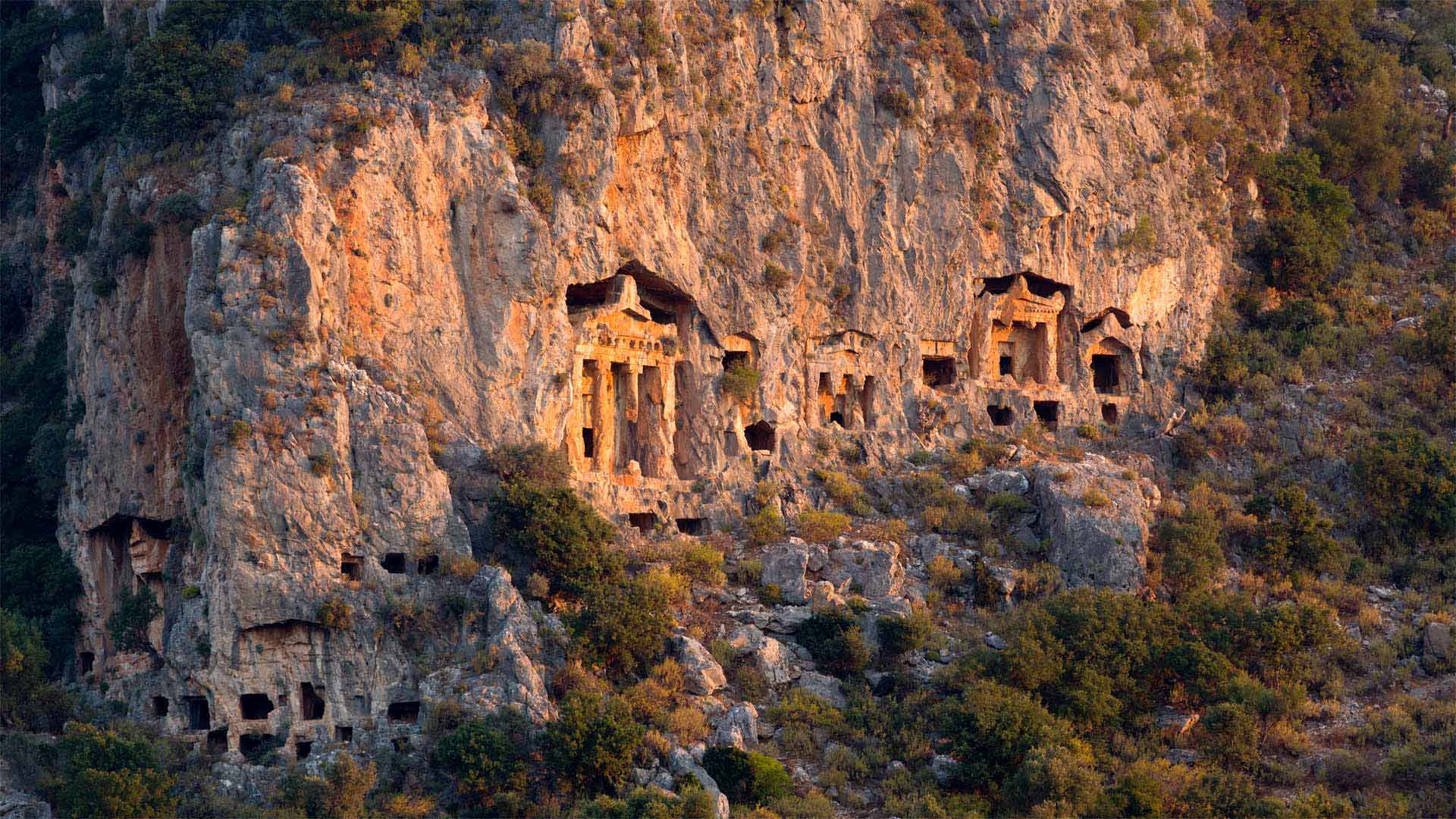
悬崖上雕刻的古老岩石墓葬,土耳其达利安附近 Ancient rock tombs carved into the cliff near Dalyan, Turkey (© Reinhard Schmid/eStock Photo)
Turkey, Ancient rock tombs
Among the remains of the ancient Anatolian port city of Kaunos are these carvings in the sheer rock walls above the Dalyan Çayı River. Overlooking the modern-day city of Dalyan, Turkey, what appear to be ornate cliff dwellings are really the weathered facades of tombs for the elite of a once-forgotten society.
With a history of human habitation going back almost 3,000 years, Kaunos has over the centuries found itself under Persian, Greek, Persian (again), Macedonian, Roman, Lycian, Roman (again), and finally Turkish rule—just to give you the highlights. But it was the sands of time that conquered the city once and for all: Silty deposits from the river eventually mucked up the port so badly it became useless. Gradually abandoned, Kaunos' location was lost to memory, and its rock-hewn Lycian tombs, monuments, and 5,000-seater amphitheater were relegated to rumor until a British surveyor rediscovered the site in 1842.
土耳其,古岩墓
在古老的安纳托利亚港口城市卡乌诺斯的遗迹中,有这些雕刻在达利安ı河上方陡峭的岩壁上。俯瞰土耳其现代城市Dalyan,看似华丽的悬崖住宅实际上是一个曾经被遗忘的社会精英们的坟墓风化的正面。
Kaunos的人类居住历史可以追溯到近3000年前,几个世纪以来,它一直处于波斯人、希腊人、波斯人(再次)、马其顿人、罗马人、利西亚人、罗马人(再次)以及最后的土耳其统治之下,这只是为了给你一个亮点。但是,正是时间的沙粒一劳永逸地征服了这座城市:河流中的淤泥沉积物最终把港口弄得一团糟,变得毫无用处。卡诺斯的位置逐渐被遗弃,人们对其失去了记忆,其岩石凿成的利西亚陵墓、纪念碑和5000座的圆形剧场也被流言传开,直到1842年一名英国勘测员重新发现该地点。
内姆鲁特山上巨大的石灰岩雕像,土耳其阿德亚曼 Colossal limestone statues on Mount Nemrut, Adıyaman, Turkey (© Peerakit JIrachetthakun/Getty Images)
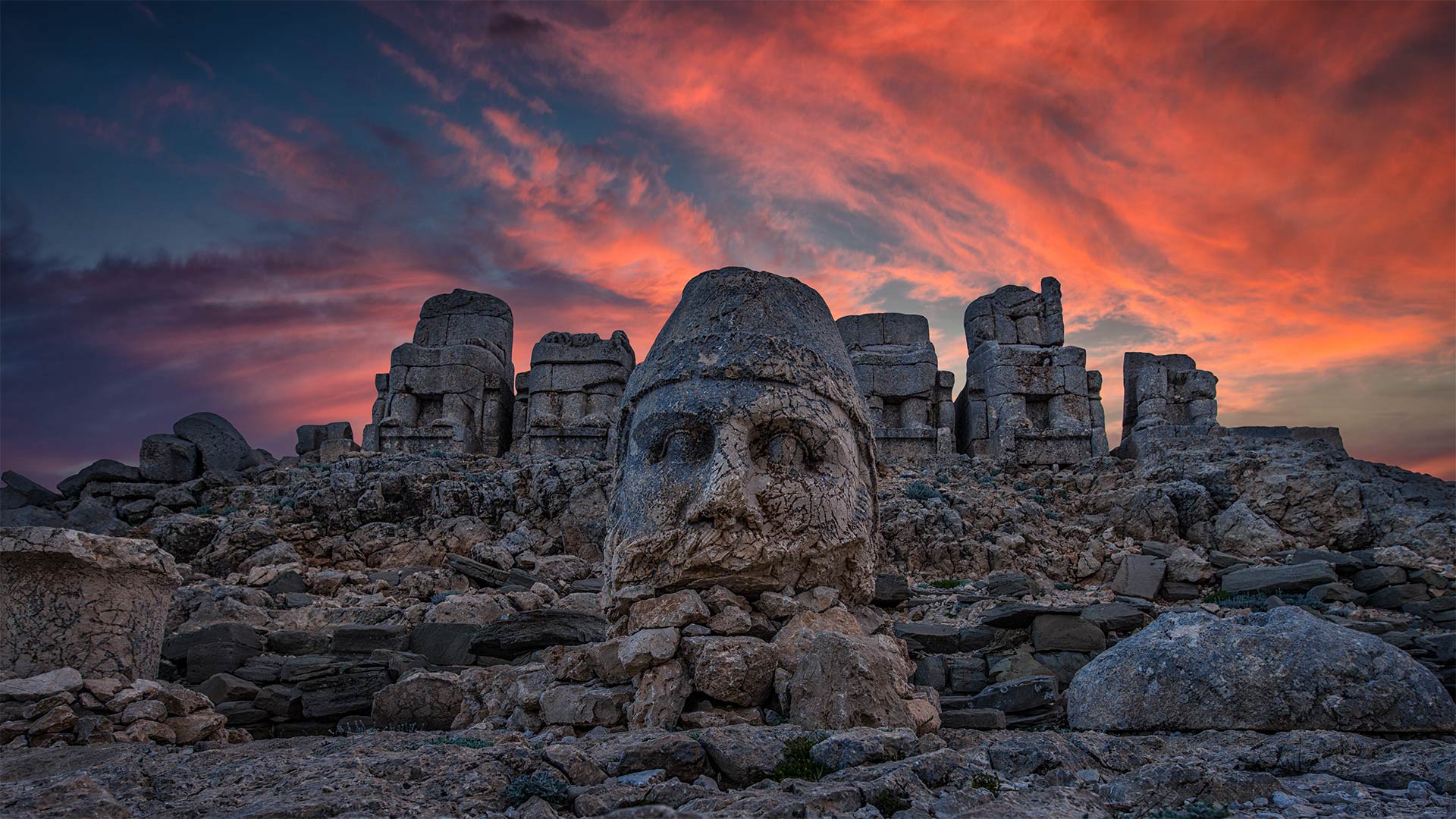
内姆鲁特山上巨大的石灰岩雕像,土耳其阿德亚曼 Colossal limestone statues on Mount Nemrut, Adıyaman, Turkey (© Peerakit JIrachetthakun/Getty Images)
The mountaintop of toppled gods
The ruins on Mount Nemrut depict a gaggle of gods from both Greek and Persian traditions, plus a few deities that King Antiochus I made up himself. The range of spiritual faiths represented in the statues found near the 7,000-foot summit reflects southeastern Turkey's long history as a crossroads of cultures. Today, the derelict statues are protected as a UNESCO World Heritage Site.
In 70 BCE, Antiochus took power here in Commagene, one of several small onetime states formed from the shambles of the Seleucid Empire. Looking to unify his populace, he synthesized a mythology that hailed Greek and Persian figures, from Ares to Zarathustra—plus the king himself and his family. Antiochus' claim to godhood wasn't eternal, as he was deposed in 31 BCE, but sometime before that he cemented his customized state religion in history by having its partial pantheon—including, of course, himself—carved into stone statues on the peak overlooking his kingdom.
被推翻的神的山顶
涅姆鲁特山上的废墟描绘了希腊和波斯传统的众神,加上安提约克一世国王自己创造的一些神。在7000英尺高的山顶附近发现的雕像所代表的各种精神信仰反映了土耳其东南部作为文化交汇点的悠久历史。今天,这些被遗弃的雕像被联合国教科文组织列为世界遗产。
公元前70年,安提约克在科马根尼掌权,科马根尼是塞琉西帝国废墟中形成的几个小国家之一。为了统一他的人民,他合成了一个神话,颂扬希腊和波斯的人物,从阿瑞斯到查拉图斯特拉,再加上国王本人和他的家人。安提约克对神性的要求并不是永恒的,因为他在公元前31年被废黜,但在此之前的某个时候,他通过拥有部分万神殿(当然包括他自己)在俯瞰王国的山顶上雕刻成石像,巩固了他定制的国教在历史上的地位。
土耳其棉花堡附近希腊古城希拉波利斯的剧院鸟瞰图 Aerial view of the theater at the ancient city of Hierapolis, adjacent to Pamukkale, Turkey (© Amazing Aerial Agency/Offset by Shutterstock)
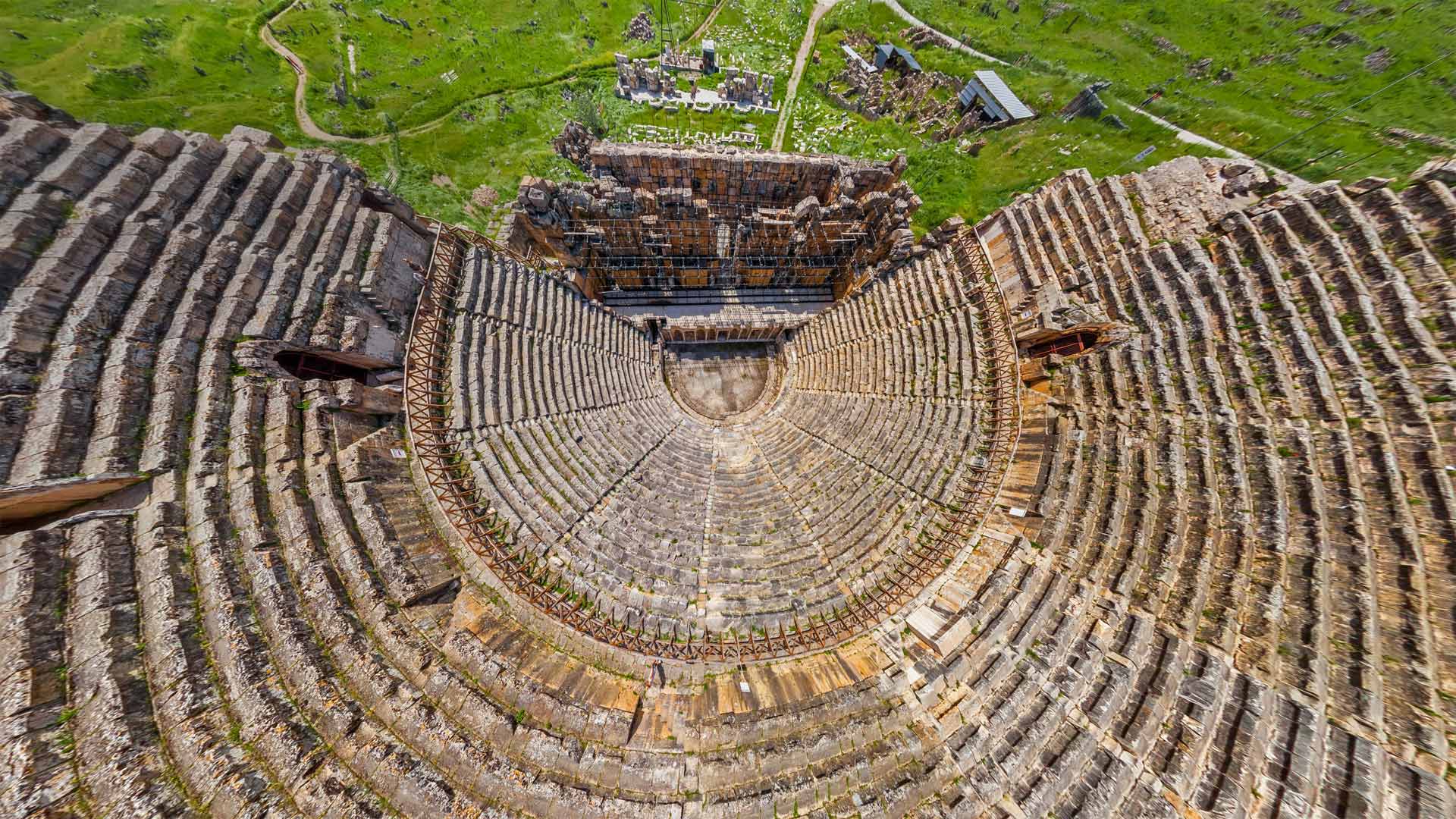
土耳其棉花堡附近希腊古城希拉波利斯的剧院鸟瞰图 Aerial view of the theater at the ancient city of Hierapolis, adjacent to Pamukkale, Turkey (© Amazing Aerial Agency/Offset by Shutterstock)
Take in a show on your Roman holiday
In the hills around Pamukkale, Turkey, you'll find the ancient ruins of Hierapolis, which thrived here as holy and healing destination through Greek, Roman, and Ottoman times. The city was founded as a thermal spa in 190 BCE by Eumenes II, the king of Pergamon and was likely named after the wife of the legendary founder of the Pergamene dynasty, Hiero.
The amphitheater so prominent in this aerial view was built in the second century CE under Roman Emperor Hadrian. Renovated several times over the next 160 years—once to accommodate aquatic shows--the theater would have seated about 15,000 people. An earthquake in 1354 finally toppled the ancient city and it was abandoned until it was excavated by German archeologist Carl Humann in the 19th century. Today, the complex retains some of the best-preserved decorative features of any ancient Roman theater, with friezes of Roman Emperor Septimus Severus and his family, as well as the Greek gods Dionysus, Artemis, and Apollo.
“精灵烟囟”和窑洞,土耳其卡帕多西亚 Fairy chimneys and cave dwellings in Uçhisar, Cappadocia, Turkey (© Ivan Kmit/Alamy)
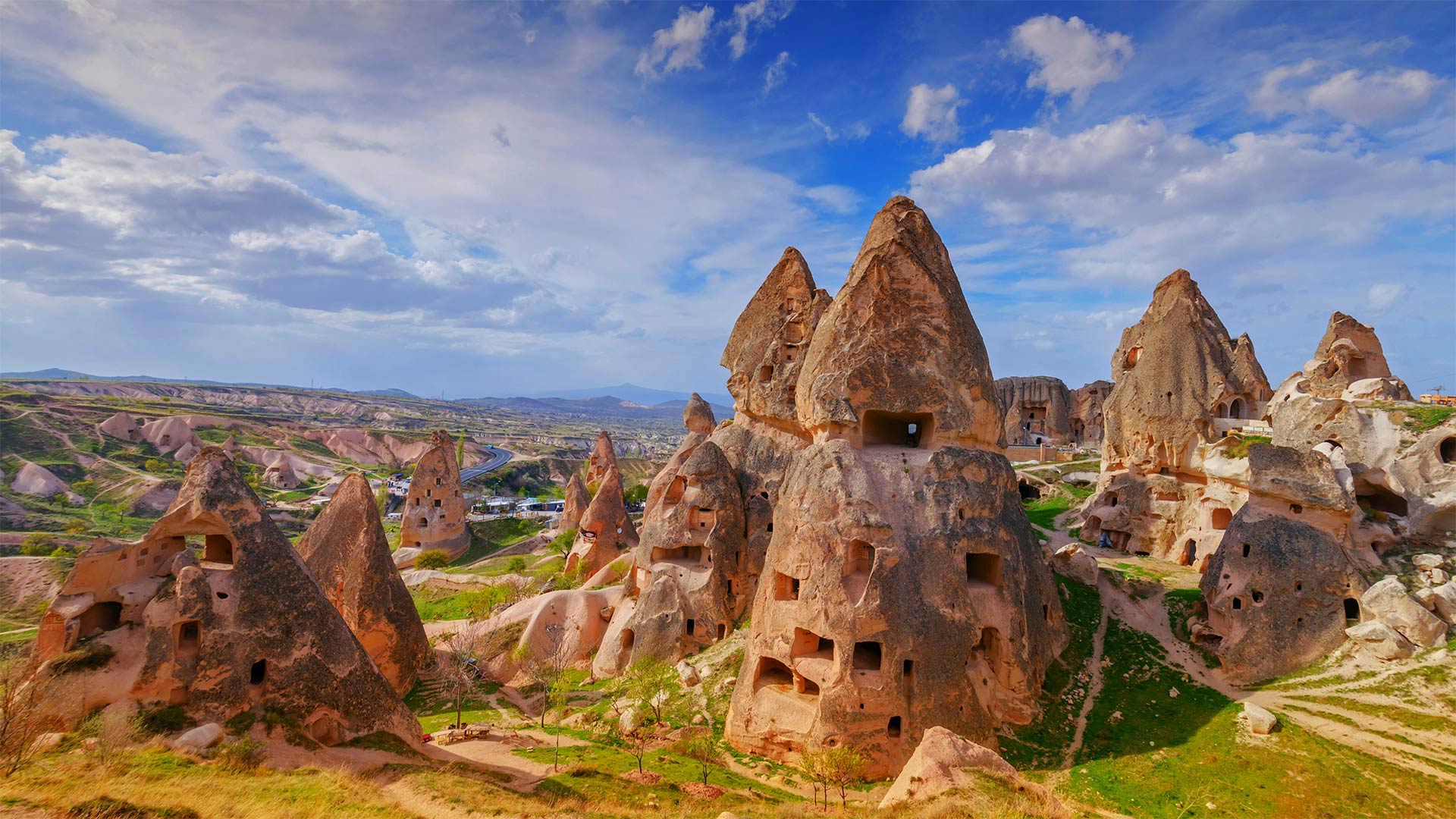
“精灵烟囟”和窑洞,土耳其卡帕多西亚 Fairy chimneys and cave dwellings in Uçhisar, Cappadocia, Turkey (© Ivan Kmit/Alamy)
And to think that I saw it in Cappadocia
The fantastical 'fairy chimneys' found in central Turkey's historic Cappadocia region were formed by a collision of the natural and the man-made—and they form a scene that seems straight out of a Dr. Seuss illustration. The landforms were created when volcanoes deposited mounds of soft, porous rock called tuff, which was later covered with hard basalt. In the 10th century (though possibly starting up to 5,000 years ago) humans excavated the tuff to create caves and catacombs that could fit thousands of dwellers. Through not only the astonishing ruins but the many 'cave hotels' hewn into rock in the city of Göreme, the memory of those ingenious city planners lives on.
But in fact, it's the memory of Dr. Seuss that brings us here today. On March 2, 1904, Seuss—real name Theodor Geisel—was born in Springfield, Massachusetts. The children's book creator—known for his quirky, bombastic poetry and fantastical pen-and-ink landscapes—passed away in 1991, but his birthday is still observed as a yearly celebration of literacy for kids and 'obsolete children' (as Seuss classified adults) everywhere.