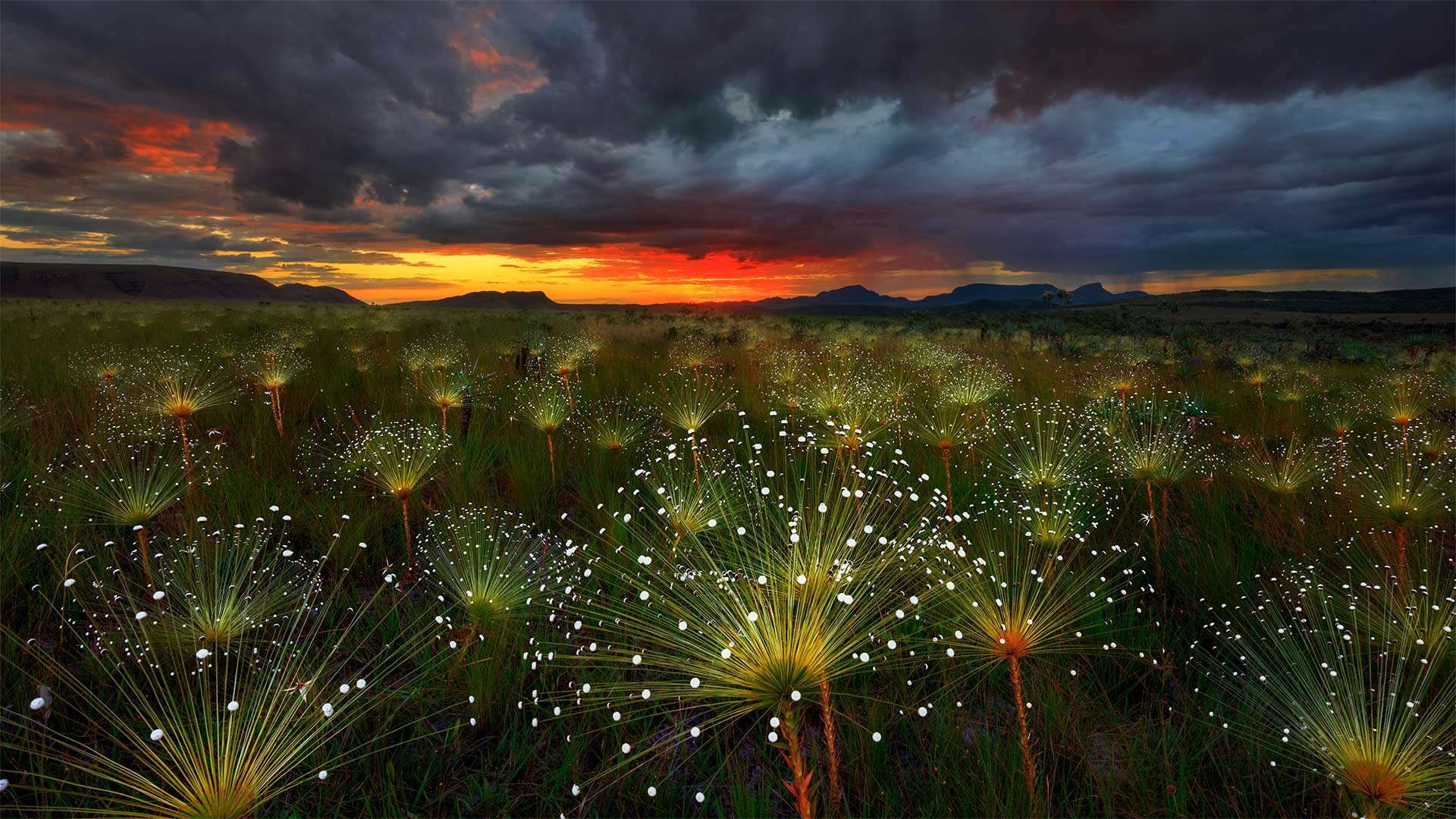
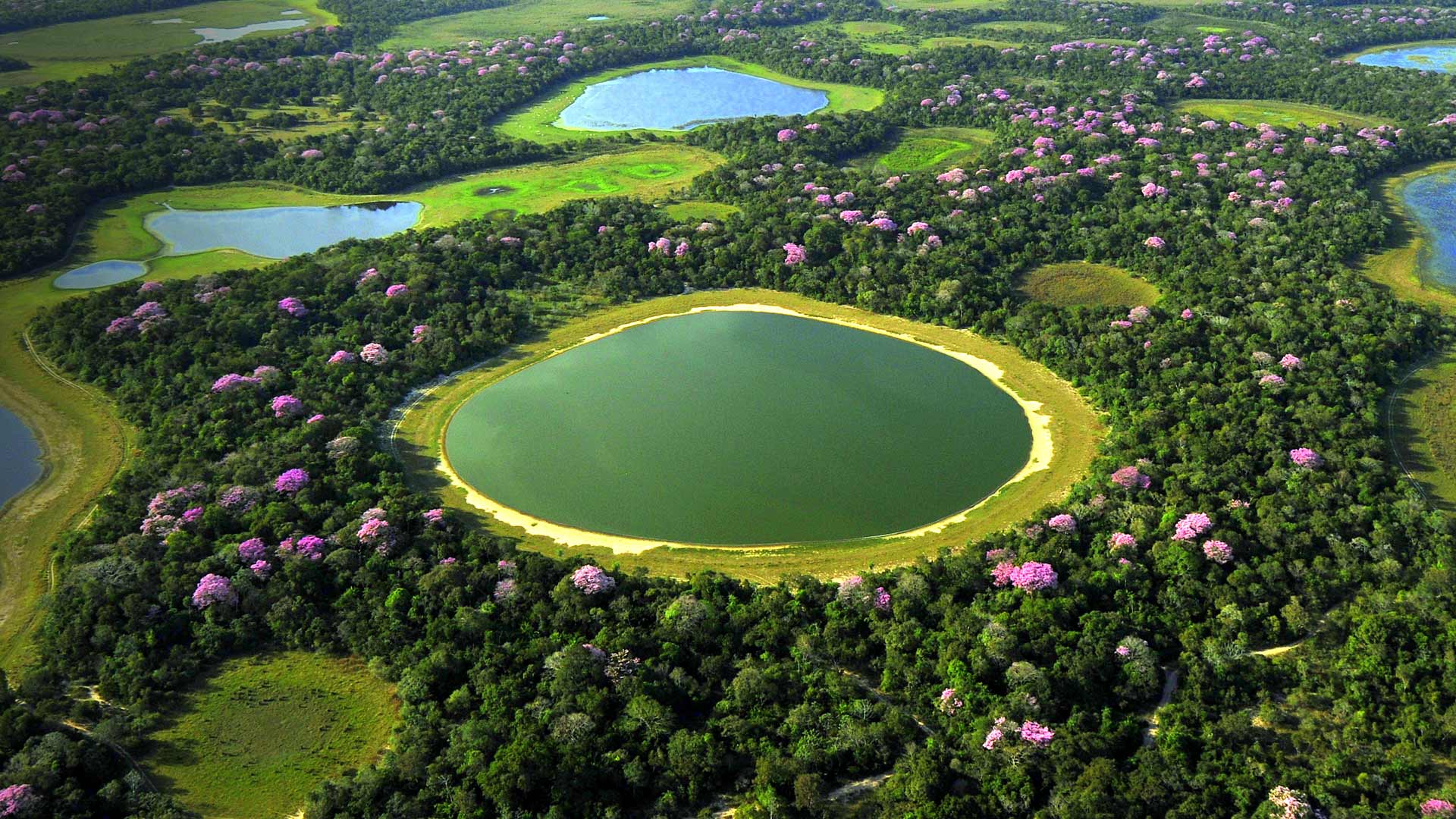
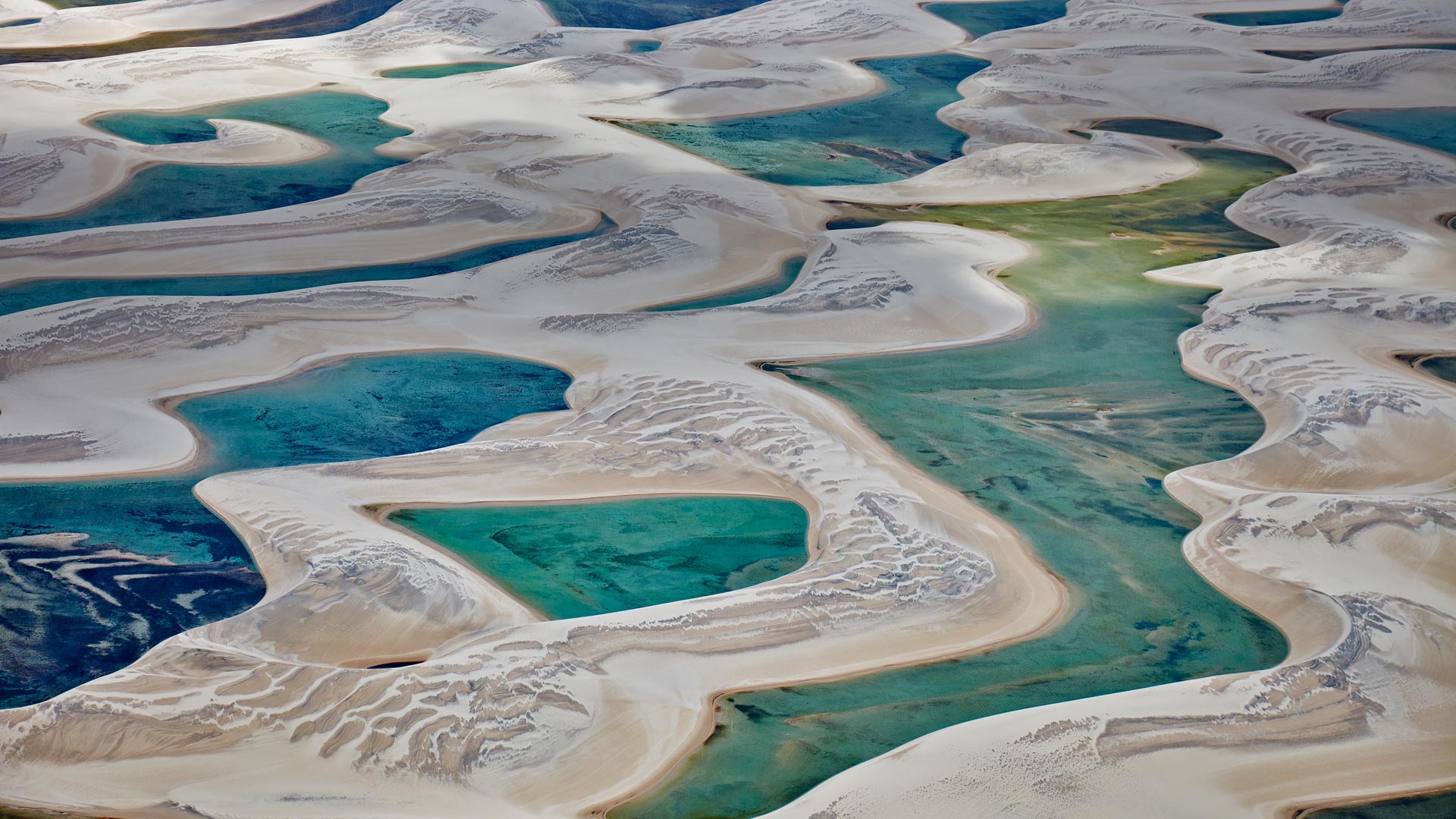
伦索伊斯马拉年塞斯国家公园,巴西巴雷里尼亚斯市 Lençóis Maranhenses National Park in Barreirinhas, Brazil (© WIN-Initiative/Getty Images)
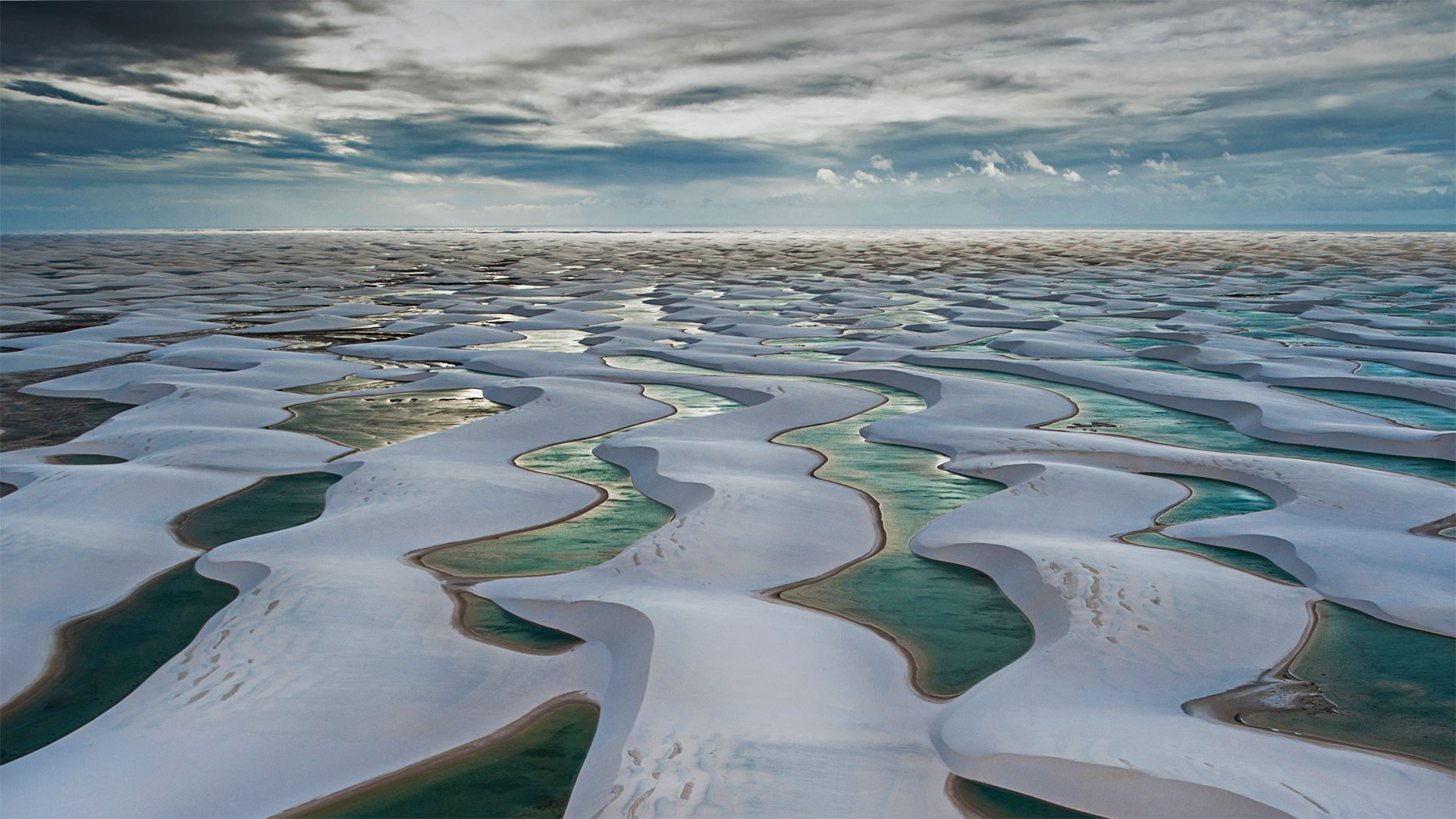
伦索伊斯马拉年塞斯国家公园,巴西巴雷里尼亚斯市 Lençóis Maranhenses National Park in Barreirinhas, Brazil (© WIN-Initiative/Getty Images)
White dunes, blue lagoons
From the air, the mesmerizing tapestry of sandy dunes and lagoons you see here gives Lençóis Maranhenses National Park an otherworldly, desert-like appearance. Located in the sparsely populated Northeast corner of Brazil, this park gets far too much annual rainfall—nearly 50 inches—to be considered a desert. In fact, heavy rain is part of what makes this place unique: Nearly 70% of its annual rainfall comes between January and May, filling the park's nearly 40,000 lagoons to the brim with fresh rainwater. Why doesn't the water sink into the sand? A layer of impermeable bedrock beneath the dunes prevents that from happening.
Despite its remote location, the park, established in 1981, has become a popular destination for ecotourists. They come partly to see the many kinds of animals and plants that manage to thrive here, including several endangered species. One of the park's most famous inhabitants is the predatory Atlantic wolffish, which lies dormant during the dry season by burying itself into the layers of wet mud in the lagoons, only to reemerge to snack on unsuspecting prey as the pools refill with the rains.
白色沙丘,蓝色泻湖
从空中看,这里迷人的沙丘和泻湖挂毯给了伦索斯马兰森斯国家公园一个超凡脱俗的沙漠般的外观。这个公园位于巴西人口稀少的东北角,年降雨量高达近50英寸,不算沙漠。事实上,暴雨是这个地方独特之处的一部分:每年近70%的降雨量来自1月至5月,公园近4万个泻湖被新鲜雨水填满。为什么水不沉进沙子里?沙丘下面的一层不透水的基岩阻止了这种情况的发生。
尽管地理位置偏远,但这座建于1981年的公园已成为生态旅游者的热门目的地。他们来这里的部分原因是看到许多种类的动植物在这里繁衍生息,包括一些濒临灭绝的物种。该公园最著名的居民之一是捕食性的大西洋狼鱼,它在旱季蛰伏在泻湖的湿泥层中,结果又重新出现,在雨水不断涌入的池塘中捕食毫无防备的猎物。
马瑙斯附近的亚马逊河流域鸟瞰图,巴西 Aerial of the Amazon River Basin near Manaus, Brazil (© Art Wolfe/Danita Delimont)
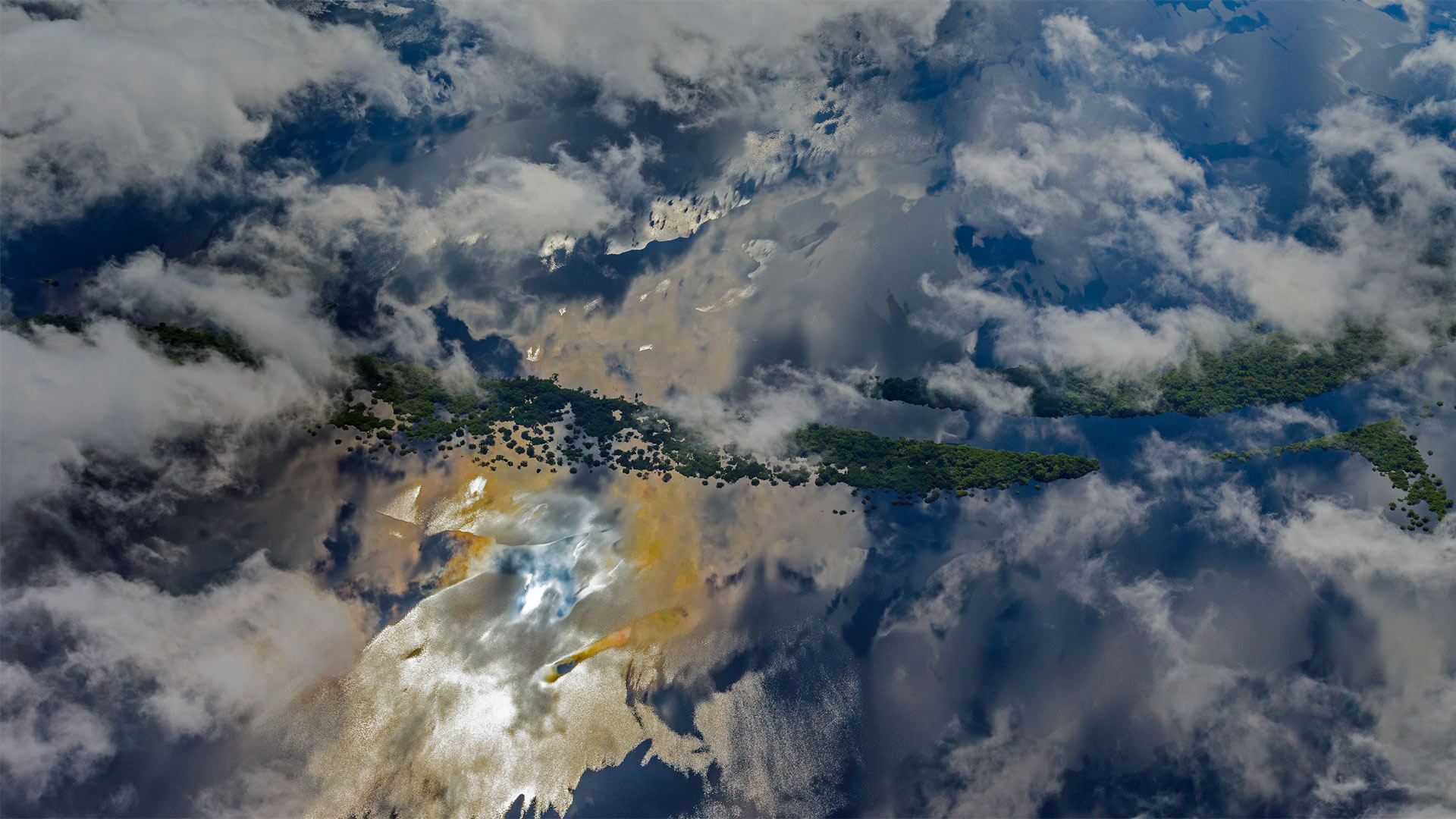
马瑙斯附近的亚马逊河流域鸟瞰图,巴西 Aerial of the Amazon River Basin near Manaus, Brazil (© Art Wolfe/Danita Delimont)
Reflections on the mighty Amazon
For World Rainforest Day we take you below these clouds to the Amazon River Basin and the largest rainforest in the world. At more than 2.1 million square miles, the Amazon accounts for half of Earth's remaining tropical rainforests. And a fifth of the world's freshwater flows through this river basin. Perhaps a tenth of the planet's known species call it home, many of which have yet to be identified—that's trees, plants, fish, mammals, and a third of Earth's bird species. Now take a deep breath. The ‘Lungs of the World' produces 20 percent of Earth's oxygen, while storing vast amounts of carbon dioxide, earning it an all-star ‘carbon sink' status.
Why's it called the Amazon? Spanish explorer and conquistador Francisco de Orellana gave it that name after encountering indigenous women of the Pira-tapuya tribe who fought alongside men. The women warriors of the region reminded Orellana of the Amazons of Greek mythology. Today, the Amazon rainforest still sounds almost mythologically powerful—and it is. Yet, all rainforests are fragile biosystems. Worldwide, we lose swaths of these precious environments to agriculture and mining. However, the pace of deforestation is slowing as farming methods improve and advocacy efforts build awareness around these rich bio-diverse tropical rainforests. The more we learn about rainforests, the more we appreciate how our own future, and the future of our planet, hinge upon their health.