月球与地球由阿耳忒弥斯2号机组人员拍摄 Moon and Earth captured by the Artemis II crew (© NASA)

月球与地球由阿耳忒弥斯2号机组人员拍摄 Moon and Earth captured by the Artemis II crew (© NASA)
月瞰寰宇 The lunar perspective
国际月球日
从月球那遍布环形山的表面望去,地球在无垠的黑暗中呈现为一抹微光闪烁的娥眉状——这一罕见的奇观与我们惯常的地面观测视角截然相反。这片由数十亿年撞击作用塑造的荒芜地貌,完整地保存了早期太阳系的演化记录。7月20日是国际月球日,旨在纪念1969年阿波罗11号任务中人类首次踏上月球表面的历史性时刻。该纪念日由联合国于2021年设立,不仅致敬过去的辉煌成就,更聚焦于当下持续不断的月球探测努力。
月球作为地球唯一的天然卫星,在距离地球约23.9万英里的轨道上运行。由于几乎不存在大气层,月球经历着极端的温差跨度——受光面的酷热与阴影区的严寒形成了鲜明对比。然而,月球的影响力远超其表面:它的引力是驱动地球海洋潮汐的核心动力,将这个寂静且真空的世界与人类的日常生活紧密相连。月球不仅是太空探索的目的地,更是夜空中永恒的存在,连接着人类早期的天文观测与当代的深空探测。
International Moon Day
From the moon's cratered surface, Earth appears as a thin, glowing crescent against the darkness—a rare view that reverses our usual perspective. This stark landscape, shaped by billions of years of impacts, preserves a record of the early solar system. July 20 marks International Moon Day, commemorating the 1969 Apollo 11 landing, when humans first set foot on the lunar surface. Established by the United Nations in 2021, the day highlights past achievements and ongoing efforts to explore the moon.
Orbiting about 239,000 miles from Earth, the moon is Earth's only natural satellite. With almost no atmosphere, it experiences extreme temperature contrasts between sunlit heat and shadowed cold. Yet its influence reaches far beyond its surface—its gravity helps drive ocean tides on Earth, linking this quiet, airless world to everyday life. More than a destination for exploration, the moon remains a constant presence in our skies, connecting early observations of the night sky to ongoing exploration today.
城市灯光在下方划过, 拍摄于国际空间站 City lights streak below, taken from the International Space Station (© NASA)

城市灯光在下方划过, 拍摄于国际空间站 City lights streak below, taken from the International Space Station (© NASA)
离开地球的第一步 The first step off Earth
国际人类航天日
今天,世界纪念国际载人航天日,这是联合国设立的纪念日,旨在纪念人类首次进入太空的旅程以及人类太空时代的开始。这个日期回忆起1961年4月12日,尤里·加加林绕地球飞行,证明人类可以离开地球并安全返回。
这种探索精神在国际空间站上依然存在。从国际空间站上,宇航员拍摄发光的城市网格和穿越地球大气层的强烈雷暴——这些景象将科学变成了魔法。空间站绕地球运行的高度大约为250英里,每90分钟环绕地球一圈,使船员每天最多可以看到16次日出和日落。自2000年以来,空间站一直有人居住,由美国、俄罗斯、欧洲、日本和加拿大的合作伙伴共同运营。在空间站内部,宇航员进行推进医学、材料和气候科学的研究,同时也学习人类如何在离地球更远的地方生活和工作。
International Day of Human Space Flight
Today, the world marks the International Day of Human Space Flight, a United Nations observance honoring the first human journey into space and the start of the space age for humanity. The date recalls April 12, 1961, when Yuri Gagarin orbited Earth, proving that people could leave the planet and return safely.
That spirit of exploration lives on aboard the International Space Station. From the ISS, astronauts photograph glowing city grids and powerful lightning storms streaking through Earth's atmosphere—views that turn science into magic. Orbiting about 250 miles above the planet, the station circles Earth every 90 minutes, giving crews up to 16 sunrises and sunsets a day. It has been continuously occupied since 2000 and is operated by a partnership of the United States, Russia, Europe, Japan, and Canada. Inside, astronauts conduct research that advances medicine, materials, and climate science, while also learning how humans can live and work farther from home.
礁湖星云中的星际云,由哈勃太空望远镜拍摄 Interstellar clouds in the Lagoon Nebula, captured by the Hubble Space Telescope (© ESA/NASA)

礁湖星云中的星际云,由哈勃太空望远镜拍摄 Interstellar clouds in the Lagoon Nebula, captured by the Hubble Space Telescope (© ESA/NASA)
从前有一颗星星 Once upon a star
礁湖星云
宇宙生机勃勃,生生不息。图中的礁湖星云中,一个名为NGC 6530的星团正在孕育新生恒星,这光芒提醒着我们,宇宙的起源早已交织其中。它距离我们约4350光年,已有数百万年历史,目前仍处于恒星形成的早期阶段。
礁湖星云,在梅西耶星表中名列第八,简称M8,是一个位于南天人马座的发射星云(也可称之为电离氢区)。在NGC用表中排名6523,又称NGC 6523。这个星云是许多天文爱好者十分熟悉并且喜爱的天体之一,也是天文摄影的热门目标天体。礁湖星云充满炽热气体,是许多年轻恒星的家园,因其中心左侧的数道尘埃带而获得了礁湖星云的别名。
Carl Sagan Day
The universe hums with creation. Featured here, in the Lagoon Nebula, a cluster called NGC 6530 is kindling newborn stars, a glowing reminder that beginnings are woven into the fabric of the cosmos. About 4,350 light-years away and a few million years old, it is a stellar formation still in its earliest chapter.
The world celebrates Carl Sagan Day every November 9 to honor the astronomer who shared distant wonders through stories people could understand. Founded in 2009, the day is observed worldwide, marked by lectures, planetarium shows, and stargazing nights that carry Sagan's call for scientific curiosity.
Carl Sagan's legacy stretches from NASA's Voyager missions and the Golden Record to his Cosmos television series, inspiring millions to see science as both reason and a source of endless possibilities. At Cornell University, home to the Carl Sagan Institute, his vision continues through the search for habitable worlds and the celebration of cosmic discovery. In the night sky, NGC 6530 offers a fitting tribute: a nursery of suns forming within clouds of gas and dust, echoing Sagan's reminder that 'We are made of star stuff.'
詹姆斯·韦伯太空望远镜观测的创生之柱 The Pillars of Creation viewed by the James Webb Space Telescopev (© NASA)

詹姆斯·韦伯太空望远镜观测的创生之柱 The Pillars of Creation viewed by the James Webb Space Telescope (© NASA)
宇宙在绽放 Universe in bloom
太空周还没结束呢!
随着世界空间周接近尾声,宇宙依然不断给予我们仰望的理由。想象一下云朵——不是在天空中飘动,而是在浩瀚星海中延展,孕育着新星的诞生。这正是NASA的詹姆斯·韦布太空望远镜所捕捉到的“创生之柱”景象。如图所示,色彩与细节前所未见,令人震撼。
这些巨大的尖塔状结构,从左下角斜伸至右上角,几乎完全由尘埃和气体构成,这里正是恒星诞生的摇篮。在这些巍峨的结构内部,引力紧紧束缚着团块状的物质,逐步引发燃烧,从而孕育出新的恒星,它们已在柱体边缘闪烁生辉。令人惊叹的是,这一宇宙奇观正发生在距我们仅6500光年的鹰状星云中。这些柱体隐藏在遮蔽遥远宇宙的厚重星际云带之后,却依然绽放着璀璨的光芒,成为星云的焦点所在。
Space Week isn't over yet!
As World Space Week draws to a close, the cosmos continues to give us reasons to look up in awe. Picture clouds—not drifting across our skies, but stretching across space itself, cradling the birth of new stars. That's exactly what NASA's James Webb Space Telescope has revealed in its view of the Pillars of Creation—shown here—with colors and details unlike anything seen before.
These massive, spire-like structures—rising diagonally from bottom left to the top right—are composed almost entirely of dust and gas, the very seedbed of stars. Within these towering formations, gravity tightens its grip on knots of material, sparking gradual ignition and birthing new stars that already shimmer along the pillars' edges. Remarkably, this celestial performance is taking place just 6,500 light-years away, within the Eagle Nebula. Hidden behind thick lanes of interstellar clouds that mask the distant universe, the pillars emerge in full glory, shining front and center.
从SpaceX载人龙飞船“奋进号”视角看到的国际空间站主太阳能电池阵列 ISS main solar arrays seen from SpaceX Crew Dragon Endeavour (© NASA)

从SpaceX载人龙飞船“奋进号”视角看到的国际空间站主太阳能电池阵列 ISS main solar arrays seen from SpaceX Crew Dragon Endeavour (© NASA)
使命必达 Mission: Possible
世界空间周
10月4日至10日,世界空间周邀我们一同超越地球的界限,追逐星辰。这一盛事源于1957年苏联发射的"斯普特尼克1号"卫星,以及1967年签署的《外层空间条约》——这份开创性的国际承诺标志着人类和平探索宇宙的崭新篇章。在这一周里,教室里充满实验的热闹,天文馆里惊叹声不绝于耳,望远镜将人类与遥远星系相连。这些瞬间共同编织出科学探索的宇宙篇章,见证人类不断突破边界的执着追求。本年度主题明确:点燃新一代探索者、工程师和梦想家的热情,让他们准备好改写宇宙的篇章。
今天这张照片展示了国际空间站(ISS)的壮观景象,这座由16个国家共同建造的巨型实验室,正环绕地球约250英里的轨道运行。其太阳能电池板持续吸收阳光,为微重力环境研究、前沿科技探索以及人类在地球之外的生存实验提供动力。这张照片由SpaceX载人龙飞船“奋进号”拍摄——这艘可重复使用的航天器自2020年以来已完成六次任务,负责运送宇航员和货物。这一场景生动诠释了人类选择合作而非竞争时所能取得的成就。每一块闪闪发光的太阳能板都在昭示:最后的疆域触手可及,而探索它的无畏气魄,正是人类的本质。
World Space Week
From October 4 to 10, World Space Week invites us to transcend our earthly bounds and chase the stars. It was born from the launch of Sputnik 1 by the USSR in 1957 and the signing of the Outer Space Treaty in 1967, a pioneering international commitment to peaceful cosmic exploration. During this week, classrooms buzz with experiments, planetariums echo with wonder, and telescopes bridge the gap to distant galaxies. Together, these moments weave a universal story of science, discovery, and humanity's relentless drive to push boundaries. The week's mission is clear: to ignite the next generation of explorers, engineers, and dreamers ready to rewrite the cosmos.
Today's image captures the International Space Station, a vast laboratory built by 15 nations, orbiting about 260 miles above Earth. Its solar arrays soak up sunlight to power groundbreaking research on microgravity, technology, and human survival beyond our planet. Shot from the SpaceX Crew Dragon Endeavour—a reusable spacecraft that has completed six missions since 2020, ferrying astronauts and cargo—this scene embodies what humanity can achieve when it chooses cooperation over competition. Each gleaming panel makes it clear: the final frontier is within reach, and the audacity to explore it defines us.
从国际空间站穹顶俯瞰南太平洋 View from the cupola of the International Space Station above the South Pacific Ocean (© NASA)
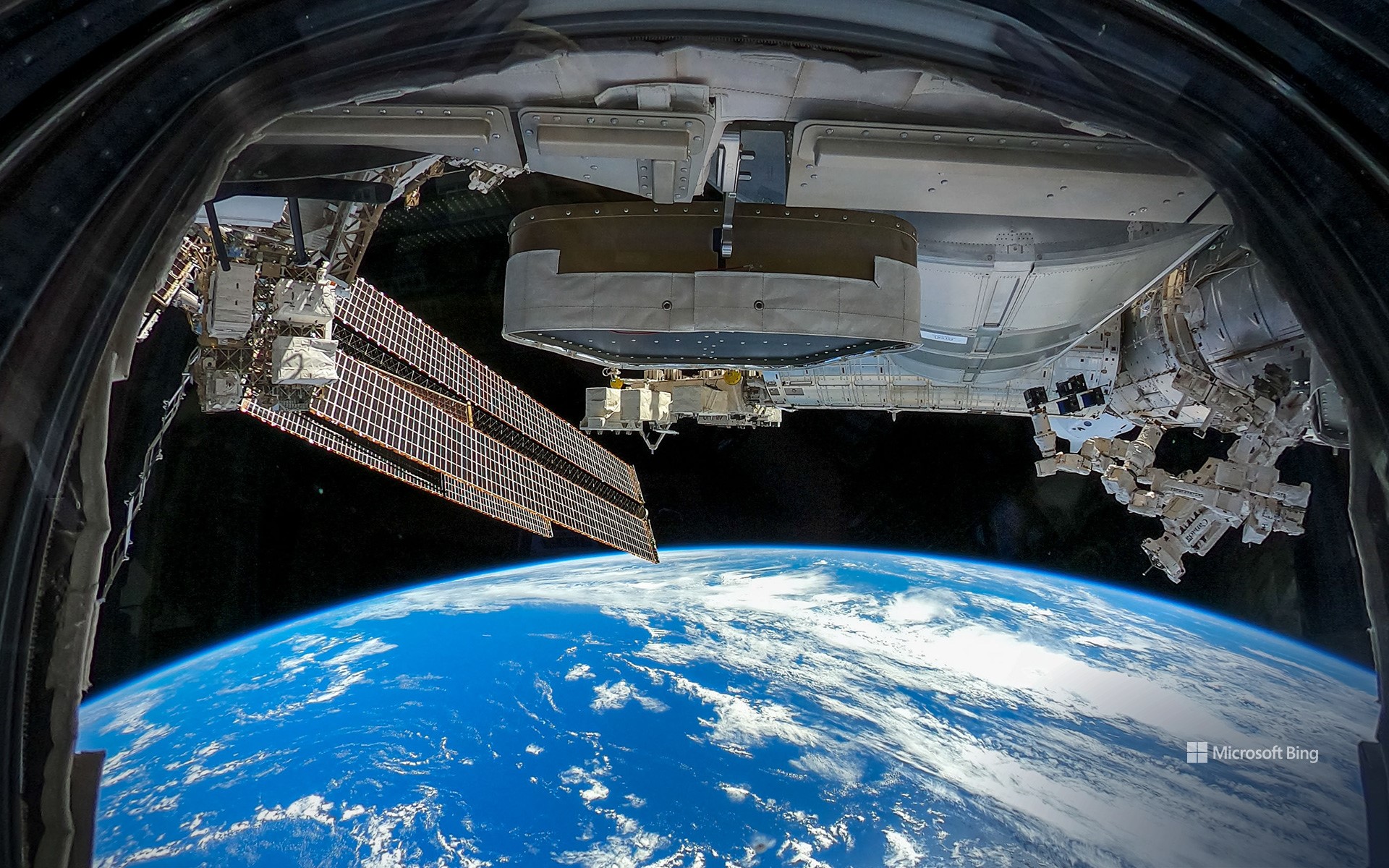
从国际空间站穹顶俯瞰南太平洋 View from the cupola of the International Space Station above the South Pacific Ocean (© NASA)
改变世界的108分钟 108 minutes that changed the world
载人空间飞行国际日
在人类历史上不久之前,我们迈出了超越地球的第一步。几千年来,人类仰望星空,想象着星辰大海的奥秘。然后,在1961年4月12日,一个人离开了地球,永远改变了历史。那天早上,苏联飞行员尤里·加加林登上了一艘名为“东方1号”的小型球形宇宙飞船。倒计时开始,发动机点火。随着火箭呼啸着冲向天空,他喊道:“出发了!”就这样,地球迎来了首位太空旅行者。
加加林在太空中绕地球飞行了 108 分钟,从人类前所未见的视角俯瞰着世界。当他安全返回地球时,一切都已不同。人类正式进入了太空时代。他的飞行点燃了登月竞赛,也让人们开始憧憬未来在火星生活的可能性。几十年后,为了纪念这一成就,联合国将 4 月 12 日设立为载人空间飞行国际日。今日图片展示的是国际空间站穹顶舱的视角,俯瞰广阔的南太平洋。这提醒着我们,在浩瀚的宇宙中地球是多么渺小,而人类航天探索已经走出了多远的距离。
International Day of Human Space Flight
Not so long ago, humanity took its first step beyond Earth. For thousands of years, we gazed at the stars, dreaming of what lay beyond. Then, on April 12, 1961, one man left the planet and changed history forever. That morning, Soviet pilot Yuri Gagarin climbed into a small, spherical spacecraft named Vostok 1. The countdown began. The engines ignited. As the rocket roared toward the sky, he called out, 'Poyekhali!'—'Let's go!' And just like that, Earth had its first space traveler.
For 108 minutes, Gagarin orbited the planet, watching the world from a view no human had ever seen before. When he landed safely back on Earth, everything had changed. Humanity had entered the Space Age. His flight sparked the race to the moon, the dream of living on Mars, and much more. Decades later, in honor of his achievement, the United Nations declared April 12 as the International Day of Human Space Flight. Pictured here is the view from the cupola of the International Space Station, showing the vast South Pacific Ocean. It is a reminder of how small Earth is in the grand cosmos—and how far human spaceflight has taken us.
木星的冰卫星木卫二 Jupiter's icy moon Europa (© NASA/JPL-Caltech/SETI Institute)
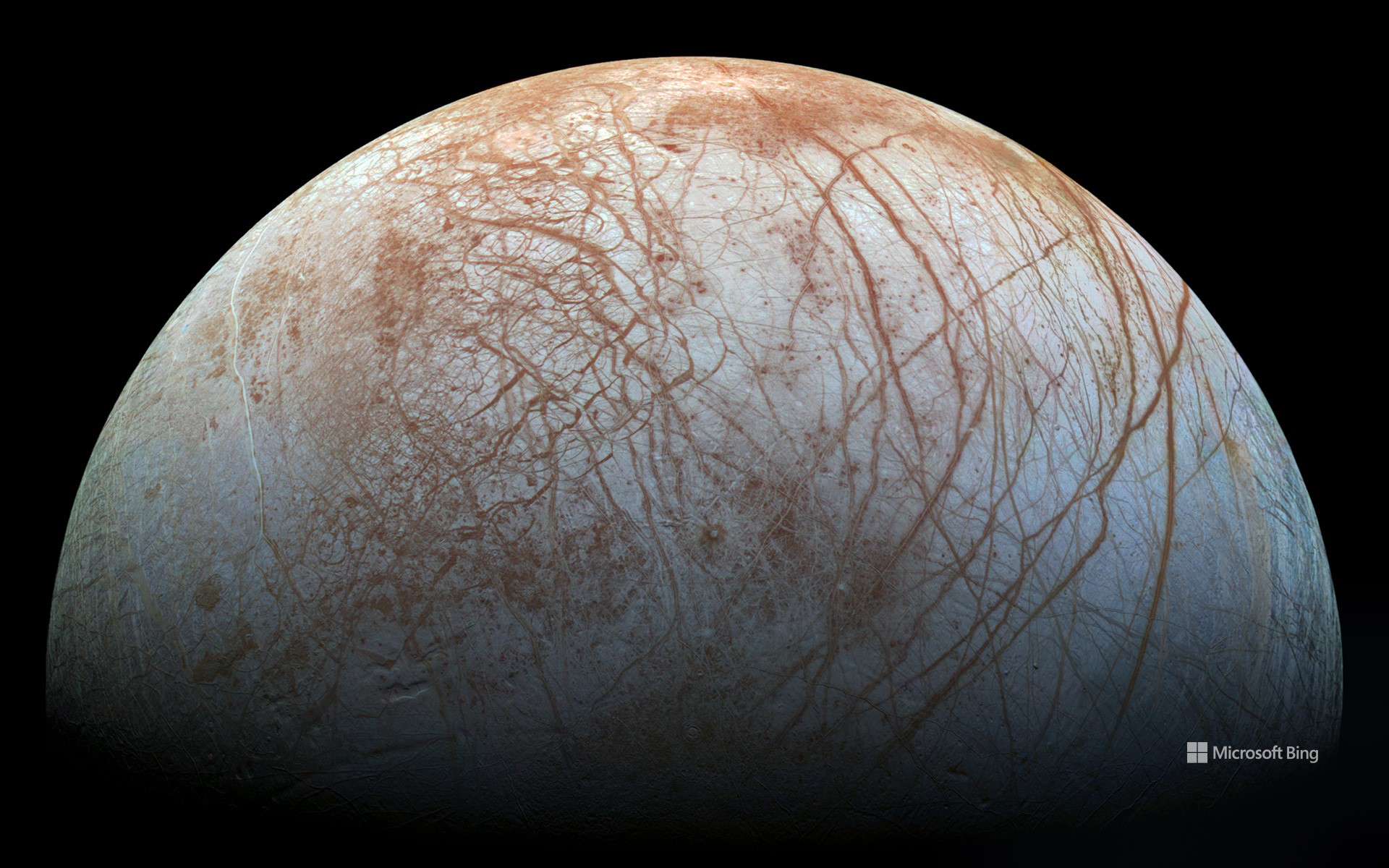
木星的冰卫星木卫二 Jupiter's icy moon Europa (© NASA/JPL-Caltech/SETI Institute)
一轮蓝月亮 A blue moon
世界空间周开幕
今天,我们要去探索宇宙。世界空间周的设立,是为了庆祝空间科学技术为改善人类生活水平所作出的贡献。除了帮助我们了解我们所生活的宇宙,太空探索在帮助科学家开发新药物、创造新能源、改进农业技术方面也发挥了重要作用。今年的世界空间周的主题是空间与气候变化,为了庆祝空间技术在了解和监测地球气候变化方面发挥的重要作用,将有83个国家会举办相关的庆祝活动。
太空探索还带来了太阳系的神奇照片,今天的这张就是其中之一。木卫二是木星已知的95颗卫星之一。它的表面主要由冻结的水构成,这些水破裂后又重新冻结,形成了我们在其表面看到的图案。事实上,虽然木卫二的大小只有地球的四分之一,但它的含水量可能是地球海洋的两倍。世界空间周是花点时间欣赏太阳系内外奇观的最佳时机!
World Space Week begins
Today, we're blasting off to explore the cosmos. World Space Week celebrates the science and technology that go into exploring our universe, and how it benefits us back on Earth. Space exploration has helped scientists develop new medicines, create new power sources, and even improve farming techniques. This year's theme is Space and Climate Change; events will be held in 83 countries to champion the role of space technology in understanding and monitoring Earth's climate.
Space exploration has also led to amazing photographs of our solar system, like the one featured here today. Europa is one of Jupiter's 95 known moons. Its surface is mainly made up of frozen water, which has broken up and refrozen, creating the patterns seen on its surface. Although Europa is just a quarter of the size of Earth, it may contain twice the amount of water. Space Week is the perfect time to take a moment to appreciate the wonders of our solar system, and beyond!
从国际空间站拍摄的巴哈马群岛 The Bahamas photographed from the International Space Station (© NASA)
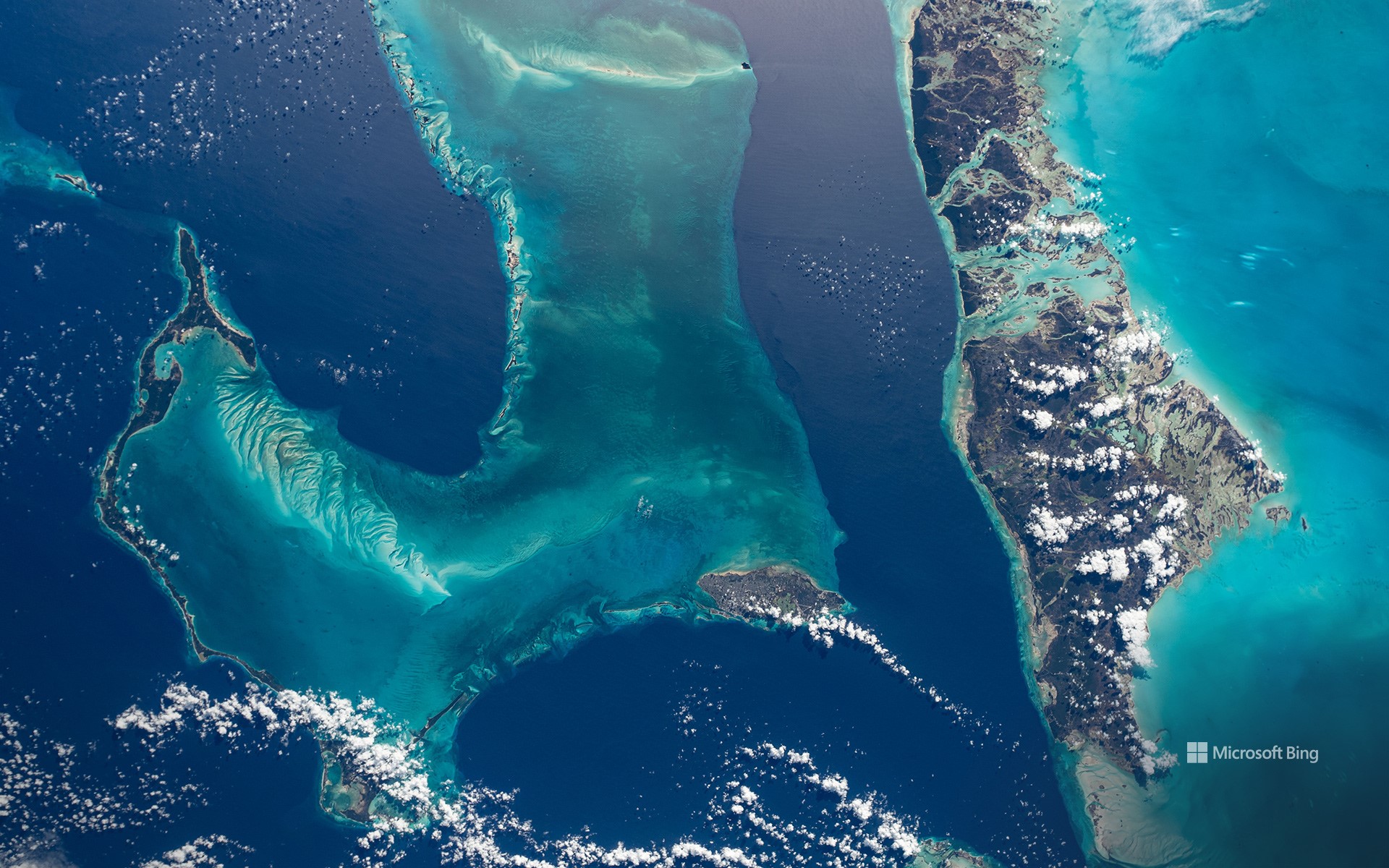
从国际空间站拍摄的巴哈马群岛 The Bahamas photographed from the International Space Station (© NASA)
潜入碧海 A dive into the blue
巴哈马
绿松石水域、充满活力的珊瑚礁、户外用餐和海盗故事——欢迎来到巴哈马!这个西印度群岛群岛在大西洋上有3000多个珊瑚礁、岛屿和小岛,是世界第三大堡礁——安德罗斯堡礁的所在地。对于被大自然吸引的冒险灵魂来说,长岛663英尺深的海洋天坑Dean's Blue Hole提供了一次激动人心的体验。从海港岛宁静的粉红色沙滩到首都拿骚熙熙攘攘的稻草市场和著名的酒窖,巴哈马不仅仅是一个目的地,它是一个迷人的故事。
The Bahamas
Turquoise waters, vibrant coral reefs, alfresco dining, and tales of pirates—welcome to the Bahamas! With over 3,000 cays, islands, and islets in the Atlantic Ocean, this West Indies archipelago is home to the world's third-largest barrier reef—the Andros Barrier Reef. For adventurous souls drawn to nature, Dean's Blue Hole, a 663-foot-deep marine sinkhole on Long Island, offers a thrilling experience. From the serene pink sand beaches of Harbour Island to the capital city Nassau's bustling Straw Market and famous wine cellars, the Bahamas is more than just a destination—it's a captivating tale waiting to unfold.
巴西亚马逊上空巨大的砧状云 Large anvil clouds above the Amazon in Brazil (© NASA)
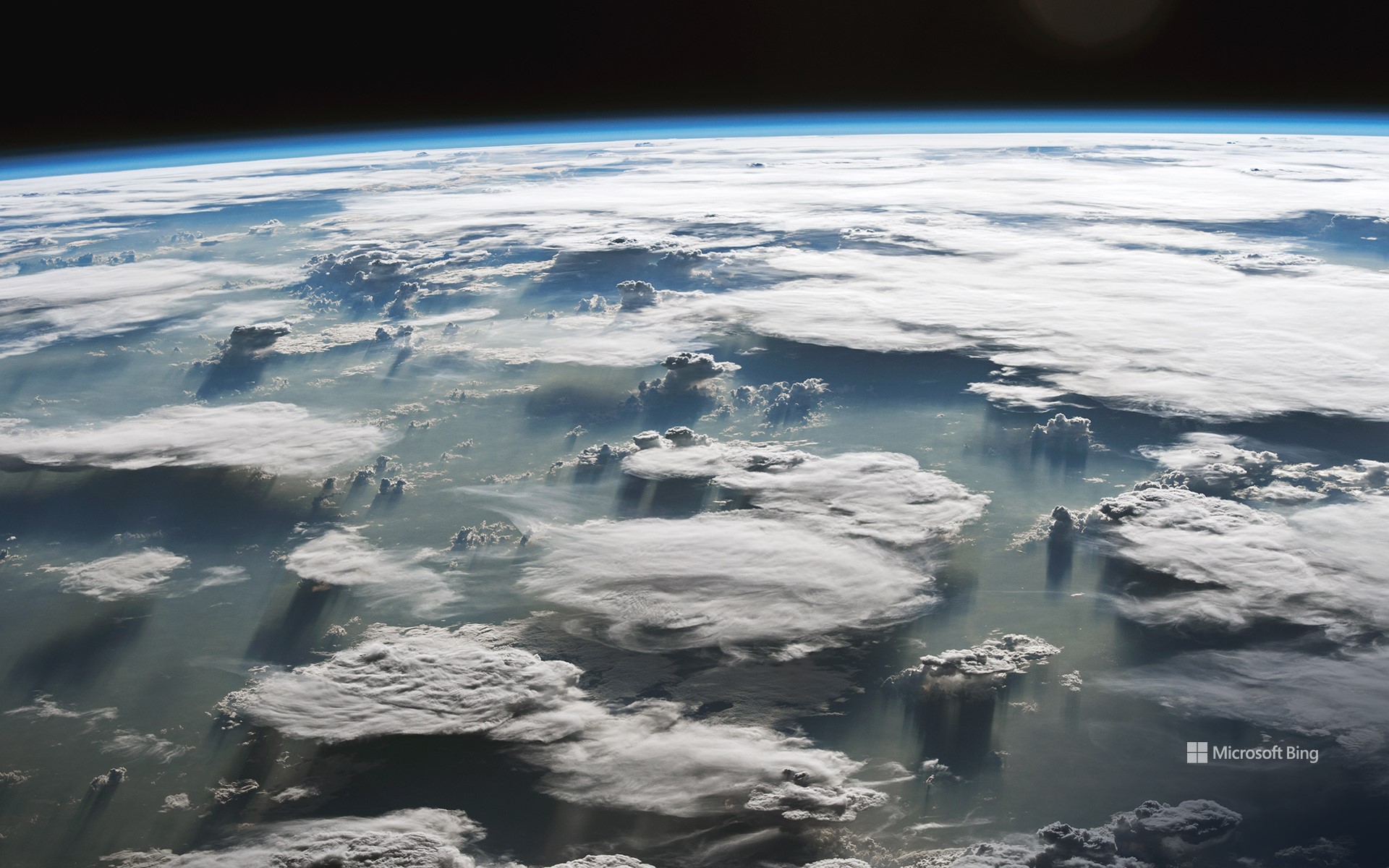
巴西亚马逊上空巨大的砧状云 Large anvil clouds above the Amazon in Brazil (© NASA)
造雾 Making a fog-cast
世界气象日
“当云层像岩石和高塔一样出现时,地球就会因频繁的阵雨而焕然一新”,这句古老的气象谚语对于雷暴云(又名积雨云或砧状云)来说有几分道理。而照片中展示的正是砧状云。今天,在世界气象日,我们向大气层的这个奇迹致敬。为了纪念世界气象组织于1950年3月23日成立,世界气象日的首次纪念活动于1961年的3月23日举行。但这一天不仅仅是对历史的致敬,还是为了呼吁人们认识到气象学在我们生活中的重要作用。天气预报可能并不总是可靠的,但由于卫星和超级计算机等技术的进步,天气预报已经取得了长足的进步。由于这些进步,全球天气模型可以提供长达16天的预报,龙卷风预警的平均提前时间从1974年的-15分钟缩短到今天的15分钟左右。让我们为气象学已取得的进展和将要取得的进步欢呼吧!
World Meteorological Day
'When clouds appear like rocks and towers, the Earth's refreshed with frequent showers.' There's a whisper of truth to this old proverb for the storm clouds, also known as cumulonimbus or anvil clouds, which are pictured here. Today, on World Meteorological Day, we honor the marvel that is our atmosphere. This observance, first held in 1961, commemorates the establishment of the World Meteorological Organization and recognizes the vital role meteorology plays in our lives. Weather forecasts may not always appear reliable, but thanks to advances in technology like satellites and supercomputers, they have come a long way. Global weather models provide forecasts for up to 16 days and, the average lead time for tornado warnings is now around 15 minutes. Cheers for the progress made and much more to come!
狼蛛星云中形成的年轻恒星,詹姆斯·韦布空间望远镜 Young stars forming in the Tarantula Nebula, James Webb Space Telescope (© NASA, ESA, CSA, STScI, Webb ERO Production Team)

狼蛛星云中形成的年轻恒星,詹姆斯·韦布空间望远镜 Young stars forming in the Tarantula Nebula, James Webb Space Telescope (© NASA, ESA, CSA, STScI, Webb ERO Production Team)
狼蛛星云 A spider's Webb of stars
世界太空周
每年10月4日至10日是世界太空周,可以让全世界的人了解太空探索和太空技术带来的诸多好处,并庆祝人类在地外取得的成就。其中令人惊叹的宇宙奇观是狼蛛星云,由美国宇航局的詹姆斯·韦伯太空望远镜拍摄。狼蛛星云是本星系群中最明亮、最大的恒星形成区,本星系群也是银河系的所在地。该星云巨大的体积和动态能量为宇宙学家和天文学家提供了大量引人注目的素材。
World Space Week
It's World Space Week, an opportunity to celebrate humanity's extraterrestrial achievements, as well as the benefits that come from space exploration and technology. The star of our homepage is actually a star-forming region known as the Tarantula Nebula, found in the same group of galaxies as our Milky Way. This detailed image was captured by the powerful James Webb Space Telescope and shows thousands of never-before-seen stars, previously obscured by cosmic dust. The nebula's colossal size and dynamic energy offer plenty of compelling material for astronomers and stargazers of all stripes.