丹霞地貌,张掖国家地质公园,甘肃省,中国 Danxia landform, Zhangye National Geopark, Gansu, China (© Weiquan Lin/Getty Images)
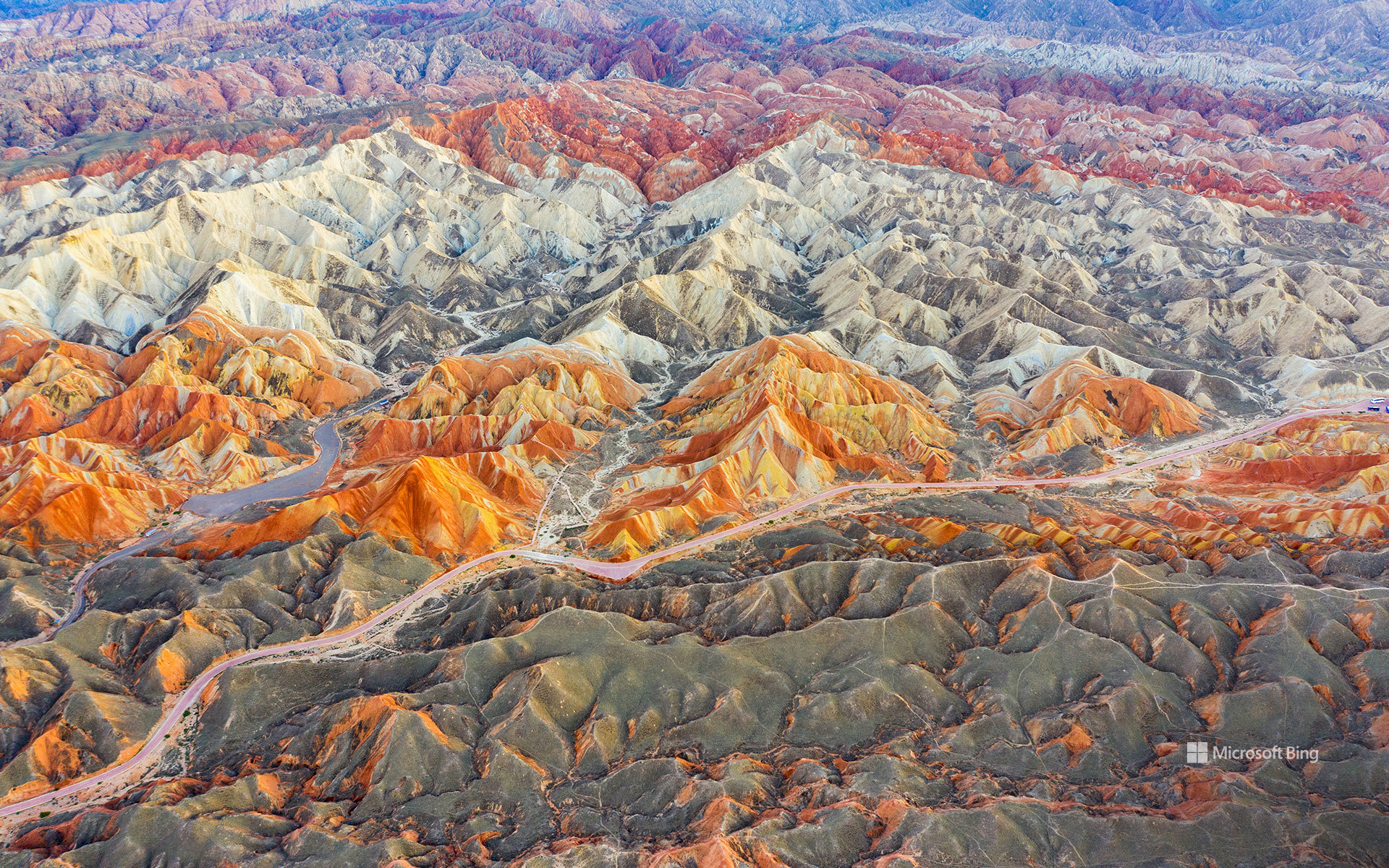
丹霞地貌,张掖国家地质公园,甘肃省,中国 Danxia landform, Zhangye National Geopark, Gansu, China (© Weiquan Lin/Getty Images)
条纹中的地球故事 Earth's story in stripes
国际地质多样性日
如果一座山能用一道道条纹向你展示它的地质历史,会是什么样?在中国的张掖国家地质公园,岩石正是如此。红色、橙色、黄色、棕色以及其他大地色调的条带在山脊间绵延起伏。这种壮丽景观被称为丹霞地貌,由地质年代中沉积形成的多层沉积岩塑造而成。后来,构造力使岩石抬升并发生褶皱,而风化和侵蚀则将它们雕琢成山脊、峭壁、沟壑和山峰。
“丹霞”这个名称的字面意思是玫瑰色的云霞。这些颜色来自岩石本身,其中矿物质和化学过程造就了不同的色调。例如,氧化铁形成了其大部分标志性的红色,而矿物质和沉积物的差异则构成了更加丰富的色彩。
张掖于2020年被指定为联合国教科文组织世界地质公园,坐落在甘肃,这一地区与古丝绸之路有着密切联系。值此国际地质多样性日,它以斑斓的色彩提醒我们:地球最杰出的艺术作品坚如磐石。
International Geodiversity Day
What if a mountain range could show you its geological history in stripes? At Zhangye National Geopark in China, the rocks do exactly that. Ridges roll across the landscape in bands of red, orange, yellow, brown, and other earthy tones. Known as the Danxia landform, this striking landscape was shaped by layers of sedimentary rock deposited over geological time. Tectonic forces later uplifted and folded the rocks, while weathering and erosion carved them into ridges, cliffs, gullies, and peaks.
The name Danxia literally translates to rosy clouds. The colors come from the rocks themselves, with minerals and chemical processes contributing to the different shades. Iron oxides, for instance, are responsible for much of its characteristic red coloring, while variations in minerals and sediment create its broader palette.
Designated as a UNESCO Global Geopark in 2020, Zhangye is located in Gansu, a region linked to the ancient Silk Road. For International Geodiversity Day, it is a colorful reminder that Earth's best artwork is rock-solid.
庆祝中秋节的中国灯笼 Chinese lanterns for Mid-Autumn Festival celebration (© LeeYiuTung/Getty Images)
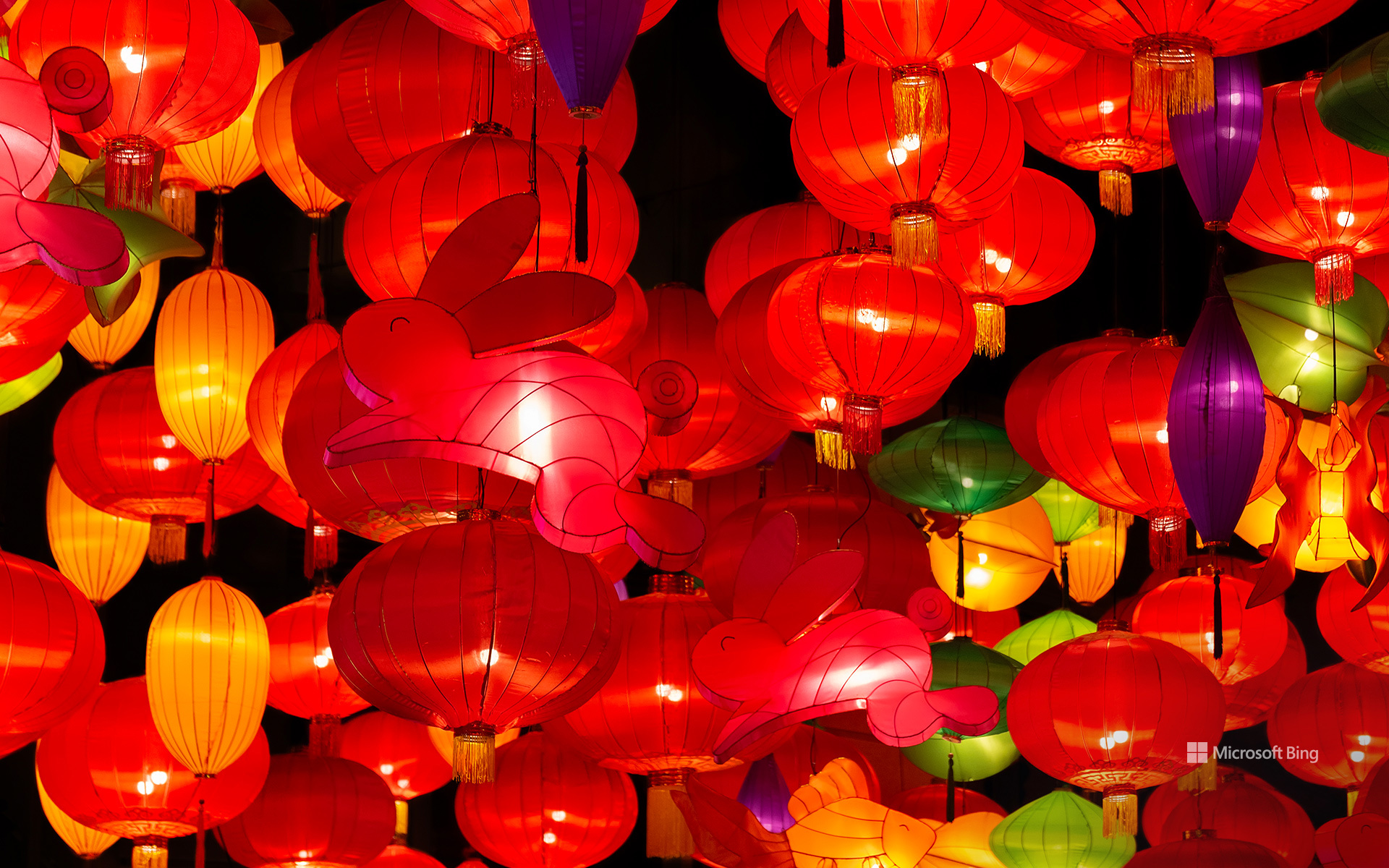
庆祝中秋节的中国灯笼 Chinese lanterns for Mid-Autumn Festival celebration (© LeeYiuTung/Getty Images)
当月亮也来赴会 When the moon joins the party
中秋节
如果满月是你家宴上的贵宾,会是什么情景?这正是中秋节的意蕴,中秋节也被称为月亮节。这个节日在农历八月十五庆祝,是中国文化中最重要的节日之一。它的源头可追溯至3,000多年前周朝时期的祭月仪式。最广为人知的传说讲述了嫦娥服下长生不老药后飞上月宫的故事。
月饼是这一节日最具代表性的美食。圆圆的外形象征着圆满与团聚。民间传说称,元朝时期,反抗者曾把推翻蒙古统治者的秘密消息藏在月饼里。
这个节日还催生了牵线结缘的习俗,因此被比作月亮版的情人节。尽管中秋月以明亮著称,科学却告诉我们,它不一定是一年中最亮的月亮。传说、灯笼和月饼汇聚于此,这个节日确实值得人们抬头仰望。
Mid-Autumn Festival
What if the full moon were the guest of honor at your family dinner? That is the idea behind the Mid-Autumn Festival, also known as the Moon Festival. Celebrated on the 15th day of the eighth lunar month, it is one of the most important festivals in Chinese culture. Its roots trace back more than 3,000 years to moon-honoring rituals during the Zhou Dynasty. Its best-known legend tells of Chang'e, who drank an elixir of immortality and rose to the moon.
Mooncakes are the celebration's signature treat. Their round shape symbolizes completeness and reunion. Folklore claims that rebels once hid secret messages to overthrow the Mongol rulers inside mooncakes during the Yuan Dynasty.
The festival has also inspired matchmaking customs, earning comparisons to a lunar Valentine's Day. And while the Mid-Autumn moon is celebrated for its brightness, science says it is not necessarily the year's brightest. With legends, lanterns, and mooncakes, this festival has plenty to look up to.
地坛公园秋日美景,北京,中国 Beijing autumn ditan park view beautiful fall (© by Wei/Adobestock)
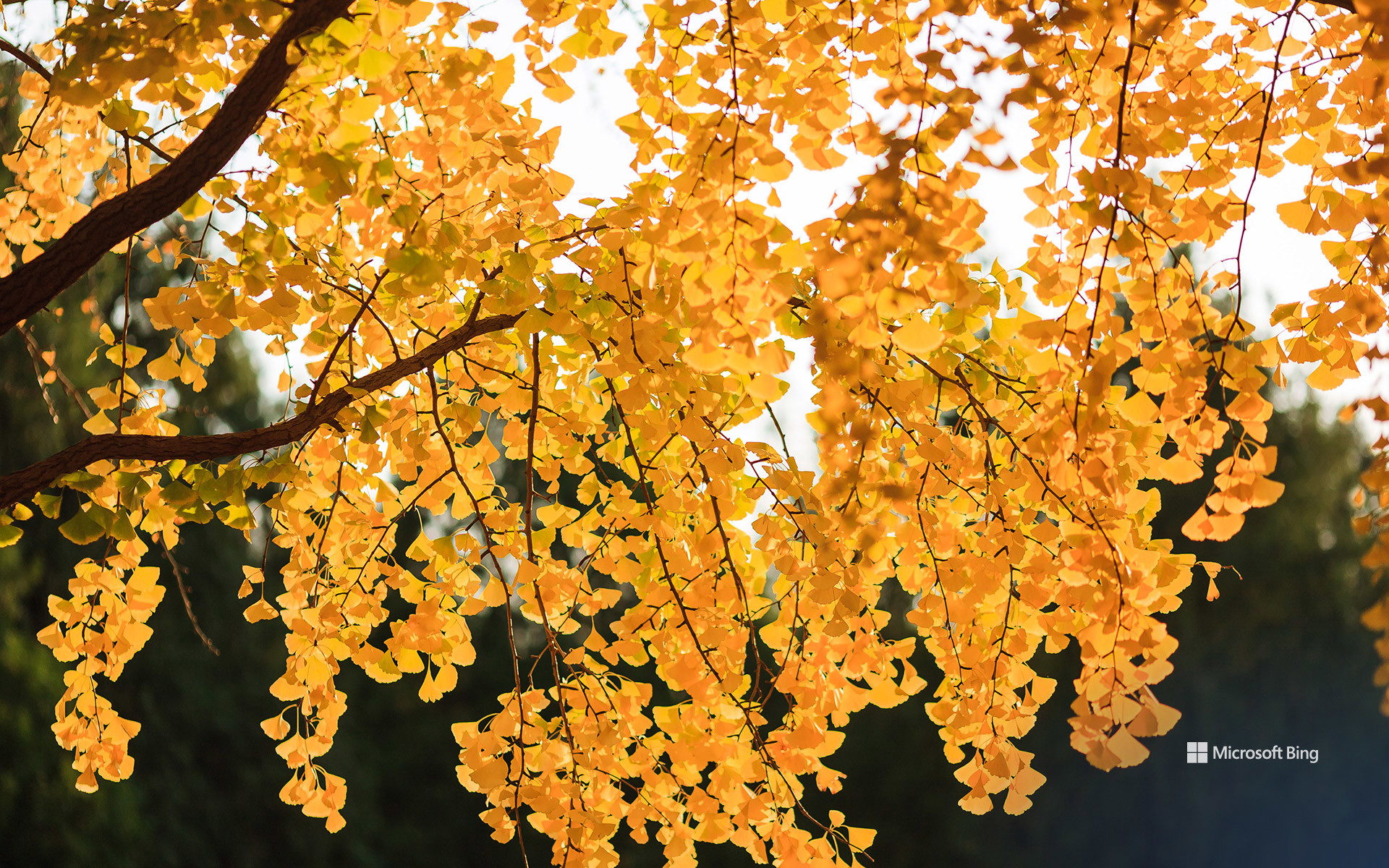
地坛公园秋日美景,北京,中国 Beijing autumn ditan park view beautiful fall (© by Wei/Adobestock)
金秋平分,地坛染黄 Golden leaves of the Autumn Equinox
地坛公园银杏大道,北京,中国
金色地毯通常只出现在童话世界里,但在金秋时节的北京,它们却铺展在你的脚下。地坛公园(方泽坛)著名的银杏大道汇聚了200多株历史悠久的银杏树。每当秋风掠过,数以万计的扇形金叶翩翩飘落,将这座古老的皇家坛庙铺垫成一片如梦似幻的金黄海洋。
地坛始建于明代嘉靖九年(1530年),曾是明清两代帝王在秋分时节祭祀“皇地祗”神明的地方。如今,当太阳直射赤道、昼夜再次平分,这座庄严的皇家坛庙不再只有岁月的肃穆,而是在光影与斑斓色彩中蜕变为自然与历史交融的避风港,静静诉说着古都数百年的时空变迁。
在清晨和煦的秋阳下,朱红的宫墙、古朴的黛瓦与熠熠生辉的金叶交相辉映,勾勒出绝美的高古意境。正如文学大师史铁生在《我与地坛》中所描绘的那样,地坛始终守护着这份宁静与包容,倾听着风吹落叶的沙沙响声,邀请每一位游人在喧嚣的现代都市深处放慢脚步,体味岁月留下的温润与悠长。
地肤田,中国 Field of kochia plants, China (© lingqi xie/Getty Images)

地肤田,中国 Field of kochia plants, China (© lingqi xie/Getty Images)
坚韧在此扎根 Where toughness takes root
地肤田,中国
在今天的画面中,中国大地上铺展着绿色与深红色的地肤。地肤原产于欧亚大陆部分地区,19世纪末作为观赏植物和制作扫帚的材料来源被引入美国。它耐旱、耐热、耐盐碱土壤和少雨环境的能力,帮助其扩散至美国大平原及美国西部大部分地区。
地肤由种子迅速生长,单株在一个生长季内便可长到数英尺高,并产生数千粒种子。幼株可用作牲畜饲料,尤其是在其他植被稀少的干旱地区。地肤因醒目的色彩和顽强的生命力而受人欣赏,但农民也将它视为一种难以治理的耐性杂草。从美国大草原到画面中中国色彩绚丽的田野,它始终是自然适应能力的非凡例证。
Field of kochia plants, China
In today's image, kochia plants spread across the landscape in China in shades of green and deep red. Native to parts of Eurasia, kochia was introduced to the United States in the late 1800s as an ornamental plant and a source of material for broom making. Its ability to withstand drought, heat, saline soils, and low rainfall helped it spread across the Great Plains and much of the American West.
Growing quickly from seed, a single plant can reach several feet tall in one season and produce thousands of seeds. Young plants have been used as forage for livestock, particularly in dry regions where other vegetation is scarce. While admired for its striking colors and resilience, kochia is also known to farmers as a hardy weed that can be difficult to control. From American prairies to the vibrant fields seen here in China, it remains a remarkable example of nature's adaptability.
在处暑时节的村庄田野与寺庙佛塔,江阴市,江苏省,中国 Village fields and a temple pagoda during the End of Heat solar term, Jiangyin City, Jiangsu Province, China (© jia yu/Getty Images)

在处暑时节的村庄田野与寺庙佛塔,江阴市,江苏省,中国 Village fields and a temple pagoda during the End of Heat solar term, Jiangyin City, Jiangsu Province, China (© jia yu/Getty Images)
暑气渐消,金秋已至 The receding heat brings golden autum
处暑时节
处暑时节将至,航拍视角下的古塔迎着晨雾耸立于渐染秋色的林木之间,生动呈现了暑气消退、金秋将至的自然韵律,以及中国传统文化景观的悠久魅力 。这一时节的传统习俗包括放河灯、迎秋赏景以及饮用中草药煎剂(如凉茶/防暑汤),以调和四季交替时的身体平衡 。
穿越西台吉乃尔湖的公路,青海省,中国 Highway through Xitai Jinaier Lake, Qinghai Province, China (© Kaicheng Xu/Getty Images)

穿越西台吉乃尔湖的公路,青海省,中国 Highway through Xitai Jinaier Lake, Qinghai Province, China (© Kaicheng Xu/Getty Images)
穿行于蓝色之间 Between the blues
中国青海省西台吉乃尔湖上的公路
在青藏高原北缘、中国西部的荒漠之中,西台吉乃尔湖以一种超现实的姿态横跨在偏远的柴达木盆地。315国道的一段延伸线直接纵贯其浅水区,营造出一种公路悬浮于两个世界之间的视觉错觉。受卤水中矿物质浓度差异的影响,湖水呈现出鲜明的对比:一侧常显深邃的蓝色,另一侧则呈现柔和的绿色。
该湖泊位于海拔超过2,700米的干旱盆地腹地,周围盐湖广布,荒漠无垠。在这里,强烈的蒸发作用留下了丰富的矿物沉积,赋予了湖水不寻常的色调。这种地质作用造就了一个荒凉却迷人的环境——宁静、广袤,充满了域外行星般的质感。驱车驶过西台吉乃尔湖,仿佛在世界边缘跨越一座内陆海,地质演化与极度的孤独感交织,构成了中国境内最令人难忘的自然景观之一。
Highway through Xitai Jinaier Lake, Qinghai Province, China
Cutting a surreal path through the high-altitude deserts of western China, Xitai Jinaier Lake (also known as West Taijinar Lake) is a striking salt lake in the remote Qaidam Basin. A stretch of National Highway 315 runs directly across its shallow waters, creating the illusion of a road floating between two worlds. On one side, the water often appears deep blue; on the other, a softer green hue, a contrast shaped by differing mineral concentrations in the brine.
Set more than 8,800 feet above sea level, the lake lies within a vast, arid basin where salt lakes and desert expanses dominate the landscape. Here, evaporation leaves behind mineral-rich deposits, giving the water its unusual tones. The result is a stark yet captivating environment—quiet, expansive, and almost otherworldly. Driving across Xitai Jinaier Lake feels like crossing an inland sea at the edge of the world, where geology and isolation combine to create one of China's most unforgettable landscapes.
四川省的茶梯田, 中国 Tea terraces in Sichuan Province, China (© lzf/Shutterstock)

四川省的茶梯田, 中国 Tea terraces in Sichuan Province, China (© lzf/Shutterstock)
酿造传承 Brewing a legacy
国际茶日
“国际茶日”旨在礼赞一种将日常习俗与古老地貌紧密相连的饮品。只需瞥一眼中国四川省那层层叠叠的梯田茶园,便不难领略其深植的文化根基。这片位于中国西南部的云雾缭绕之地,乃是茶文化的早期发源地之一;早在两千多年前,当地居民便已在此饮茶、植茶。在邻近的蒙顶山上,一位名叫吴理真的学者曾在汉朝时期开辟了世界上首批人工管理的茶园,从而为后世一代又一代的茶农奠定了坚实的基础。
这些陡峭的梯田并非仅仅为了美观而建。它们帮助农民调控雨水、保护脆弱的土壤,并亲手采摘那些日后将远销四川境外的嫩叶。数百年来,产自这些山丘的收成沿着崎岖的商贸古道运往西藏,由背夫们翻山越岭、一路背负前行。“国际茶日”已获联合国认可,旨在彰显茶饮深厚的文化底蕴,并突显那数百万个与每一杯茶息息相关的生计——无论这杯茶是冲泡于寻常百姓家中,还是种植于巍峨的山坡之上。
International Tea Day
International Tea Day celebrates a drink that connects daily rituals to ancient landscapes. Just one look at the terraced tea fields of Sichuan Province, China, shows how deep those roots run. This misty region in southwest China is one of the earliest centers of tea culture, where people drank and cultivated tea more than 2,000 years ago. On nearby Mengding Mountain, a scholar named Wu Lizhen planted some of the world's first managed tea gardens during the Han Dynasty, laying the groundwork for generations of growers.
The steep terraces weren't built for beauty alone. They helped farmers manage rainfall, protect fragile soil, and hand-pick tender leaves that later traveled far beyond Sichuan. For centuries, harvests from these hills moved along rugged trade routes toward Tibet, carried by porters across mountain passes.
Recognized by the United Nations, International Tea Day highlights the beverage's cultural legacy and the millions of livelihoods tied to every cup—whether brewed at home or grown on a mountainside.
中国的长城 The Great Wall of China (© aphotostory/Getty Images)

中国的长城 The Great Wall of China (© aphotostory/Getty Images)
初夏·翠微长城 Emerald Great Wall in Early Summer
中国夏季的长城
五月的中国北方,仿佛刚从春天的画卷中苏醒,带着清新的气息与恰到好处的温度,向远方的旅人发出邀请。无论是在古城街巷间寻访历史的回声,还是沿着万里长城的脊线远望群山,五月的北方都以其明净与舒展,呈现出一年中最适合出行的模样。此时出发,不仅能避开盛夏的炎热,也能在恰好的光影与温度中,收获一段轻盈而难忘的旅途。
初夏的万里长城,呈现出与春秋截然不同的生命力。连绵起伏的山峦被郁郁葱葱的植被覆盖,长城宛如一条蜿蜒的巨龙,在翠绿之间若隐若现。阳光充足时,城墙的砖石在蓝天映衬下显得格外鲜明,视野开阔、层次分明。这一时节的长城更具活力,但气温也相对较高,尤其是像八达岭长城这样的热门段落,人流较多、体感较热。相比之下,慕田峪长城等区域植被覆盖更丰富,环境相对清幽,是不少人避开拥挤、享受自然的选择。
元宵节期间悬挂的宫灯,北京自贡灯会现场,北京,中国 Palace lanterns hung during the Lantern Festival, Zigong Lantern Festival in Beijing, Beijing, China (© Grisha Bruev/Shutterstock)

元宵节期间悬挂的宫灯,北京自贡灯会现场,北京,中国 Palace lanterns hung during the Lantern Festival, Zigong Lantern Festival in Beijing, Beijing, China (© Grisha Bruev/Shutterstock)
花灯映月,团圆吉祥 Happy and reunited days
元宵节
元宵节是中国农历新年的重要节日,通常在正月十五庆祝。人们会吃汤圆(象征团圆)并欣赏各式灯笼,寓意团圆、幸福与吉祥。节日期间,家庭聚会、赏灯和灯谜活动都非常受欢迎,是春节庆祝活动的延续。
北京自贡灯会是元宵节期间最具特色的灯会之一,汇集了丰富多彩的宫灯、动物灯和民俗灯组。每一盏灯都巧妙设计、栩栩如生,为观众呈现一场视觉盛宴。灯会不仅展示精湛工艺,也传递了节日的喜庆与吉祥氛围。
中国春节传统汉字“福” Chinese New Year traditional character "Fu" (© DuKai摄影师/Getty Images)

中国春节传统汉字“福” Chinese New Year traditional character "Fu" (© DuKai摄影师/Getty Images)
福气满满,马年大吉 Wishing you a prosperous Year of the Horse
马年春节
过年好!今天是中国民间最隆重最富有特色的传统节日之一。其实每年从腊八或小年开始,到元宵节,都称之为过年。春节期间,中国全国各地人们都举办着感恩祈福、阖家团聚、除旧布新、迎禧接福、祈求丰年为主要内容的活动。而中国农历新年也在世界各地掀起了“中国风”,春节庆祝活动内容丰富多彩,具有重要的历史、艺术和文化价值。
马在中国文化中象征着力量、速度、活力与进取精神。自古以来,马在战争、农业和商业中都扮演着重要角色,在文学、成语和俗语中也占有一席之地,如“马到成功”和“马上封侯”常用于表达顺利与成功。马的形象被历代文人歌颂,并在艺术和文化创作中频繁出现。
Chinese New Year
Chinese New Year, also known as the Spring Festival, marks the beginning of a new year on the traditional Chinese lunisolar calendar. This calendar follows the phases of the moon and the rhythms of the seasons. Red lanterns—like the ones shown in today's image—are widely associated with the celebration. The holiday falls on the new moon between January 21 and February 20 and has been observed for more than 2,000 years. In 2024, UNESCO added the Spring Festival to its Intangible Cultural Heritage of Humanity list, recognizing its cultural and historical importance.
The festival follows a 15-day sequence, beginning on Chinese New Year's Eve and ending with the Lantern Festival. Each day traditionally carries its own customs, though practices vary from region to region. Even with these regional differences, the overall progression of the celebration remains similar across communities, reflecting a shared cultural framework tied to the lunar calendar.
The date of Chinese New Year changes annually because it is based on lunar cycles rather than the Gregorian calendar. This shifting date sets it apart from fixed-date holidays and explains why the festival's timing varies each year, even though its internal structure stays consistent.