丹霞地貌,张掖国家地质公园,甘肃省,中国 Danxia landform, Zhangye National Geopark, Gansu, China (© Weiquan Lin/Getty Images)
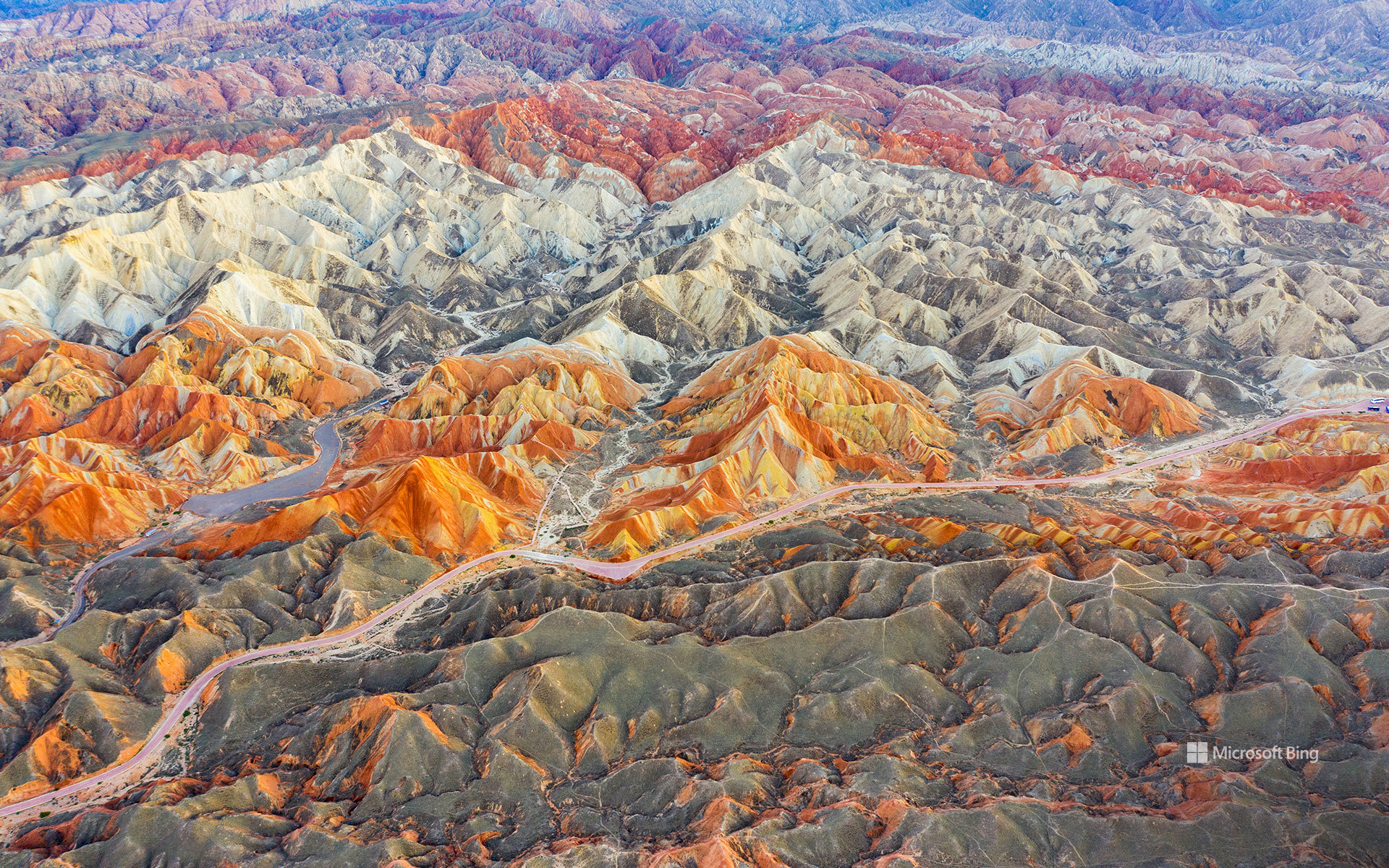
丹霞地貌,张掖国家地质公园,甘肃省,中国 Danxia landform, Zhangye National Geopark, Gansu, China (© Weiquan Lin/Getty Images)
条纹中的地球故事 Earth's story in stripes
国际地质多样性日
如果一座山能用一道道条纹向你展示它的地质历史,会是什么样?在中国的张掖国家地质公园,岩石正是如此。红色、橙色、黄色、棕色以及其他大地色调的条带在山脊间绵延起伏。这种壮丽景观被称为丹霞地貌,由地质年代中沉积形成的多层沉积岩塑造而成。后来,构造力使岩石抬升并发生褶皱,而风化和侵蚀则将它们雕琢成山脊、峭壁、沟壑和山峰。
“丹霞”这个名称的字面意思是玫瑰色的云霞。这些颜色来自岩石本身,其中矿物质和化学过程造就了不同的色调。例如,氧化铁形成了其大部分标志性的红色,而矿物质和沉积物的差异则构成了更加丰富的色彩。
张掖于2020年被指定为联合国教科文组织世界地质公园,坐落在甘肃,这一地区与古丝绸之路有着密切联系。值此国际地质多样性日,它以斑斓的色彩提醒我们:地球最杰出的艺术作品坚如磐石。
International Geodiversity Day
What if a mountain range could show you its geological history in stripes? At Zhangye National Geopark in China, the rocks do exactly that. Ridges roll across the landscape in bands of red, orange, yellow, brown, and other earthy tones. Known as the Danxia landform, this striking landscape was shaped by layers of sedimentary rock deposited over geological time. Tectonic forces later uplifted and folded the rocks, while weathering and erosion carved them into ridges, cliffs, gullies, and peaks.
The name Danxia literally translates to rosy clouds. The colors come from the rocks themselves, with minerals and chemical processes contributing to the different shades. Iron oxides, for instance, are responsible for much of its characteristic red coloring, while variations in minerals and sediment create its broader palette.
Designated as a UNESCO Global Geopark in 2020, Zhangye is located in Gansu, a region linked to the ancient Silk Road. For International Geodiversity Day, it is a colorful reminder that Earth's best artwork is rock-solid.
被胡杨树围绕着的湖, 金塔县, 酒泉, 甘肃, 中国 Lake surrounded by euphrates poplar trees, Jinta, Jiuquan, Gansu, China (© Feng Wei Photography/Getty images)

被胡杨树围绕着的湖, 金塔县, 酒泉, 甘肃, 中国 Lake surrounded by euphrates poplar trees, Jinta, Jiuquan, Gansu, China (© Feng Wei Photography/Getty images)
千年秘境 Thousand Years of Secret Realm
中国甘肃金塔胡杨林
金塔沙漠胡杨林风景区位于甘肃省酒泉市金塔县西部巢湖林场,占地八万余亩,拥有西北地区最大的人工胡杨林。这些古老、耐寒耐旱的胡杨树,是第三纪遗留下来的,创造了“三千年古树”的生态奇观。金波湖水与胡杨林相映成趣,沙枣、柽柳等植物构成了多样的生态系统。
敦煌月牙泉,甘肃省,中国 Crescent Lake near Dunhuang, Gansu Province, China (© R7 Photo/Shutterstock)

敦煌月牙泉,甘肃省,中国 Crescent Lake near Dunhuang, Gansu Province, China (© R7 Photo/Shutterstock)
这片湖泊可不是海市蜃楼 This lake is no mirage
敦煌月牙泉,中国
月牙泉位于中国甘肃省敦煌市附近,是隐藏在广袤戈壁滩上的一个摄人心魄的自然奇观。数百年来,这片因独特的月牙形状而闻名的绿洲,一直是一个重要的水源地。人们认为,月牙泉是风蚀形成的,其水源是地下泉水。由于附近有山脉遮挡,月牙泉才不会被该地的风沙所淹没。当地采取了许多保护措施,确保月牙泉不会干涸。游客不仅可以在湖上划船、骑骆驼在沙漠徜徉,还可以在附近的莫高窟欣赏古代佛教壁画及雕塑。
Crescent Lake near Dunhuang, China
Crescent Lake is a captivating natural wonder hidden in the vast Gobi Desert near the city of Dunhuang in China's Gansu province. This oasis, named for its unusual shape, has been a vital water source here for centuries. The lake is thought to have formed in a valley carved by wind and been fed by an underground spring. It sits amid Dunhuang's 'singing' sand dunes, which make a noise when the wind blows. The sand dunes also help stop the lake from being swallowed by sand and conservation efforts have ensured that it doesn't dry out. Visitors enjoy boating on the lake, camel rides through the surrounding dunes, and seeing ancient Buddhist art and murals in the nearby Mogao Caves.
张掖国家地质公园,甘肃,中国 Zhangye Danxia National Geopark, Gansu, China (© TONNAJA/Getty Images)

张掖国家地质公园,甘肃,中国 Zhangye Danxia National Geopark, Gansu, China (© TONNAJA/Getty Images)
行走在彩虹岩石上 Walking a rocky rainbow
国际岩石日
7月13日是国际岩石日。为什么要给岩石设立一个节日呢?因为自石器时代以来,岩石就在人类历史中扮演着重要角色。它们是人类最早的工具,也是自然的记录,包裹着古代生物的化石,也留下了地质变化的印记。中国张掖丹霞国家地质公园的彩虹山就是一个很好的例子。这里的沉积岩经过数百万年的风化和侵蚀,最终形成了这片色彩斑斓的风景,红、橙、黄、紫各色疏密相生,组合有序。变质岩、沉积岩、火成岩等等各种各样的岩石帮助形成了我们今天所生活的世界。
International Rock Day
International Rock Day, on July 13, celebrates these hardy heroes, which have played a big part in human history since at least the Stone Age. They served as humanity's first tools and as nature's journals, protecting ancient fossils and documenting changes caused by geological processes.
Our homepage image shows Zhangye National Geopark's Rainbow Mountains in China, an incredible landscape created over millions of years. Those colorful layers are formed of sedimentary sandstone rock. Iron oxide gave the rock its predominately rusty hue, while other oxides tinted the various layers brown, yellow, and green. Sandstone and minerals that were once layered on top of each other were lifted and distorted by tectonic movement, revealing those colorful stripes. And that is not the end of this geological tale. This unique landscape continues to change, as wind and water erosion sculpts new pillars and ravines. No matter what your favorite category of rock is—metamorphic, sedimentary, or igneous—rocks of every kind helped build the world we live in today.
马蹄寺风景区内的马蹄寺和石窟,中国甘肃省 The Mati Si (Horse's Hoof Temple) and grottoes of Mati Si Scenic Area, Gansu province, China (© Ana Flašker/Alamy)
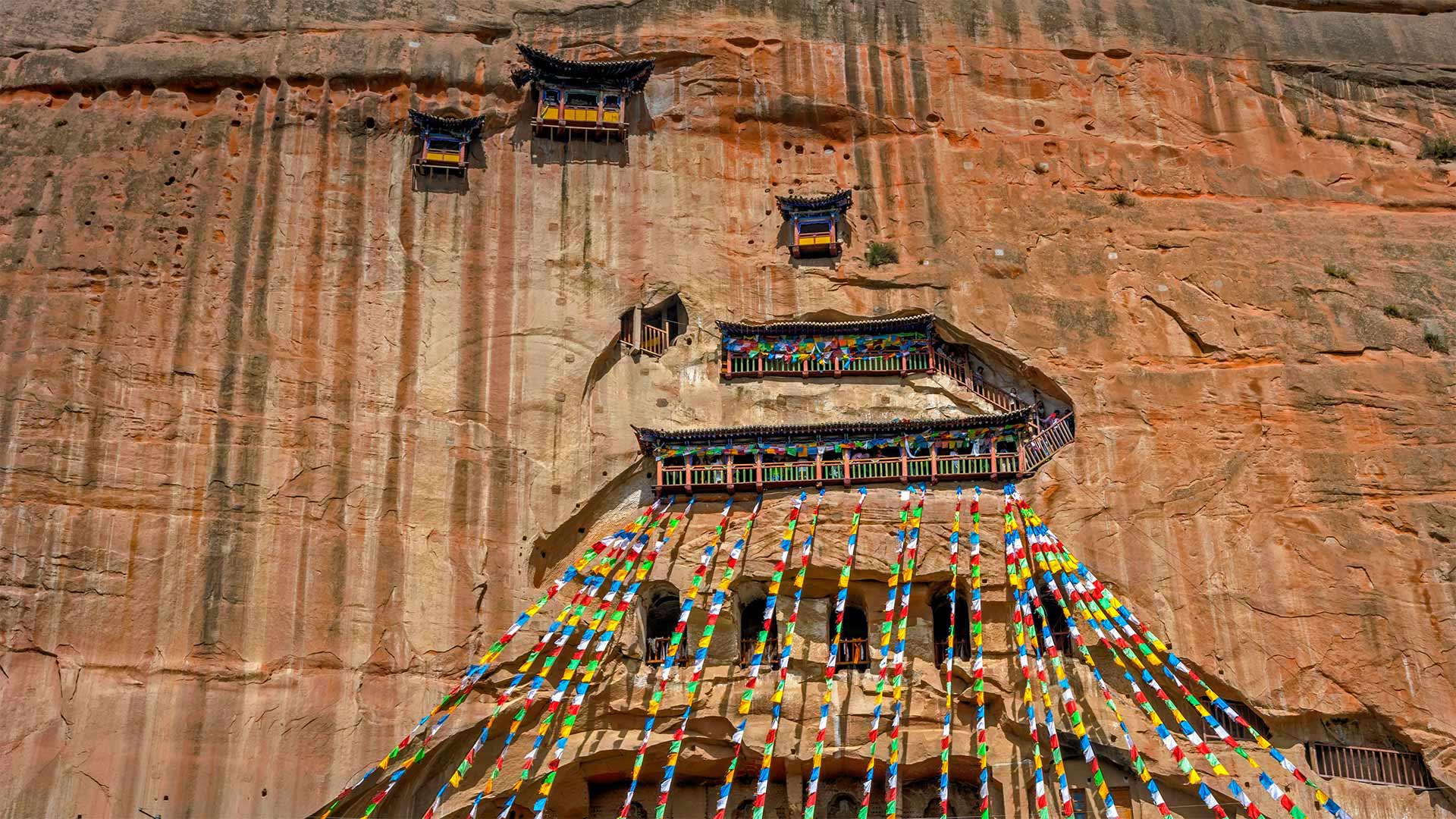
马蹄寺风景区内的马蹄寺和石窟,中国甘肃省 The Mati Si (Horse's Hoof Temple) and grottoes of Mati Si Scenic Area, Gansu province, China (© Ana Flašker/Alamy)
A cliff-hanging complex of temples
Feast your eyes on the colorful Mati Si (Horse's Hoof Temple) and its cliffside complex of sandstone grottoes and wooden pavilions. To understand the mythical origin of the Horse's Hoof Temple, you have to squint your eyes a bit. Then you might be able to see the hoof marks left by a frightened longma, the fabled winged dragon horse that purportedly landed here thousands of years ago. What you can't see is the claustrophobic network of tunnels connecting the seven floors and seven grottoes to the Mati Si pagoda, which itself is 200 feet high and holds hundreds of Buddha statues.
Mati Si lies within the grasslands of China's Gansu province along the Hexi Corridor of what was once China's Northern Silk Road. There's no bus service to the temple so you'll have to grab a taxi or, like the mythical dragon horse that left its imprint here, hoof it.