小溪上方的萤火虫,冈山县,日本 Fireflies glowing above a stream, Okayama Prefecture, Japan (© tdub303/Getty Images)

小溪上方的萤火虫,冈山县,日本 Fireflies glowing above a stream, Okayama Prefecture, Japan (© tdub303/Getty Images)
流光之诗 The poetry of vanishing light
萤火虫发光在小溪上方,冈山县,日本
在冈山县(Okayama Prefecture),当湿润的空气笼罩在溪流之上,被称为“hotaru”的日本萤火虫便开始发出信号。在温暖无风的夜晚,如果条件理想,它们通常会在日落约两小时后开始发光,发散出一种水边独有的静谧感。
萤火虫并非蝇类,而是甲虫(Beetles),大多数种类栖息在水边,如池塘、溪流、沼泽和河流。白天,它们隐藏在低矮的草丛中;入夜后,它们爬上植被并起飞,通过闪烁光芒来寻找配偶。它们的光源自腹部的化学反应,而特定物种的闪烁频率有助于伴侣识别正确的信号。它们的幼虫生活在更安静且充满饥饿感的阶段:作为肉食性动物,幼虫以蜗牛和蛞蝓等软体动物为食;而成年萤火虫则可能采食昆虫、花蜜或花粉。
在日本,“萤狩”(Hotaru-gari,即观赏萤火虫)有着深厚的文化根基。平安时代(794–1185)的作家如清少纳言(Sei Shōnagon)曾在著作中描写过萤火虫,后世的文学作品和浮世绘(Ukiyo-e,一种传统的木版画和绘画形式)也常借其转瞬即逝的光芒来隐喻生命之无常。
Fireflies glowing above a stream, Okayama Prefecture, Japan
In Okayama Prefecture, when humid air settles over a stream, hotaru—Japan's fireflies—begin signaling. On warm, windless evenings, they often start glowing about two hours after sunset under favorable conditions, inviting silence beside water.
Fireflies aren't flies but beetles, and most species stay near water—ponds, streams, marshes, and rivers. By day they hide low in the grass; after dark they climb vegetation and take flight, flashing to find a mate. Their light comes from a chemical reaction in the abdomen, and species-specific timing helps partners recognize the right signal. Their young live a quieter, hungrier life: larvae are carnivores that feed on soft-bodied prey such as snails and slugs. Adults may eat insects, nectar, or pollen.
In Japan, watching them—hotaru-gari—has deep roots. Heian-era (794–1185) writers like Sei Shōnagon wrote about fireflies, and later literature and ukiyo-e art—a traditional form of woodblock prints and paintings—used their brief light to evoke impermanence.
同步萤火虫,大烟山国家公园,田纳西州,美国 Synchronous fireflies, Great Smoky Mountains National Park, Tennessee (© Floris Van Bruegel/Minden Pictures)

同步萤火虫,大烟山国家公园,田纳西州,美国 Synchronous fireflies, Great Smoky Mountains National Park, Tennessee (© Floris Van Bruegel/Minden Pictures)
一闪一闪亮晶晶(的小虫子) Twinkle, twinkle, little bugs
自然摄影日
让自己沉浸在大自然中绝对是阴沉的一天的最佳解药。我们周围的动植物、景色、声音和气味可以安抚我们的精神、身体和灵魂。想象自己沉浸在若虚若幻的情境中,好像站在神秘森林里,被高耸树木、潺潺溪流还有闪烁的萤火虫环绕。这片神秘的森林就是大烟山国家公园,这里每年五月和六月是萤火虫季。今天是大烟山国家公园的创立日,也正好是自然摄影日,可能没有什么比在今天拍摄萤火虫更应景了。
Nature Photography Day
Towering trees, rushing streams, and luminous fireflies combine to create this magical landscape in Tennessee's Great Smoky Mountains National Park. The park is famous for its firefly season between May and June when these 'lightning bugs' gather to put on a light show as part of a mating display. Today, we celebrate the anniversary of this magnificent national park, as well as Nature Photography Day. There may be no better subject than the lightning bug to mark the day—as photography is the art of capturing light in lasting images.
蓝山国家公园里的萤火虫,澳大利亚 Glowworms in Blue Mountains National Park, Australia (© Leelakajonkij/Getty Images)
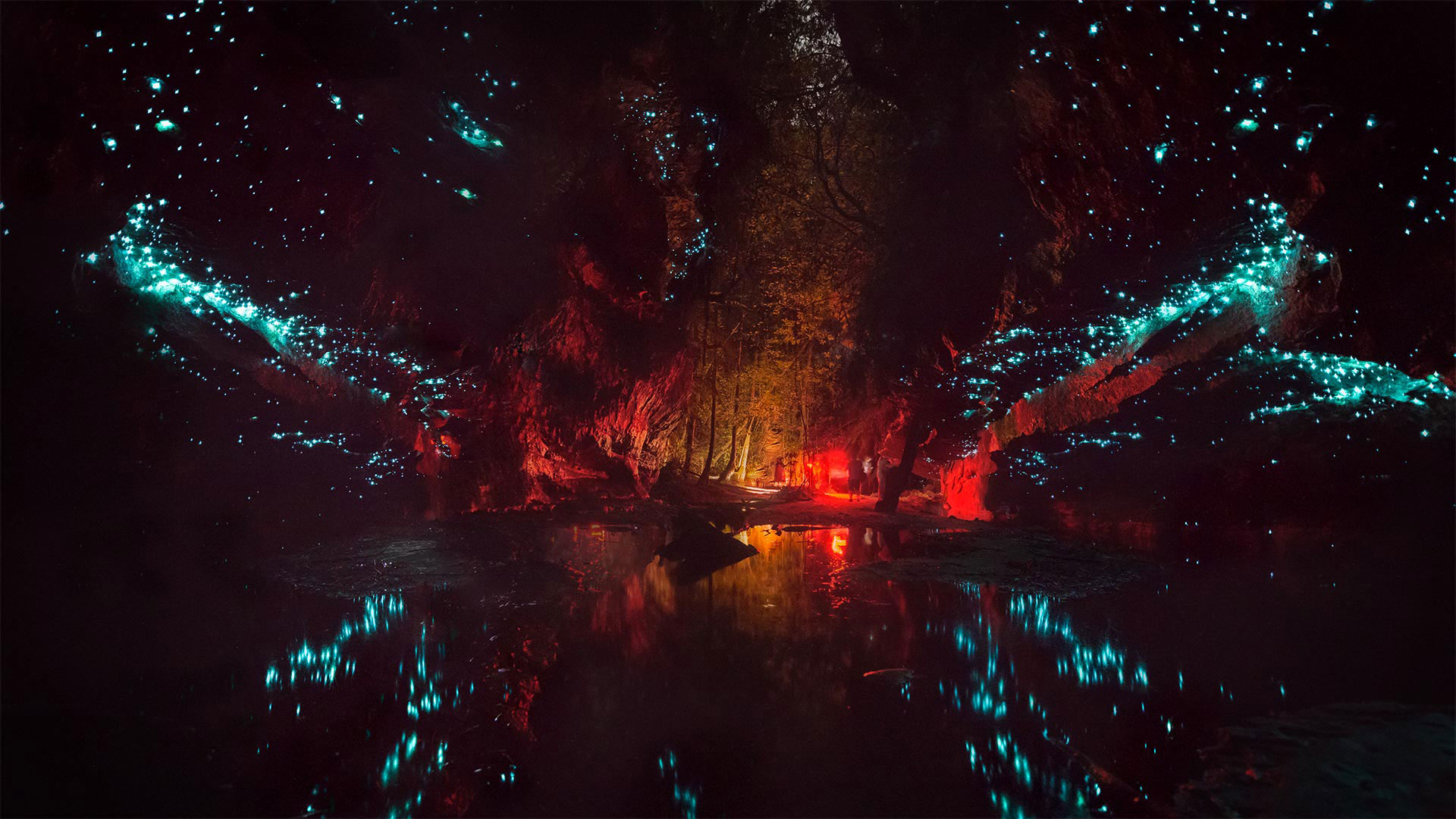
蓝山国家公园里的萤火虫,澳大利亚 Glowworms in Blue Mountains National Park, Australia (© Leelakajonkij/Getty Images)
Glowworm caves in Australia
Down under the land in the Land Down Under, cave explorers may find these subterranean spaces illuminated by an unlikely light source. Fungus gnat larvae—more affectionately known as glowworms—speckle the walls and ceilings of caverns here in Australia during the warm season from December to March. To humans they're hypnotizingly harmless and add a little otherworldly charm to the caves in such places as Blue Mountains National Park, as seen in our photo. But if you're a fly or mosquito, beware! Glowworms dangle tiny, sticky silk strands that ensnare winged insects flying toward what looks like a starry night sky, but is in fact the cave ceiling, covered in glowworms, patiently waiting to reel in a deceived fly.
澳大利亚的萤火虫洞穴
在地下,洞穴探险家可能会发现这些地下空间被一种不太可能的光源照亮。在12月至3月的温暖季节,真菌小昆虫幼虫(更亲切地称为萤火虫)在澳大利亚洞穴的墙壁和天花板上散布斑点。在我们的照片中可以看到,对人类来说,它们无害得令人着迷,为蓝山国家公园等地的洞穴增添了一点超凡脱俗的魅力。但如果你是一只苍蝇或蚊子,小心!萤火虫悬挂着细小的、粘乎乎的丝线,诱捕着飞向星空的有翼昆虫,但事实上是洞穴的天花板,上面覆盖着萤火虫,耐心地等待着一只受骗的苍蝇。
日南市的萤火虫,日本鸟取县 Fireflies in Nichinan, Tottori, Japan (© north-tail/Getty Images Plus)
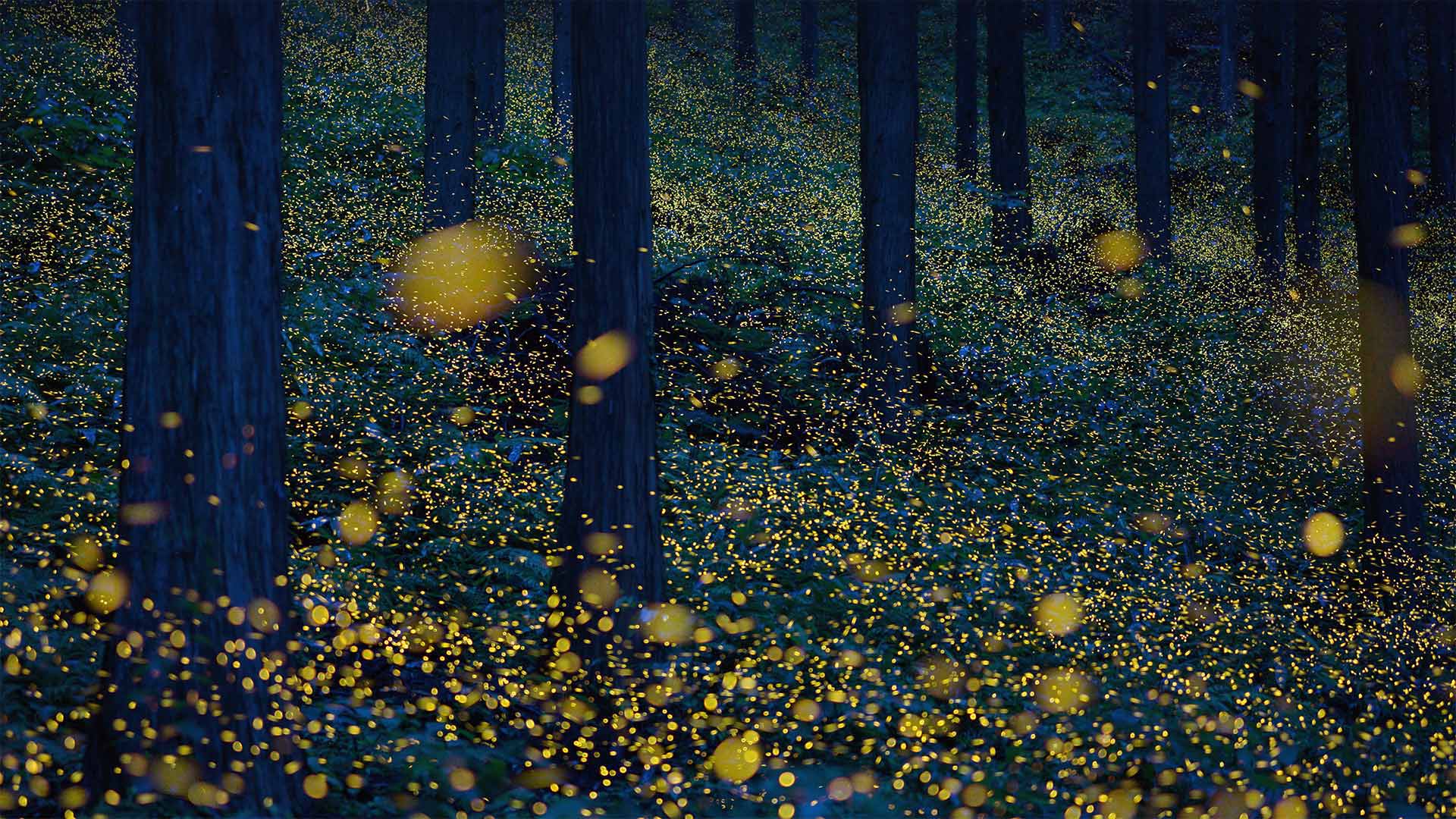
日南市的萤火虫,日本鸟取县 Fireflies in Nichinan, Tottori, Japan (© north-tail/Getty Images Plus)
A firefly frolic
You might be crashing the biggest party in Japan's least populous region. Each summer, fireflies turn this forest in rural Tottori prefecture into their own glitzy nightclub. There's no telling which fireflies are the males in this shot, but be assured they'll spend mating season trying to flicker their way into the females' hearts.
The buzzkill here is that fireflies' heyday each June and July amounts to their entire two-month adult lives—so when the rave dies, the flies shortly follow. Fortunately, that's plenty of time for the reveling bugs to produce countless eggs, soon to hatch into larvae who'll emerge from their pupae next summer and kick off the light show once again.
萤火虫嬉戏
你可能会毁了日本人口最少地区最大的派对。每年夏天,萤火虫都会把托托里县乡村的这片森林变成自己耀眼的夜总会。目前还不清楚哪只萤火虫是这张照片中的雄性萤火虫,但可以肯定的是,它们会在交配的季节里试图进入雌性萤火虫的心脏。
这里最有趣的是,萤火虫每年6月和7月的全盛期相当于它们整整两个月的成虫生活,所以当它们死去时,它们很快就会跟着死去。幸运的是,这是足够的时间,狂欢的虫子产生无数的卵,很快孵化成幼虫谁将出现在他们的蛹明年夏天,并启动灯光表演再次。