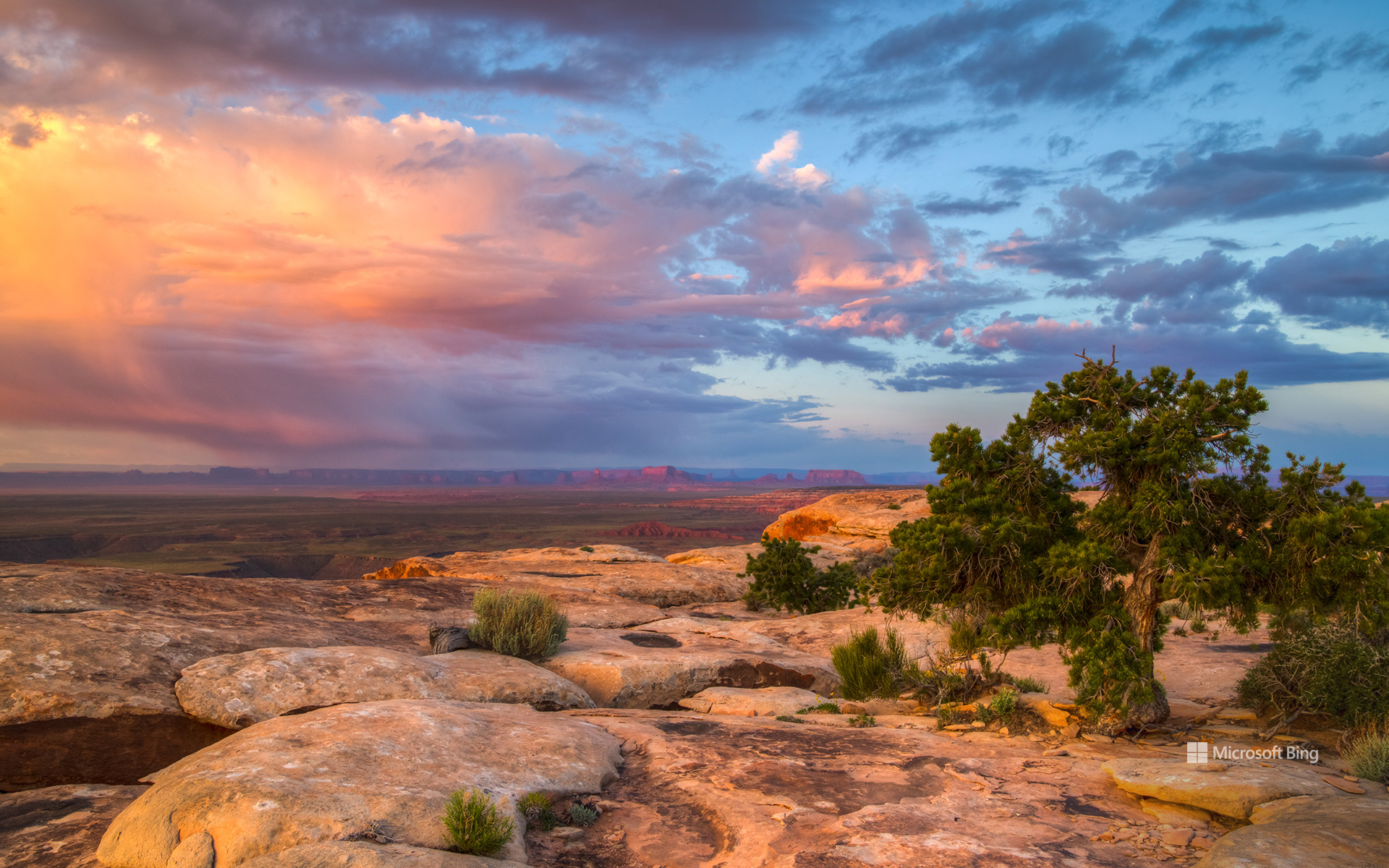
熊耳国家纪念区附近的雪松台地和骡子角,犹他州,美国 Cedar Mesa and Muley Point near Bears Ears National Monument, Utah, USA (© Jeff Clay/Tandem Stills + Motion)
熊耳国家纪念区附近的雪松台地和骡子角,犹他州,美国 Cedar Mesa and Muley Point near Bears Ears National Monument, Utah, USA (© Jeff Clay/Tandem Stills + Motion)
写在大地上的故事 The stories written across the land
美国国家公共土地日
熊的耳朵、着火的房屋和遍布急转弯的道路有什么共同之处?它们都是犹他州东南部公共土地故事的一部分。
在国家公共土地日,雪松台地及附近的骡子角展现出古老历史与高地沙漠风光的非凡交融。熊耳国家纪念区拥有重要的文化和自然资源,其中包括反映数千年人类历史的考古遗址。它的名字源于两座形似熊耳的孤峰。
National Public Lands Day
What do a bear's ears, a house on fire, and a road packed with hairpin turns have in common? They're all part of the story of southeastern Utah's public lands.
On National Public Lands Day, Cedar Mesa and nearby Muley Point offer a remarkable mix of ancient history and high-desert scenery. Bears Ears National Monument encompasses important cultural and natural resources, including archaeological sites that reflect thousands of years of human history. Its name comes from twin buttes that resemble a bear's ears.
Rising to roughly 6,500 feet, Cedar Mesa is carved by deep canyons, including Grand Gulch, an archaeological treasure trove. Mule Canyon's House on Fire gets its name from sandstone that glows orange in morning light. Nearby Muley Point overlooks the San Juan River, Valley of the Gods, Monument Valley, and Navajo Mountain. Reaching it via the steep, unpaved Moki Dugway gives new meaning to the word 'switchback.'