摩艾石像采石场,拉诺拉拉库,复活节岛,智利 Moai statue quarry, Rano Raraku, Easter Island, Chile (© Gavin Hellier/Alamy)
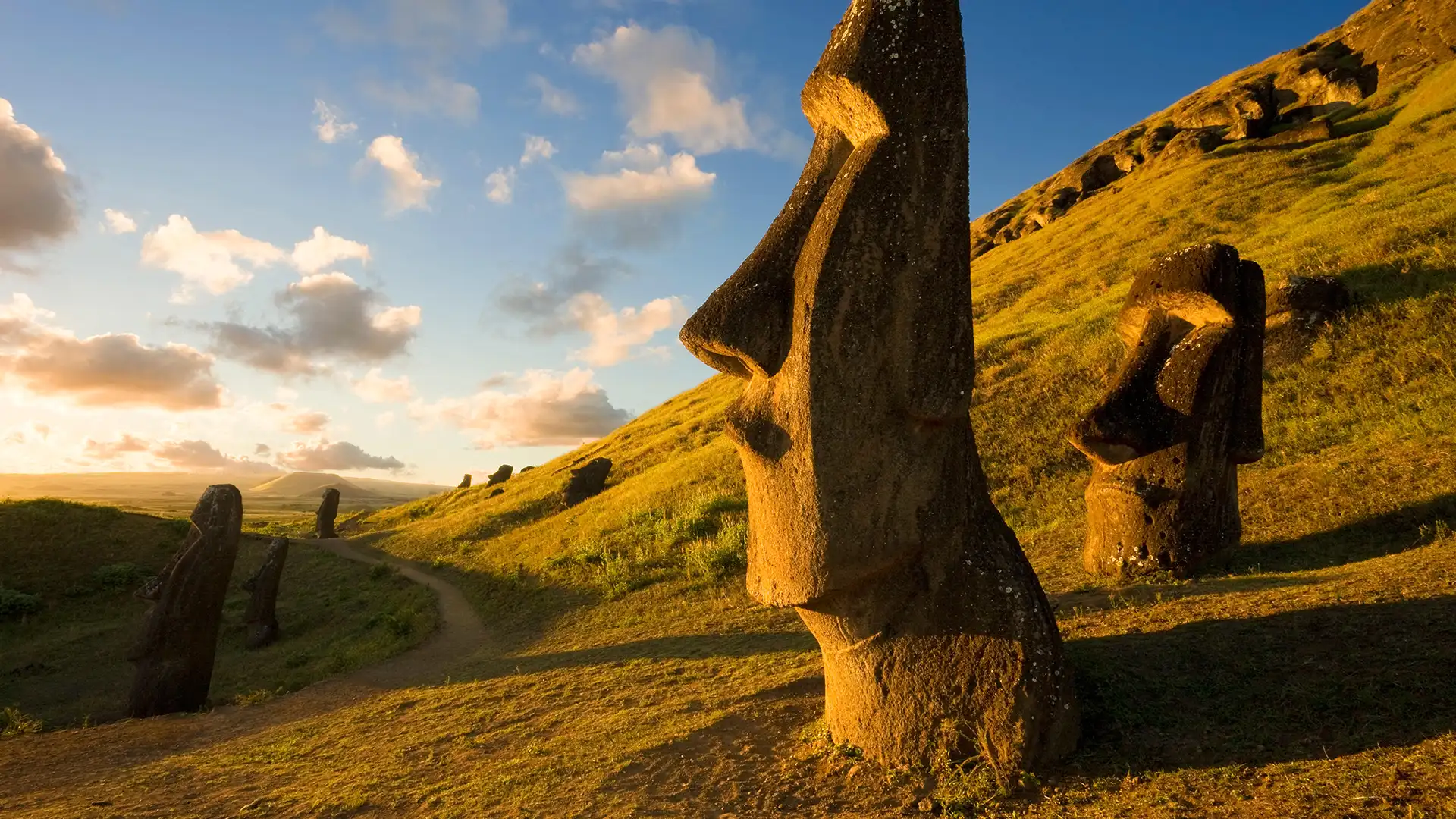
摩艾石像采石场,拉诺拉拉库,复活节岛,智利 Moai statue quarry, Rano Raraku, Easter Island, Chile (© Gavin Hellier/Alamy)
未完成巨像的静默 The silence of unfinished giants
世界遗产日
在今天的世界遗产日,人们将目光投向那些讲述人类共同历史的地方——这些地点因其卓越的文化或自然价值而受到保护。其中之一,便矗立在智利复活节岛的火山岩之上。在拉诺拉拉库,一座已熄灭火山的山坡曾是岛上绝大多数著名摩艾石像的雕刻工坊。画面展现的正是这一非凡的采石场:半成品的巨像从岩石中显现,仿佛在创作的瞬间被定格。
这些石像由拉帕努伊人在约13世纪至16世纪间雕刻而成,直接取材于压实的火山灰岩。完成后,它们被运往岛上的祭祀平台,用于宗教与仪式活动。拉诺拉拉库位于拉帕努伊国家公园之内,该公园被列入联合国教科文组织世界遗产名录,以其独特的考古景观和延续至今的波利尼西亚文化而闻名。
世界遗产日提醒我们,保护这些地方的重要性。像拉诺拉拉库这样的遗址,不仅仅是地标,更是人类智慧、信仰以及与土地之间联系的见证。这些珍贵的遗产被保存下来,让后代得以继续研究与感受。
World Heritage Day
Today, on World Heritage Day, attention turns to places that tell humanity's shared story—protected for their exceptional cultural or natural value. One of them rises from volcanic stone on Easter Island, Chile. At Rano Raraku, the slopes of an extinct volcano became the workshop where nearly all of the island's famous moai were carved. The image captures this remarkable quarry, where half-finished figures emerge from the rock, frozen mid-creation.
Carved by the Rapa Nui people between about the 13th and 16th centuries, the statues were shaped directly from compressed volcanic ash, then transported across the island to ceremonial platforms. Rano Raraku lies within Rapa Nui National Park, a UNESCO World Heritage Site recognized for its extraordinary archaeological landscape and living Polynesian heritage.
World Heritage Day highlights why protecting such places matters. Sites like Rano Raraku are more than landmarks—they are records of human ingenuity, belief, and connection to the land, preserved for future generations to study and experience.
阿胡汤加里基的日出,拉帕·努伊国家公园,复活节岛,智利 Sunrise at Ahu Tongariki, Rapa Nui National Park, Easter Island, Chile (© Piriya Photography/Getty Images)
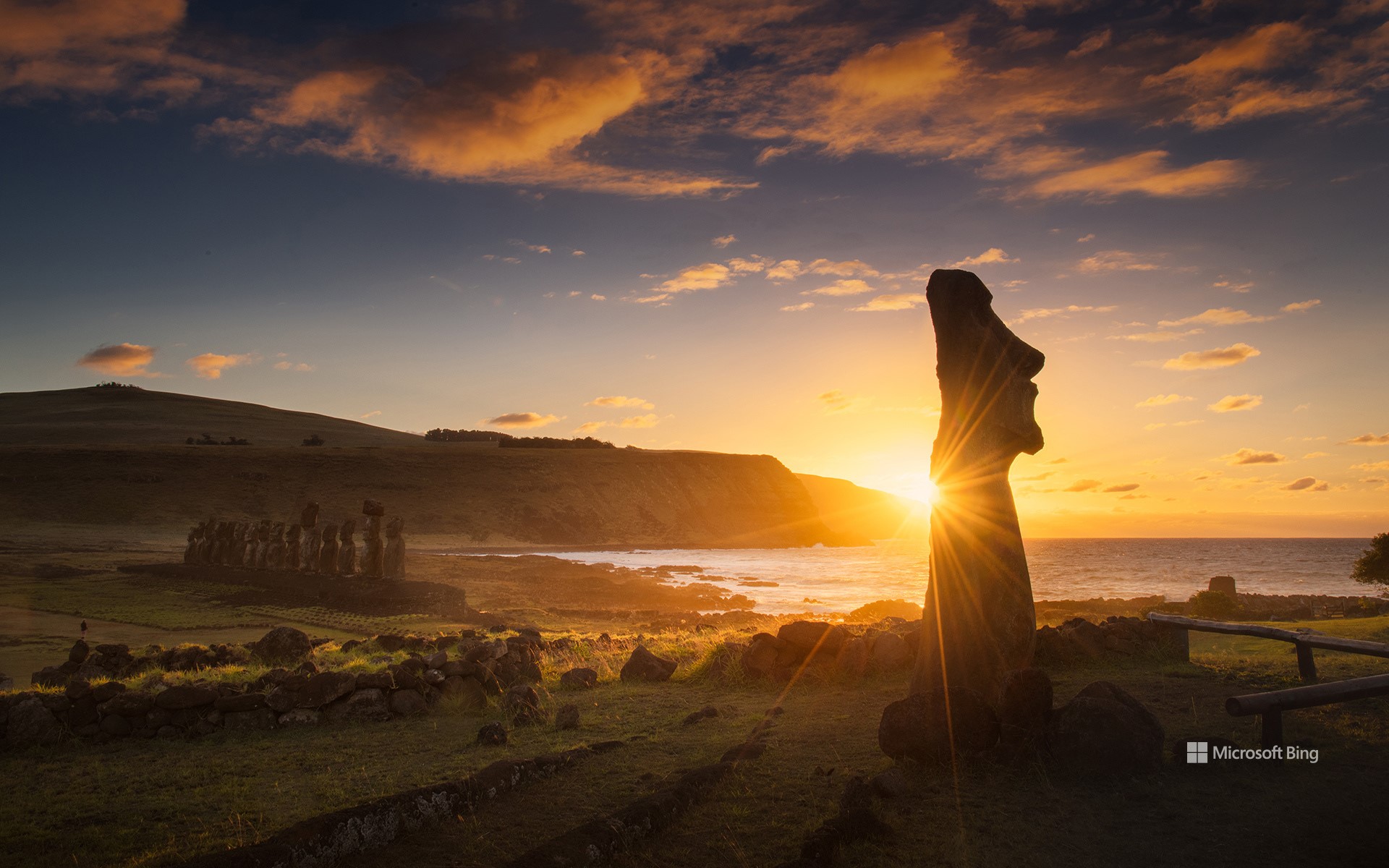
阿胡汤加里基的日出,拉帕·努伊国家公园,复活节岛,智利 Sunrise at Ahu Tongariki, Rapa Nui National Park, Easter Island, Chile (© Piriya Photography/Getty Images)
古老又神秘 Ancient and mysterious
拉帕·努伊国家公园,复活节岛,智利
欢迎来到拉帕努伊岛,该岛也被称为智利的复活节岛,是世界上最偏远、最迷人的天堂之一。这座令人惊叹的岛屿以其标志性的摩艾石像而闻名,是一座拥有壮丽景观和丰富文化遗产的宝库。专家们对波利尼西亚人到来的时间众说纷纭,但许多研究人员认为应该是在8世纪左右。作为世界遗产的复活节岛占地超过17,000英亩,包括附近的四个小岛。在岛上,你可以欣赏到今天的图片所展示的迷人日出,探索矗立着宏伟雕像的火山口和郁郁葱葱的草地。
对这座岛屿的名字感到好奇吗?原住民称它为拉帕努伊,意思是“大拉帕”,指的是这片土地的地形与澳大利亚群岛的拉帕岛相似。荷兰探险家雅可布·罗赫芬是第一个访问该岛的欧洲人,他将该岛命名为帕斯奇-艾兰,即英语中的“复活节岛”,以纪念他在复活节当天抵达该岛。虽然复活节似乎离今天很遥远,但你全年都可以探索这个独特的世界遗产。深入了解其充满活力的历史,让这座岛屿用魅力征服你。
Rapa Nui National Park, Easter Island, Chile
Welcome to Rapa Nui, also known as Easter Island, one of the world's most remote and enchanting paradises, roughly 2,330 miles west of mainland Chile. Famous for its iconic moai statues, Rapa Nui boasts breathtaking landscapes and rich cultural heritage. Experts are divided on when the island's ancestral inhabitants first arrived from Polynesia, though many researchers suggest it was around the 8th century. Take in the mesmerizing sunrise featured in today's image and explore the striking volcanic craters and lush, grassy plains where the imposing statues stand. The World Heritage property of Easter Island spans more than 17,000 acres, including four nearby islets.
The island's original inhabitants call it Rapa Nui, meaning 'Great Rapa,' referring to the land's similarity to Rapa Island, in French Polynesia. Dutch explorer Jacob Roggeveen, the first European to visit, named it Paasch-Eyland, or 'Easter Island' in English, to mark his arrival on Easter Sunday. You can explore this unique World Heritage site year-round. Dive into its vibrant history and let the island's charm sweep you away.
复活节岛上的摩艾石像,智利 Moai statues on Easter Island, Chile (© Karine Aigner/Tandem Stills + Motion)
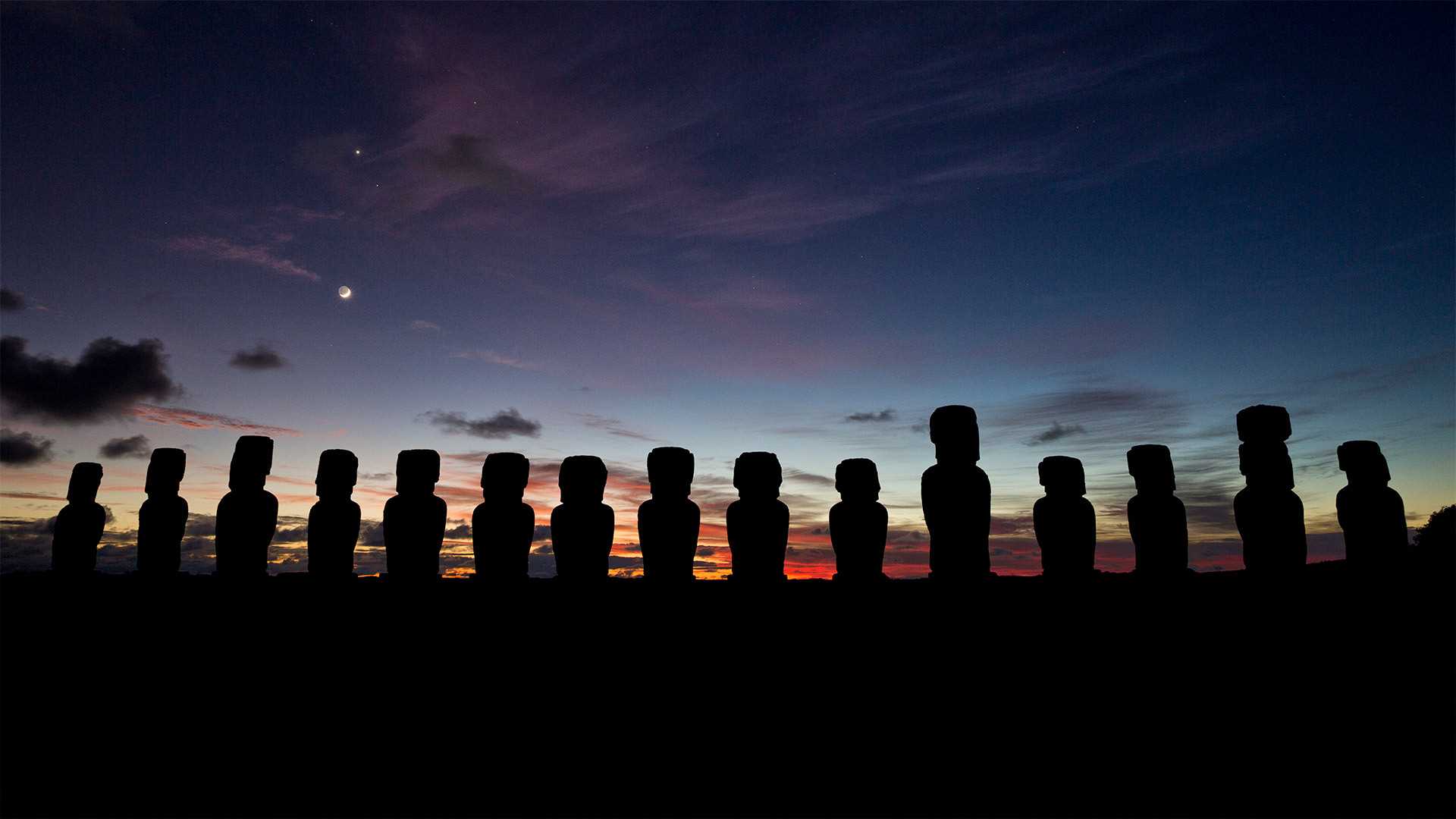
复活节岛上的摩艾石像,智利 Moai statues on Easter Island, Chile (© Karine Aigner/Tandem Stills + Motion)
摩艾石像 Big rocks, big heads
摩艾石像,智利
今天,照片上呈现的是久负盛名的摩艾石像,它位于智利偏远的复活节岛上。这些巨人石像是由拉帕努伊人在1250年到1500年之间用岩石雕刻而成的,全岛共有近1000座石像。考古学家认为,拉帕努伊人用这些石像纪念他们的祖先,并将其视为权力和权威的象征。这些石像里有7座面朝大海,其余石像都是背对着太平洋,面朝内陆看着村庄,仿佛是在保护着拉帕努伊人。
Moai statues on Easter Island, Chile
Today we're looking at something you may have heard about before—the famous Moai statues on Chile's remote Easter Island. These big-headed statues were carved out of solidified volcanic ash by the Rapa Nui people between 1250 and 1500, and there are nearly 1,000 of them on the island. Archaeologists believe they were meant to honor Rapa Nui ancestors and were revered as symbols of power and authority. All but seven of the statues face away from the surrounding Pacific Ocean, and instead look inward toward the villages, as if positioned to watch protectively over the Rapa Nui.
拉帕努伊国家公园中阿胡汤加里基的摩艾石像,智利复活节岛 Moai statues at Ahu Tongariki in Rapa Nui National Park, Easter Island, Chile (© blickwinkel/Alamy)
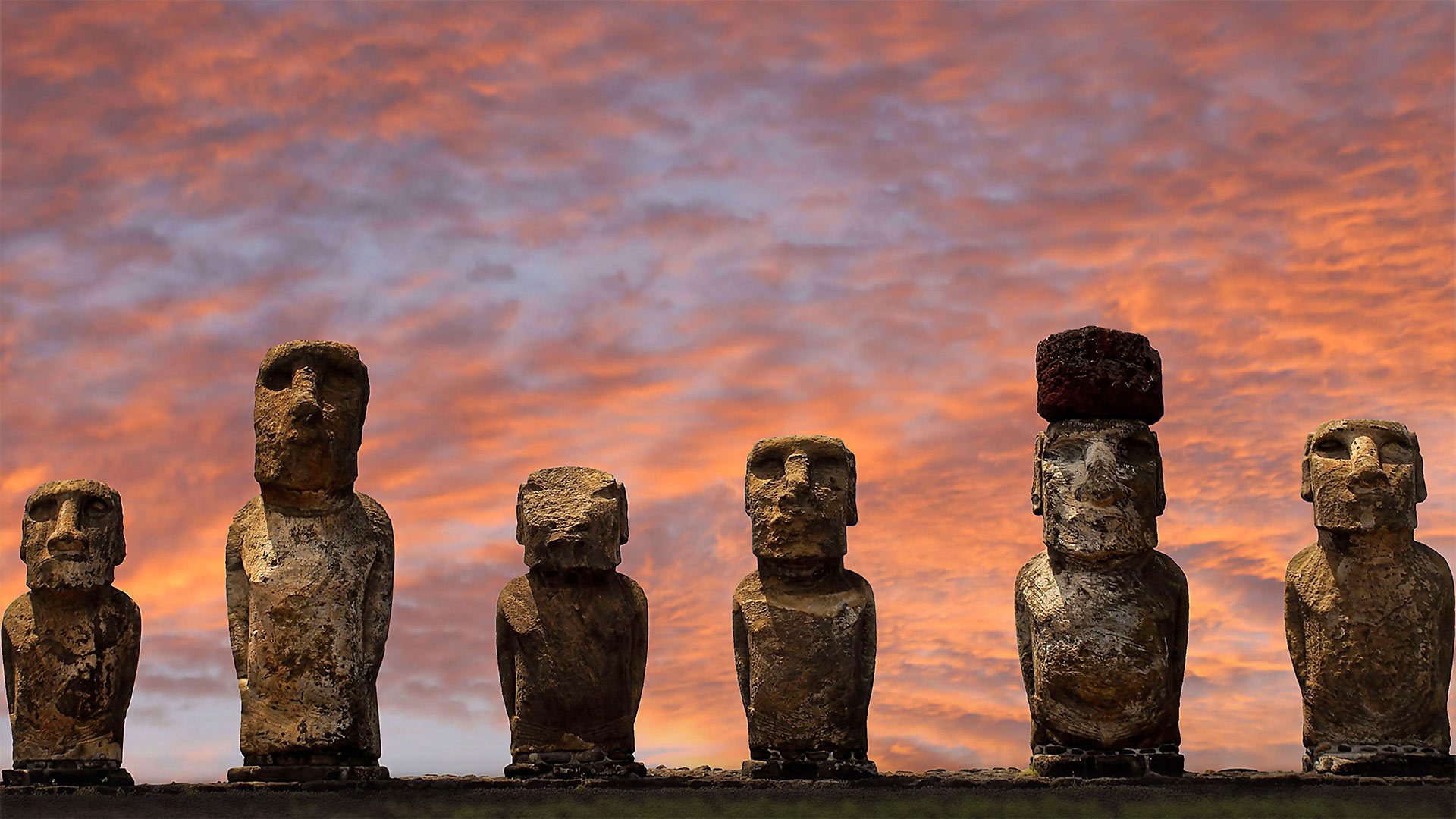
拉帕努伊国家公园中阿胡汤加里基的摩艾石像,智利复活节岛 Moai statues at Ahu Tongariki in Rapa Nui National Park, Easter Island, Chile (© blickwinkel/Alamy)
The 'moai' you know
Roam around the tiny, remote Easter Island and you'll find almost 900 of the stern stone faces called moai. They seem ancient as the pyramids, even a little alien, but they were actually sculpted between 500 and 800 years ago from compacted volcanic ash that's as terrestrial as it comes. You're seeing six of the 15 moai that stand on Ahu Tongariki, the largest ahu (stone platform) on the island. These statues were toppled in the 18th or 19th century along with other moai island-wide for reasons not fully known to scholars, though earthquakes or possible tribal infighting are postulated. The statues were later buried by a tidal wave and lay in ruins until the 1990s when they were excavated and placed back on the ahu.
Though scholars still debate how and why the moai were constructed and moved into place, it's known that they represent the ancestors of the Rapa Nui, an isolated and hardy culture that still celebrates its uniqueness. Visit Easter Island during the first two weeks of February and you'll find yourself in the midst of Tapati Rapa Nui, a festival that revives islander ceremonies of song and dance, as well as sporting events like ocean canoeing, horse racing, and haka pei (high-speed sledding on banana tree trunks).