桑吉奈尔群岛景观,摄自科西嘉岛,法国 View of the Sanguinaires Islands from Corsica, France (© Francesco Riccardo Iacomino/Getty Images)
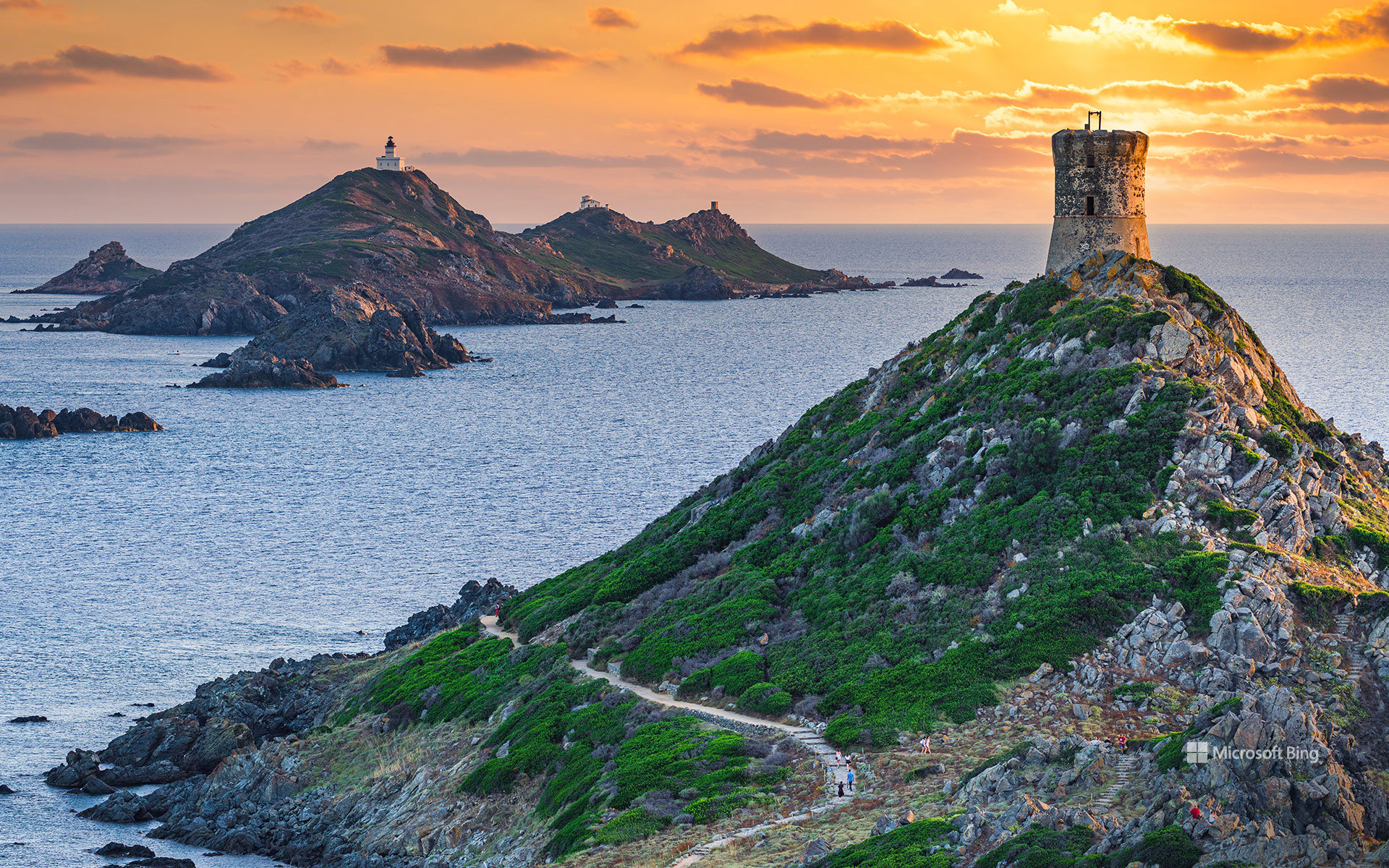
桑吉奈尔群岛景观,摄自科西嘉岛,法国 View of the Sanguinaires Islands from Corsica, France (© Francesco Riccardo Iacomino/Getty Images)
科西嘉岛的岩石前哨 Corsica's rocky outposts
从法国科西嘉岛眺望桑吉奈尔群岛
桑吉奈尔群岛就在法国科西嘉岛近海,从地中海中拔地而起,是一个由四座崎岖岩石岛屿组成的小型群岛。从一座历史悠久的瞭望塔望去,它们坐落在阿雅克肖湾的入口处。陡峭的悬崖、历经数百年的地标和开阔的海景,世世代代吸引着游客来到这一地区。尽管最远的岛屿距离海岸仅约1.2英里,但这片群岛给人的感觉却出奇地偏远:它四周被开阔水域环绕,并受到风、海浪和盐雾的塑造。
游客可以搭乘获准运营的船只前往最大的岛屿梅祖马雷岛,并沿指定步道探索。其他地方的受保护栖息地则为筑巢的海鸟和适应干燥、多风环境的耐寒地中海植物提供庇护。梅祖马雷岛上的一座灯塔令人想起这片群岛悠久的航海历史,以及它位于海湾入口处的战略位置。如今,桑吉奈尔群岛拥有壮丽的景色、野生动物和丰富航海遗产的印记,共同构成了科西嘉岛最令人难忘的自然景观之一。
View of the Sanguinaires Islands from Corsica, France
Just off the coast of Corsica, France, the Sanguinaires Islands rise from the Mediterranean as a small archipelago of four rugged, rocky islands. Viewed from a historic watchtower, they sit at the entrance to the Gulf of Ajaccio. Steep cliffs, centuries-old landmarks, and sweeping sea views have drawn visitors to the area for generations. Though the farthest island lies only about 1.2 miles from shore, the archipelago feels surprisingly remote, surrounded by open water and shaped by wind, waves, and salt spray.
Visitors can reach Mezu Mare, the largest island, via authorized boat services and explore its designated footpaths. Elsewhere, protected habitats provide refuge for nesting seabirds and hardy Mediterranean plants adapted to dry, windswept conditions. A lighthouse on Mezu Mare stands as a reminder of the archipelago's long maritime history and strategic position at the entrance to the gulf. Today, the Sanguinaires Islands offer dramatic scenery, wildlife, and traces of a rich seafaring heritage, creating one of Corsica's most memorable natural landscapes.
日落时分的埃菲尔铁塔,巴黎,法国 Eiffel Tower at sunset, Paris, France (© Alexander Spatari/Getty Images)
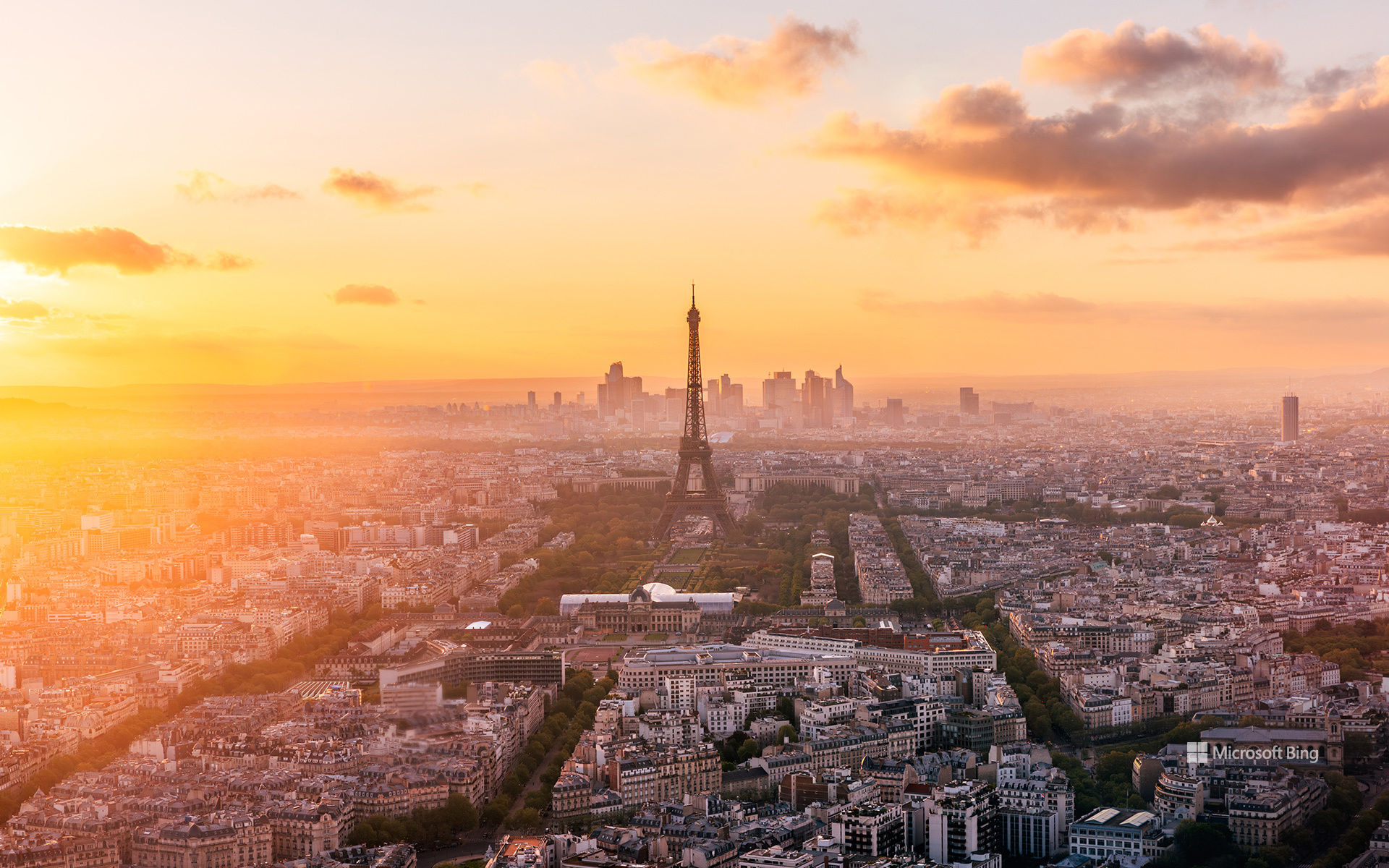
日落时分的埃菲尔铁塔,巴黎,法国 Eiffel Tower at sunset, Paris, France (© Alexander Spatari/Getty Images)
终获巴黎青睐的铁塔 The tower that won Paris over
法国巴黎日落时分的埃菲尔铁塔
几乎没有哪座城市像巴黎这样被赋予如此多的浪漫想象。然而,这座法国首都的历史并非始终像埃菲尔铁塔背后的落日霞光一样绚丽。铁塔为1889年世界博览会而建;这届世博会纪念法国大革命爆发一百周年,而铁塔最初计划作为博览会入口处的核心建筑。由工程师古斯塔夫·埃菲尔及其团队设计的这座钢铁地标,从战神广场拔地而起,高度接近1,000英尺,并成为当时世界上最高的建筑。
许多当地人曾批评这一大胆设计,但它很快便激发了公众的想象力。世博会期间,数百万人前来参观这座纪念建筑,并欣赏他们此前从未体验过的全景视野。
如今,游客可以沿塞纳河漫步,探访这座不断重塑自我的城市中的古老街区和各类博物馆。夜幕降临,埃菲尔铁塔在夜空下熠熠生辉,依然是法国创造力、雄心与韧性的有力象征。
Eiffel Tower at sunset, Paris, France
No other city is nearly as romanticized as Paris. Yet the French capital's history has not always been as rosy as the sunset glowing behind the Eiffel Tower. Built for the 1889 Exposition Universelle, or the World's Fair, which marked the centennial of the start of the French Revolution, the tower was originally intended to serve as the fair's entrance centerpiece. Designed by engineer Gustave Eiffel and his team, the iron landmark rose nearly 1,000 feet above the Champ de Mars and became the tallest structure in the world at the time.
Many locals criticized the bold design, but it quickly captured the public's imagination. During the World's Fair, millions came to see the monument and enjoy panoramic views unlike any they had experienced before.
Today, visitors can stroll along the Seine and explore old neighborhoods and museums throughout a city that continues to reinvent itself. As evening falls and the Eiffel Tower glows against the night sky, it remains a powerful symbol of French creativity, ambition, and resilience.
桑特奈葡萄酒产区葡萄园中的索林风车,伯恩丘,勃艮第,法国 Sorine windmill and vineyards, Santenay wine region, Côte de Beaune, Burgundy, France (© Marco Bottigelli/Getty Images)
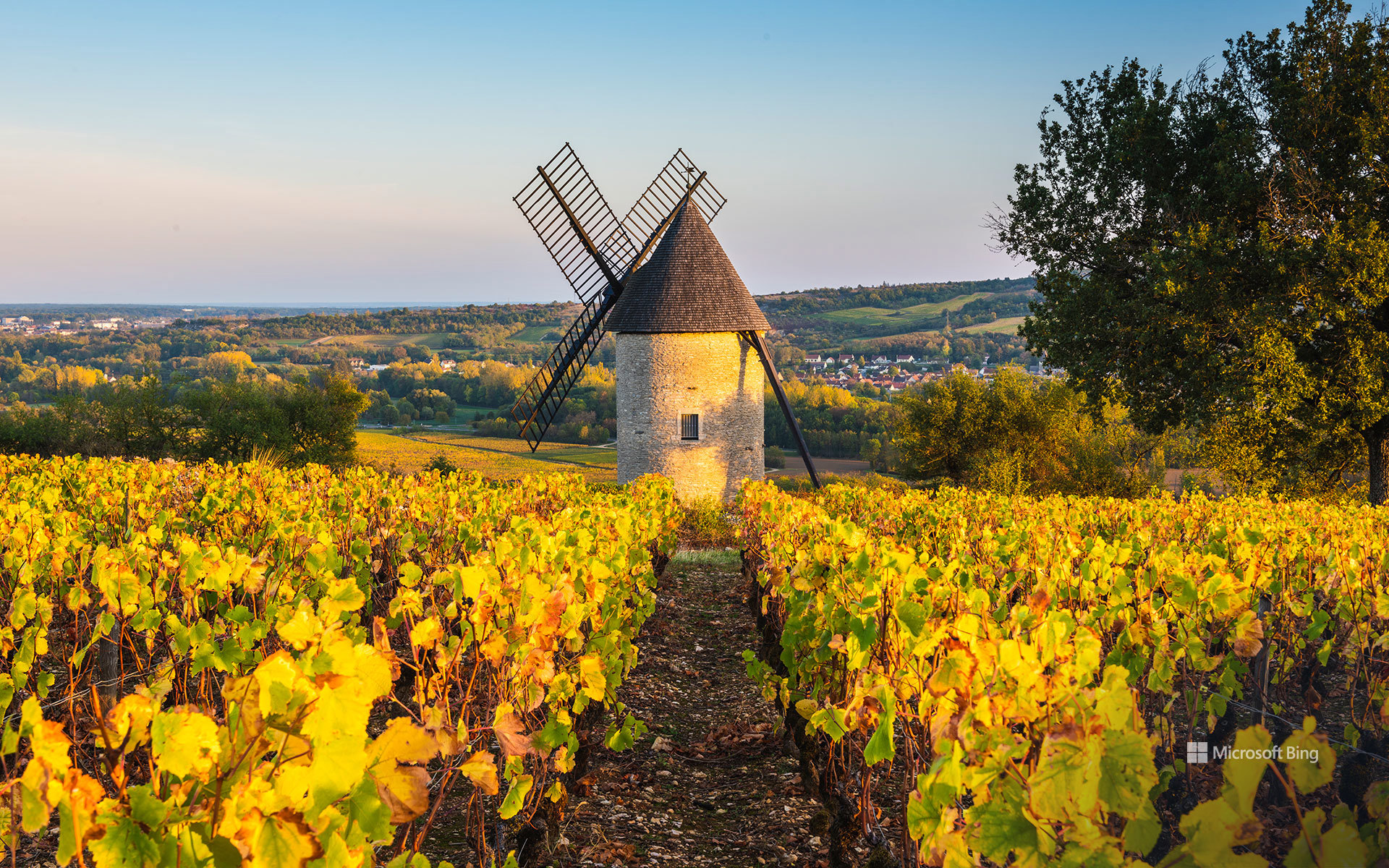
桑特奈葡萄酒产区葡萄园中的索林风车,伯恩丘,勃艮第,法国 Sorine windmill and vineyards, Santenay wine region, Côte de Beaune, Burgundy, France (© Marco Bottigelli/Getty Images)
为丰收举杯 A toast to the harvest
桑特奈葡萄酒产区,伯恩丘,勃艮第,法国
每年夏末秋初,法国最令人期待的传统之一——“vendanges”葡萄采摘季——如期而至。采摘时间因葡萄酒产区而异,并取决于天气状况、日照以及果实的成熟度。对许多葡萄园而言,采收仍主要依靠人工,工作人员会仔细挑选一串串葡萄,用于酿造法国一些最负盛名的葡萄酒。
在勃艮第伯恩丘南端的桑特奈,这一景象格外壮观。正如今天的画面所示,一排排葡萄藤沿起伏山丘铺展,山坡上方矗立着索林风车;这座修复后的19世纪地标俯瞰着周围的乡野和葡萄园。
几个世纪以来,葡萄采收一直塑造着法国人的生活。它的重要性甚至在法国共和历中留下回响:共和历以收获葡萄来命名其第一个月份,提醒人们葡萄酒酿造与法国历史交织得何等深厚。随着篮筐渐渐装满、葡萄园披上秋日色彩,农业、传统遗产与庆典在这个季节交融为一种独具法国特色的仪式。
Santenay wine region, Côte de Beaune, Burgundy, France
Each year, late summer and early fall bring one of France's most anticipated traditions: the 'vendanges,' the grape-picking season. The timing varies from one wine region to another and depends on weather conditions, sun exposure, and the ripeness of the fruit. For many vineyards, harvest is still a hands-on effort, with teams carefully selecting bunches destined for some of the country's most celebrated wines.
The scene is especially striking in Santenay, at the southern end of Burgundy's Côte de Beaune. Here, rows of vines stretch across rolling hills beneath the Sorine windmill, a restored 19th-century landmark that overlooks the surrounding countryside and vineyards, as seen in today's image.
Harvesting grapes has shaped French life for centuries. Its importance even echoes in the French Republican calendar, which named its opening month after the gathering of the crop—a reminder of how deeply winemaking is woven into the nation's history. As baskets fill and the vineyards glow with autumn color, the season blends agriculture, heritage, and celebration into a uniquely French ritual.
滨海自由城,法国里维埃拉,法国 Villefranche-sur-Mer, French Riviera, France (© StockByM/Getty Images)

滨海自由城,法国里维埃拉,法国 Villefranche-sur-Mer, French Riviera, France (© StockByM/Getty Images)
地中海风情尽显 A patchwork from above
滨海自由城,法国里维埃拉
九月,法国里维埃拉沐浴在更柔和的光线中,地中海植被也逐渐恢复生机。山丘间弥漫着阿勒颇松、迷迭香和野百里香的芳香。内陆地区,百年橄榄树和山顶村庄讲述着一个由希腊、罗马和普罗旺斯影响共同塑造的故事。
沿着海岸步道,冬青栎和草莓树经受住夏季干旱,无花果树则仍结满成熟果实。在滨海自由城等海滨城镇的海湾中,帆船和游艇优雅地滑行于海天之间;埃斯泰雷勒山地的红色岩石,与深绿色的地中海灌木丛形成鲜明对比。
在一处幽静海湾周围,蝉鸣渐渐淡去,气氛也愈发宁静。法国里维埃拉远不只是一幅明信片般完美的风景:这里是自然、遗产与生活艺术的和谐交融,地中海在此占据绝对主导。
涨潮时的圣米歇尔山,芒什省,诺曼底,法国 Mont-Saint-Michel during high tide, Manche, Normandy, France (© Clement LEONARD/Getty Images)

涨潮时的圣米歇尔山,芒什省,诺曼底,法国 Mont-Saint-Michel during high tide, Manche, Normandy, France (© Clement LEONARD/Getty Images)
潮汐塑造的传奇 Where tides shape a legend
涨潮时的圣米歇尔山,诺曼底,法国
日落时分,圣米歇尔山从法国诺曼底的水面升起,宛如一座由海洋塑造的堡垒。修道院和村庄坐落在岩石潮汐岛上,矗立于欧洲最壮观的海岸环境之一。每天两次,海水退去,露出大片沙滩;随后潮水再次涌回,重新覆盖这片景观。涨潮时,圣米歇尔山又会变成一座岛屿。数百年来,旅行者一直根据这种潮汐节奏安排行程,在条件允许时穿越潮滩,并在数小时后观看海水归来。
传说这里的起源可追溯到708年:大天使米迦勒向一位主教显现,并指示他在此建造一座圣所。随着时间推移,这里发展为欧洲最重要的朝圣地之一。如今,圣米歇尔山及其周边海湾已被列入联合国教科文组织《世界遗产名录》;数百年的历史与潮汐运动仍在塑造每一次到访体验。
Mont-Saint Michel during high tide, Normandy, France
At sunset, Mont-Saint Michel rises from the waters of Normandy, France, like a fortress shaped by the sea. Perched on a rocky tidal island, the abbey and village stand at the center of one of Europe's most dramatic coastal settings. Twice a day, the sea retreats to reveal vast stretches of sand before surging back to reclaim the landscape. At high tide, the mount becomes an island once again. For centuries, travelers timed their journeys to this rhythm, crossing the flats when conditions allowed and watching the sea return hours later.
A legend traces the site's origins to the year 708, when the Archangel Michael appeared to a bishop and instructed him to build a sanctuary here. Over time, the site grew into one of Europe's most important pilgrimage destinations. Today, Mont-Saint Michel and its surrounding bay are recognized as a UNESCO World Heritage Site, where centuries of history and the movement of the tides continue to shape every visit.
圣古斯坦港, 欧赖, 布列塔尼, 法国 Port de Saint-Goustan, Auray, Brittany, France (© Rolf E. Staerk/Shutterstock)

圣古斯坦港, 欧赖, 布列塔尼, 法国 Port de Saint-Goustan, Auray, Brittany, France (© Rolf E. Staerk/Shutterstock)
布列塔尼的潮汐之约 Where Brittany meets the tide
圣古斯当港,欧赖,布列塔尼大区,法国
在法国,圣古斯坦港位于奥雷上城区下方,一条小海湾在此汇入莫尔比昂湾。港口坐落于奥雷河与洛克河的交汇处,营造出如诗如画的静谧氛围。13世纪,布列塔尼公爵在此修建了一座桥梁、一座港口和一座城堡;如今城堡已不复存在,但鹅卵石铺就的码头、狭窄的巷道和木结构房屋依然沿水而建。从共和国广场出发,沿着城堡街一路向下,途经艺术工作室和画廊,最终抵达海滨;洛克河畔的坡道建于古老的防御工事之上,可以饱览港口的景色。穿过四拱石桥,即可到达圣索沃尔广场,然后拾级而上,前往圣吉尔达教堂,小镇从那里开始逐渐升高,俯瞰着港口。码头也见证了一段跨大西洋的历史:本杰明·富兰克林于1776年抵达此地,如今一个码头以他的名字命名。如今,咖啡馆和小船点缀着这片区域,而附近的奥雷镇则拥有远近闻名的每周集市和热闹的夏季活动。
Port de Saint-Goustan, Auray, Brittany, France
In France, Port de Saint-Goustan sits just below Auray's upper town, where a small inlet meets the Gulf of Morbihan estuary. The harbor lies at the confluence of the Auray and Loc'h rivers, creating its sheltered, storybook setting. In the 13th century, the Dukes of Brittany built a bridge, a port, and a castle here; the fortress has vanished, but cobbled quays, narrow lanes, and timber-framed houses still line the water. From Place de la République, Rue du Château passes art studios and galleries down to the waterfront; ramps along the Loc'h, built on old fortifications, open views across the port. Cross the four-arched stone bridge to Place Saint-Sauveur, then climb toward Saint-Gildas Church, where the town rises above the harbor. The quay also marks a transatlantic moment: Benjamin Franklin arrived here in 1776, and a dock now bears his name. Today, cafés and small boats fill the scene, while nearby Auray hosts a well-known weekly market and lively summer events.
瓦朗索勒高原的薰衣草行,普罗旺斯,法国 Lavender rows, Plateau de Valensole, Provence, France (© Robert Harding/Shutterstock)

瓦朗索勒高原的薰衣草行,普罗旺斯,法国 Lavender rows, Plateau de Valensole, Provence, France (© Robert Harding/Shutterstock)
紫色花海 Sea of purple
薰衣草行在瓦朗索勒高原,普罗旺斯,法国
在法国东南部,瓦朗索勒高原(Valensole Plateau)的夏季伴随着阵阵紫蓝色的波浪而至。瓦朗索勒作为该地区最大的高原之一,坐落在迪朗斯河(Durance)与阿斯河(Asse)流域之间的韦尔东地区自然公园(Verdon Regional Natural Park)内,毗邻韦尔东大峡谷(Gorges du Verdon)及其湖泊。从6月中旬到7月初,受海拔和天气影响,薰衣草与杂交薰衣草(Lavandin)竞相绽放,将大地转化为普罗旺斯最具标志性的景观之一。空气中弥漫着清冽、干爽且极具地中海特色的香气。
除了如明信片般迷人的美景,薰衣草还是一种原产于地中海沿岸的唇形科(Lamiaceae)常绿灌木。其芬芳源于花朵、叶片及茎部上的油腺,这正是它长期以来被用于制作香水、肥皂、香囊以及通过蒸馏提取精油的原因。古罗马人甚至将薰衣草用于沐浴。它还吸引着蜜蜂和其他授粉昆虫,为田野平添了一份持续不断的嗡嗡声。在瓦朗索勒,美既是农业的、芳香的,也是充满活力的——它深深扎根于气候、耕作与传统之中。
Lavender rows, Plateau de Valensole, Provence, France
In southeastern France, on the Valensole Plateau, summer arrives in waves of purple and blue. Valensole—one of the largest plateaus in the region—lies in the Verdon Regional Natural Park between the Durance and Asse valleys, near the Gorges du Verdon and its lakes. From mid-June to early July, depending on altitude and weather, lavender and lavandin bloom and transform the landscape into one of Provence's most recognizable sights. The air carries a sharp, dry, and unmistakably Mediterranean scent.
Beyond the postcard-worthy view, lavender is an evergreen shrub in the mint family, native to lands bordering the Mediterranean. Its fragrance comes from oil glands on the flowers, leaves, and stems, which is why it has long been valued for perfumes, soaps, sachets, and essential oils distilled from the plant. The ancient Romans even used lavender in their baths. It also attracts bees and other pollinators, adding a steady hum to the fields. In Valensole, beauty is agricultural, aromatic, and alive—rooted in climate, cultivation, and tradition.
凯泽斯堡,阿尔萨斯,法国 Kaysersberg, Alsace, France (© Federica Gentile/Getty Images)

凯泽斯堡,阿尔萨斯,法国 Kaysersberg, Alsace, France (© Federica Gentile/Getty Images)
此行,不虚绕道 This is your detour
凯泽斯堡,阿尔萨斯,法国
7月4日,环法自行车赛拉开帷幕——这正是聚焦法国东北部阿尔萨斯地区凯泽斯堡(Kaysersberg)村落的绝佳时机。这座历史名城坐落在维斯河(Weiss River)畔,位于科尔马(Colmar)西北约12公里处,地处孚日山脉(Vosges Mountains)的东坡。
凯泽斯堡的名字意为“皇帝之山”,反映了其显赫的战略往昔。村庄上方矗立着一座山顶堡垒,最早记载于1227年,当时神圣罗马帝国皇帝腓特烈二世(Frederick II)购入并加固了此地。如今,这份遗产向四面八方铺展开来:粉色系的半木结构房屋错落有致地排列在鹅卵石街道旁,一座建于16世纪初、极具视觉冲击力的加固石桥横跨河流,连接着老城的各个街区。
走进圣克鲁瓦教堂(Sainte Croix Church),可以发现追溯至13世纪的建筑层级;或者漫步向被葡萄园覆盖的山丘,正是这些葡萄园在数世纪间形塑了这里的生活。不妨配上一杯清脆爽口的灰皮诺(Pinot Gris)多停留片刻,让阿尔萨斯的这处角落以其特有的悠闲步调徐徐展开。
邦港圣母教堂拱顶,莱萨布勒多洛讷,法国 Vaults of the Church of Notre Dame de Bon-Port, Les Sables-d'Olonne, France (© Helmut Meyer zur Capellen/Alamy)

邦港圣母教堂拱顶,莱萨布勒多洛讷,法国 Vaults of the Church of Notre Dame de Bon-Port, Les Sables-d'Olonne, France (© Helmut Meyer zur Capellen/Alamy)
静谧的石之杰作 A quiet masterpiece in stone
邦港圣母堂,法国莱萨布勒多洛讷
在法国西部海滨小镇莱萨布勒多洛讷的邦港圣母堂拱顶下,石质拱肋依旧引导着视线向上。高耸的拱顶自1646年开始建造,这座教堂自1993年被列为法国历史古迹,坐落在一座13世纪小礼拜堂的旧址上,静静讲述着大西洋沿岸悠久的精神文化与历史故事。
随着莱萨布勒多洛讷逐渐发展为渔港,邦港圣母堂也成为远洋水手出航前的重要停靠点。教堂融合哥特式拱形与文艺复兴细节的设计,反映了建筑、信仰与海洋生活紧密交织的时代。持续的修复工作,使拱顶在潮湿、盐雾弥漫的海岸环境中得以保存。游客常会注意到石材之间的光影流转和声响的柔和,让这片宁静的空间继续讲述着精湛工艺、信仰与几世纪航海历史的故事。
Church of Notre Dame de Bon-Port, Les Sables-d'Olonne, France
Under the vaulted ceiling of Notre-Dame de Bon-Port in Les Sables-d'Olonne, a seaside town in western France, the stone ribs still guide the gaze upward. Construction of the soaring vaults began in 1646. The church—officially recognized as a French historic monument since 1993—stands on the site of a 13th-century chapel, a reminder of deep-rooted spiritual life on the Atlantic coast.
As Les Sables-d'Olonne grew into a fishing port, the church became a waypoint for sailors preparing for ocean crossings. Its blend of Gothic arches and Renaissance details reflects a time when architecture, faith, and maritime life were closely intertwined. Ongoing restoration efforts help preserve the vaults amid the damp, salt-laden coastal air. Visitors often notice how sound softens and light shifts across the stone, creating a quiet interior that continues to connect craftsmanship, belief, and centuries of seafaring history.
里昂的一条穿廊,法国 A traboule in Lyon, France (© TPopova/Getty Images)

里昂的一条穿廊,法国 A traboule in Lyon, France (© TPopova/Getty Images)
承载过往的篇章 Passages with a past
里昂的一条穿廊,法国
在法国里昂,你不只是简单地走过街巷,而是像在城市的脉络中轻盈滑行。这里的穿廊,是一条条隐秘的通道,蜿蜒穿梭于庭院与建筑之间,将简单的散步变成一场寻宝之旅。它们曾是最早的捷径,帮助居民避雨、搬运货物,或悄然穿过中世纪街区。如今,这些通道更多承载的是探索的乐趣。它们的历史可追溯至公元四世纪,在文艺复兴时期更显重要——当时丝绸商人利用这些通道,将珍贵织物从作坊安全运送到河边,免受风雨侵扰。二战期间,抵抗运动战士也曾借助这些通道作为秘密逃生路线。走进里昂,你会发现,每一条穿廊都藏着故事,每一次转角都可能遇见历史的回声。
A traboule in Lyon, France
In Lyon, France, you don't just walk through the city—you glide through it. The traboules, a network of hidden passageways threading between courtyards and buildings, turn a simple stroll into a treasure hunt. They were the original shortcuts, allowing residents to dodge rain, carry goods, or move discreetly through the medieval quarters. Today, they're less about practicality and more about discovery. These passages date back to the fourth century but became essential during the Renaissance, when silk traders used them to shuttle delicate fabrics safely from workshops to the river without braving the weather. Later, during World War II, Resistance fighters used the traboules as escape routes.
Most of Lyon's traboules are tucked away in the Vieux Lyon and Croix-Rousse districts. Push open what looks like an ordinary wooden door, and you might step into a courtyard with spiral staircases, arched galleries, and stone corridors that snake between buildings. Some passages are public, some private, and all of them blur the line between indoors and outdoors. Walking a traboule is like flipping through the city's footnotes. You're right in the heart of a living neighborhood, yet moving through centuries of history.