覆满苔藓的岩石,英国格洛斯特郡谜林,迪恩森林,格洛斯特郡,英格兰 Moss-covered rocks in Puzzlewood, Forest of Dean, Gloucestershire, England (© Fulcanelli_AOS/Getty Images)
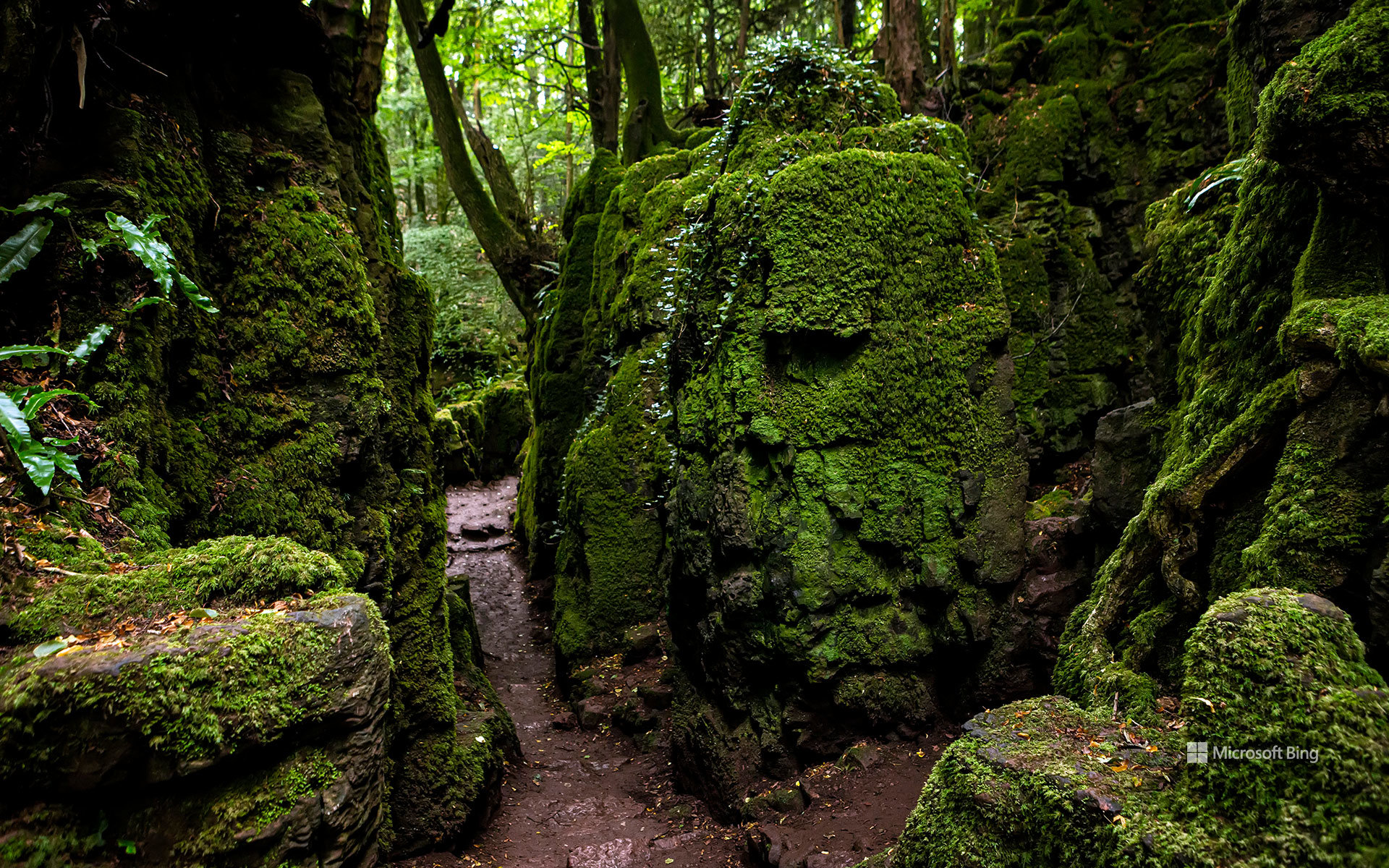
覆满苔藓的岩石,英国格洛斯特郡谜林,迪恩森林,格洛斯特郡,英格兰 Moss-covered rocks in Puzzlewood, Forest of Dean, Gloucestershire, England (© Fulcanelli_AOS/Getty Images)
迷惑不解?沿着小径走 Puzzled? Follow the trail
英国格洛斯特郡谜林,英格兰格洛斯特郡迪恩森林
如果一片森林能让你每转一个弯都捉摸不透,会是什么样?英国格洛斯特郡谜林位于英格兰迪恩森林的科尔福德附近,蜿蜒的小径穿过扭曲的树木、覆满苔藓的岩石和幽深的石质沟壑。这里不同寻常的岩层被称为“斯科尔斯”,是一种天然地质特征,随着时间推移逐渐裸露并发生改变,后来在罗马时期、甚至可能在更早以前被人们开采铁矿石。1848年,一名工人在一个岩洞内的陶罐中发现了3,000多枚罗马时代的钱币,使这片林地变成了一场现实中的寻宝之旅。
约1.5英里长的小径、木桥和石砌步道引导游客穿行于崎岖的地貌之间。英国格洛斯特郡谜林也曾亮相荧屏,出现在《星球大战:原力觉醒》《神秘博士》《梅林传奇》和《天命之咒》中。当地传说认为,这里枝干扭曲的树木和神秘氛围与J.R.R.托尔金笔下中土世界的森林有关,不过并没有确凿证据。
Puzzlewood, Forest of Dean, Gloucestershire, England
What if a forest could keep you guessing at every turn? At Puzzlewood, near Coleford in the Forest of Dean, England, winding paths lead through twisted trees, moss-covered rocks, and deep stone ravines. Its unusual rock formations, known as scowles, are natural geological features that were exposed and modified over time and later exploited for iron ore mining during the Roman period and possibly earlier. In 1848, a worker discovered more than 3,000 Roman-era coins hidden in earthenware jars inside a rock cavity, turning the woodland into a real-life treasure hunt.
Around 1.5 miles of paths, wooden bridges, and stone walkways guide visitors through the rugged landscape. Puzzlewood has also starred on screen, appearing in 'Star Wars: The Force Awakens,' 'Doctor Who,' 'Merlin,' and 'Cursed.' Local lore links its gnarled trees and mysterious atmosphere to J.R.R. Tolkien's Middle-earth forests, although there is no definitive proof.
温纳茨山口,峰区国家公园,英格兰 Winnats Pass, Peak District National Park, England (© Daniel_Kay/Getty Images)
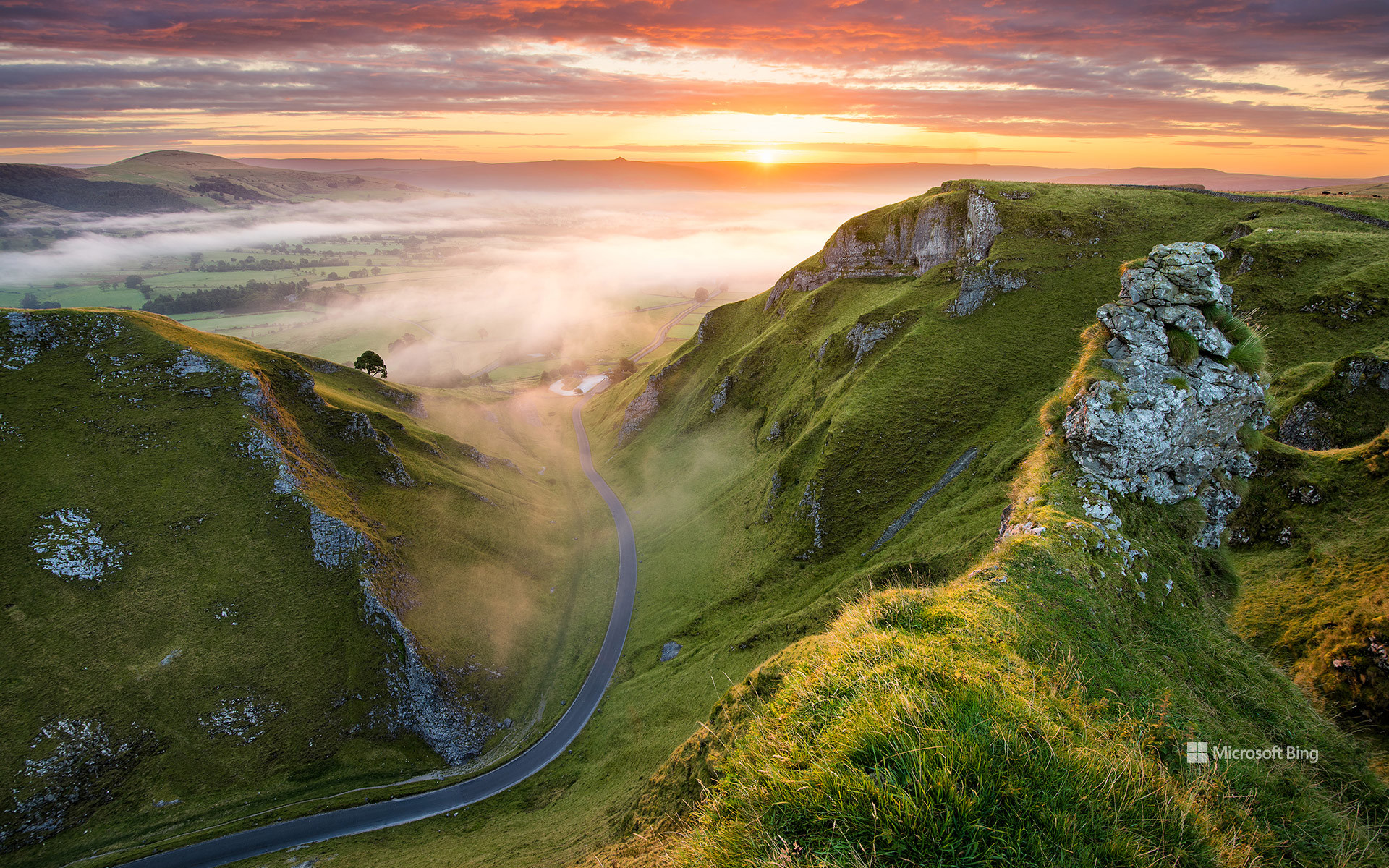
温纳茨山口,峰区国家公园,英格兰 Winnats Pass, Peak District National Park, England (© Daniel_Kay/Getty Images)
穿越山口腹地 Through the heart of the pass
英格兰峰区国家公园温纳茨山口
在英格兰峰区,一条蜿蜒的长路从已有3亿多年历史的岩石间穿过。如此漫长的地质时间尺度本就令人惊叹,而这条路还穿越了温纳茨山口:这是一道狭窄的石灰岩峡谷,高耸的峭壁展现出远古海洋曾经覆盖英国这一地区的痕迹。
然而,温纳茨山口只是英国首座国家公园——峰区国家公园的亮点之一。在这里,葱郁的石灰岩谷地逐渐过渡为一望无际的砂岩荒原,山丘下还隐匿着洞穴系统。游客可以沿壮观的山脊徒步,探索曾由铅矿工开采的地下洞窟,也可以漫步于卡斯尔顿和贝克韦尔等风景如画的社区。英格兰很少有地方能在一片景观中汇聚如此丰富的地质多样性和户外探险体验。无论从狂风劲吹的山顶远眺,还是身处洞窟深处,峰区都是一个每次转弯都会展现新景象的地方。
Winnats Pass, Peak District National Park, England
A long, winding road cuts through rocks more than 300 million years old in England's Peak District. As if that geological timescale were not remarkable enough, the road passes through Winnats Pass, a narrow limestone gorge whose towering cliffs reveal the ancient seas that once covered this part of Britain.
Yet Winnats Pass is only one highlight of the Peak District National Park, Britain's first national park. Here, green limestone valleys give way to sweeping gritstone moorlands, while hidden cave systems run beneath the hills. Visitors can hike along dramatic ridges, explore underground caverns once worked by lead miners, and wander through picturesque communities such as Castleton and Bakewell. Few places in England pack so much geological diversity and outdoor adventure into a single landscape. Whether viewed from a windswept hilltop or from the depths of a cavern, the Peak District is a place where every turn reveals something new.
东米恩南唐斯国家公园谷物田中的山毛榉树,汉普郡,英格兰 Beech tree in a cereal field, East Meon, South Downs National Park, Hampshire, England (© Guy Edwardes/Minden Pictures)

东米恩南唐斯国家公园谷物田中的山毛榉树,汉普郡,英格兰 Beech tree in a cereal field, East Meon, South Downs National Park, Hampshire, England (© Guy Edwardes/Minden Pictures)
金色田野 Fields of gold
汉普郡谷物田中的山毛榉树,英格兰
在汉普郡东米恩附近的金色田野中,一棵山毛榉独自挺立,成为英格兰南唐斯国家公园起伏景观中的醒目焦点。数百年来,农业塑造着这些白垩丘陵;时至今日,耕作仍是该地区的重要组成部分。当地排水良好的白垩土壤支撑着大规模旱作农业,其中小麦和大麦是最常见的作物。整个夏季,作物在田间逐渐成熟,随后收获季将乡野变成金色田块与麦茬交织的拼图。
9月初正值主要收获季,乡村社区开始庆祝一年的丰收。在东米恩等村庄,收获传统仍是当地生活中经久不衰的一部分,反映出土地与耕作者之间的深厚联系。以开阔天空和连绵农田为背景,这棵孤树象征着南唐斯悠久的农业遗产。
Beech tree in a cereal field, Hampshire, England
A beech tree stands alone amid golden fields near East Meon in Hampshire, providing a striking focal point in the rolling landscape of England's South Downs National Park. Agriculture has shaped these chalk hills for centuries, and farming remains an important part of the region today. The area's free-draining chalk soils support extensive arable farming, with wheat and barley among the most common crops. Throughout the summer, these crops ripen in the fields before harvest transforms the countryside into a patchwork of gold and stubble.
Early September coincides with the main harvest season, when rural communities begin celebrating the year's bounty. In villages such as East Meon, harvest traditions remain an enduring part of local life, reflecting the deep connection between the land and the people who work it. Framed by open skies and sweeping farmland, this solitary tree stands as a symbol of the South Downs' long agricultural heritage.
蒂斯河畔斯托克顿无限桥,英格兰 Infinity Bridge in Stockton-on-Tees, England (© Bahadir Yeniceri/Shutterstock)

蒂斯河畔斯托克顿无限桥,英格兰 Infinity Bridge in Stockton-on-Tees, England (© Bahadir Yeniceri/Shutterstock)
迈向无限 Crossing into infinity
国际无限日
8月8日,国际无限日让好奇心成为主角。这项庆祝活动的灵感来自横置的数字8——象征永无止境的无限符号。纽约哲学家让-皮埃尔·阿迪·费尼奥于1987年创立这一节日,邀请每个人通过科学、艺术和想象力探索宏大理念。它不只关乎数学,也关乎从浩瀚宇宙到人类创造力边界的种种可能。
英格兰蒂斯河畔斯托克顿的无限桥,将这种无边的惊奇化为现实。这座线条流畅的人行桥以两道醒目的钢拱横跨蒂斯河;拱形倒映水中时,便组成一个闪耀的无限环。夜幕降临,LED灯光沿步道流动,随着行人经过而变换色彩,增添灵动而近乎未来主义的氛围。
这座桥与国际无限日呼应着同一理念:有些事物没有终点,只有一条不断向前、邀你继续探索的道路。
International Infinity Day
On August 8, curiosity takes center stage on International Infinity Day—a celebration inspired by the sideways figure 8, a symbol of something without end. Founded in 1987 by New York–based philosopher Jean-Pierre Ady Fenyo, the day invites everyone to explore big ideas through science, art, and imagination. It's not just about math—it's also about possibilities, from the vastness of space to the limits of human creativity.
That sense of boundless wonder comes to life at England's Infinity Bridge in Stockton-on-Tees. This sleek pedestrian bridge spans the River Tees using two striking steel arches, and when their curves reflect in the water, they form a glowing infinity loop. By night, LED lights ripple along the walkway, shifting colors as people cross and adding a dynamic, almost futuristic feel.
The bridge and International Infinity Day echo the same idea: some things have no end—just a continuous path forward, inviting you to keep exploring.
泰晤士河, 伦敦, 英格兰 The River Thames, London, England (© Daniel Lange/Getty Images)

泰晤士河, 伦敦, 英格兰 The River Thames, London, England (© Daniel Lange/Getty Images)
时事 Current affairs
泰晤士河, 伦敦, 英格兰
议会大厦、钟楼和巨型摩天轮有什么共同之处?它们都矗立在泰晤士河畔,仿佛伦敦为了营造戏剧性效果而精心布局了这些标志性建筑。
右侧矗立着作为英国政府所在地的威斯敏斯特宫,它在1834年的一场大火后以哥特式风格重建。大本钟——即伊丽莎白塔内那口大钟——自1859年起便开始报时,其钟声悠扬,传遍城外。河对岸,郡政厅沿岸延伸;而伦敦眼则在缓慢的旋转中,为人们提供了独特的观景视角。
从水面上望去,眼前的景象仿佛经过了精妙绝伦的布局与选角,宛如天成。然而,这份功劳主要应归于泰晤士河。公元43年之后不久,罗马人在此建立了伦底纽姆(Londinium);之所以选址于此,是因为这条河既极具利用价值,又难以被彻底掌控。自那时起,它便承载着贸易往来、流言蜚语、权势更迭以及种种世界观。商人依它为生,君王沿它航行,艺术家为它赋予浪漫色彩。至于伦敦这座城市——它历经数世纪,向高空、向四方不断延展,但始终紧依着这条河流而生。
The River Thames, London, England
What does a parliament, a clock tower, and a giant wheel have in common? They all stand beside the River Thames as if London had carefully staged its icons for dramatic effect.
On the right, the Palace of Westminster rises as the seat of British government, rebuilt in Gothic style after the fire of 1834. Big Ben—the bell inside the Elizabeth Tower—has kept time since 1859, its chimes carrying far beyond the city. Across the river, County Hall stretches along the bank, while the London Eye offers perspective, one slow rotation at a time.
From the water, today's scene feels improbably well cast. But the Thames deserves most of the credit. Shortly after AD 43, the Romans founded Londinium here because the river was useful yet difficult to dominate. Since then, it has borne trade, rumors, power, and entire worldviews. Merchants depended on it, kings navigated it, artists romanticized it. London? It grew upward, outward, and across centuries—but always beside it.
伦敦自然历史博物馆, 英格兰 Natural History Museum, London, England (© Colm Keating/Tandem Stills + Motion)

伦敦自然历史博物馆, 英格兰 Natural History Museum, London, England (© Colm Keating/Tandem Stills + Motion)
大厅里的希望 Hope in the hall
国际博物馆日
当你步入博物馆,时光仿佛瞬间流转。一枚化石,诉说着数百万年前生命的印迹;一颗宝石,映照着肉眼难见的沧海桑田。正是这种深切的联结感,构成了“国际博物馆日”——这一由国际博物馆协会于1977年创立的节日——所旨在颂扬的核心精神。
位于伦敦的自然历史博物馆始建于1881年,步入其中,那些令人惊叹的时刻便会接踵而至。这座建筑采用罗马式复兴风格,其设计巧妙地融入了自然形态;馆内展区则划分为四个以颜色区分的区域,按主题对展厅进行了归类。如今,馆内收藏着逾8000万件标本,涵盖植物学、动物学、矿物学及古生物学等多个领域。其中,博物馆的恐龙展厅以及悬挂在欣策大厅(Hintze Hall)上方、名为“希望”(Hope)的巨型蓝鲸骨架,堪称该馆最具代表性的展品。
究竟是什么吸引着人们——是好奇心,还是怀旧情怀?博物馆将抽象的概念转化为触手可及的实物,供你亲眼观赏并探究追问。从科学纪录片到《博物馆奇妙夜》一类的电影,它们都在提醒我们:探索之旅绝非止步于教科书之中——当你迈入博物馆大门的那一刻,真正的探索才刚刚开始。
International Museum Day
You walk into a museum, and suddenly time shifts. A fossil hints at life millions of years ago. A gemstone reflects geological change you can't see. That sense of connection is exactly what International Museum Day, created in 1977 by the International Council of Museums, aims to celebrate.
At the Natural History Museum in London, which opened in 1881, those moments come quickly. Built in Romanesque Revival style, the building reflects natural forms in its design, while four color-coded zones organize the galleries by theme. Today, it houses over 80 million specimens, spanning botany, zoology, mineralogy, and paleontology. The museum's dinosaur gallery and the massive blue whale skeleton , named Hope, suspended in Hintze Hall, are among its most recognized displays.
What draws people in—curiosity or nostalgia? Museums turn abstract ideas into real objects you can see and question. From science documentaries to films like 'Night at the Museum,' they remind us that exploration doesn't end in textbooks—it starts when you walk through the door.
安妮·海瑟薇的小屋与花园,埃文河畔斯特拉特,英格兰 Anne Hathaway's cottage and garden, Stratford-upon-Avon, England (© David Steele/Shutterstock)
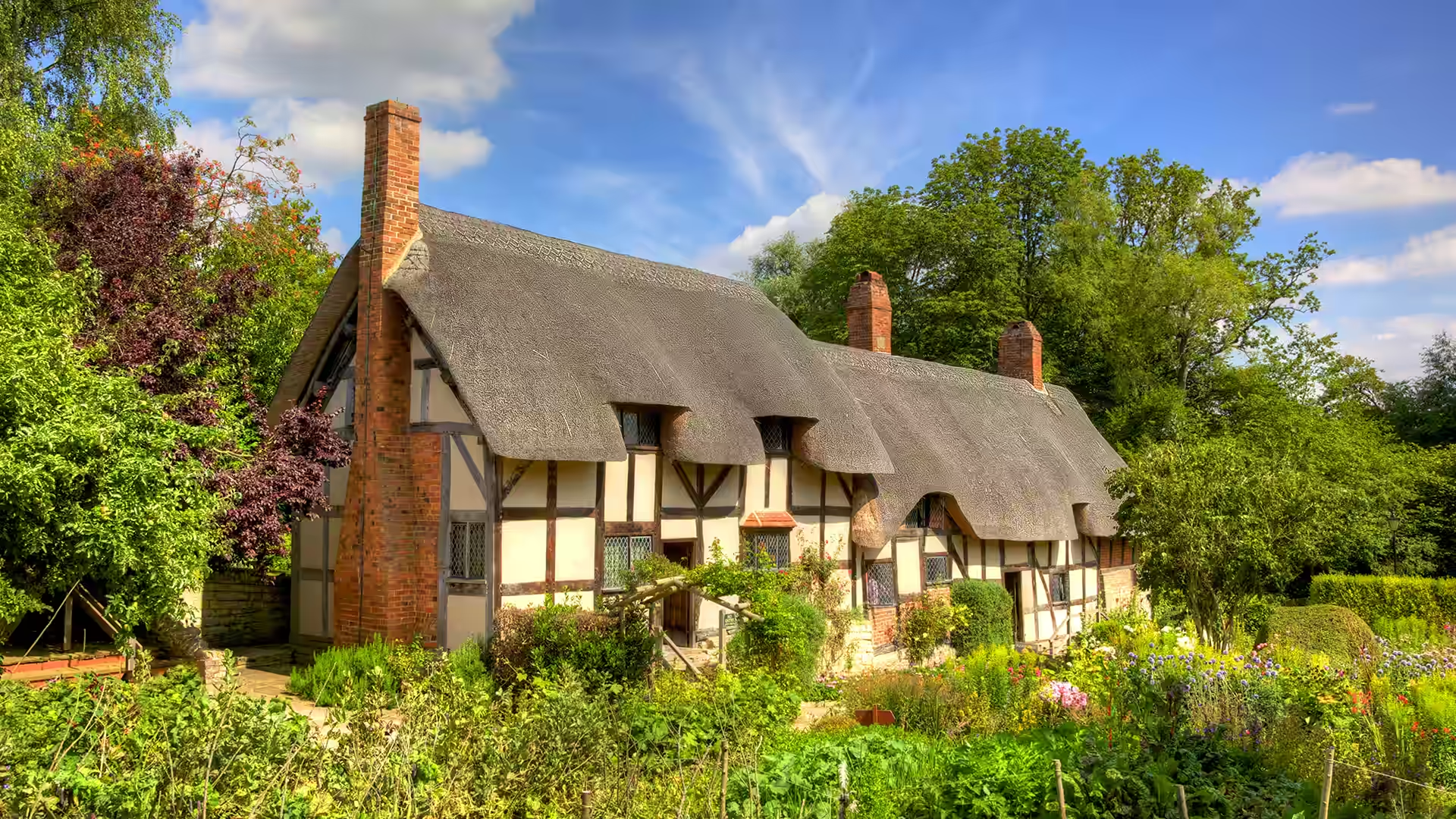
安妮·海瑟薇的小屋与花园,埃文河畔斯特拉特,英格兰 Anne Hathaway's cottage and garden, Stratford-upon-Avon, England (© David Steele/Shutterstock)
一座充满故事的小屋 A cottage full of stories
莎士比亚日
每年4月23日,世界都会再次聚焦威廉·莎士比亚的生平与遗产。这位剧作家的文字,至今仍在全球文学舞台上熠熠生辉。“莎士比亚日”既是他于1616年逝世的纪念日,也被普遍视为他1564年的诞辰。这一巧合般的日期,为这位重塑英语文学的伟大作家赋予了象征性的意义。从《哈姆雷特》中对人性深处的探寻,到《罗密欧与朱丽叶》里跨越生死的爱情,他的语言至今仍回荡在课堂、剧院与日常表达之中。莎士比亚的作品已被翻译成多种语言,并在世界各地不断上演,跨越时间与文化,持续影响着一代又一代人。
今天的图片展示的是位于英国斯特拉特福德镇的安妮·海瑟薇小屋,这里是威廉·莎士比亚未来妻子的童年故居。这座建于15世纪的茅草屋如今被保存为博物馆,为人们提供了一个难得的窗口,得以一窥这位年轻剧作家成长年代所处的日常生活环境。游客可以在这里探访保留下来的原始结构、历经数百年的家具陈设,以及以都铎时代生活为灵感打造的花园。在这样充满历史气息的空间中,人们也更容易沉浸其中,感受这段跨越时光、至今仍不断激发灵感的文化遗产。
Shakespeare Day
Each April 23, the curtain rises on the life and legacy of William Shakespeare, a playwright whose words still command the world's literary stage. Shakespeare Day commemorates the anniversary of his death in 1616 and the traditionally accepted date of his birth in 1564—a symbolic pairing that honors a writer whose works reshaped English literature. From the psychological depths of 'Hamlet' to the enduring romance of 'Romeo and Juliet,' his language continues to echo through classrooms, theaters, and everyday speech. His plays have been performed in numerous languages worldwide.
Today's image shows Anne Hathaway's cottage in Stratford‑upon‑Avon, England, the childhood home of Shakespeare's future wife. This 15th-century thatched cottage, now preserved as a museum, offers a rare glimpse into the domestic world that surrounded the young playwright. Visitors can explore original features, centuries‑old furnishings, and gardens inspired by Tudor life—an evocative setting in which to reflect on a legacy that continues to inspire new generations.
兰扬石门,位于英格兰康沃尔郡的一座兰扬新石器时代石棚墓,英国 Lanyon Quoit, a Neolithic dolmen in Cornwall, England (© Helen Hotson/Alamy)

兰扬石门,位于英格兰康沃尔郡的一座兰扬新石器时代石棚墓,英国 Lanyon Quoit, a Neolithic dolmen in Cornwall, England (© Helen Hotson/Alamy)
圆周率的古老启示 An ancient angle on Pi
庆祝圆周率日
在圆周率尚未有名字之前,人们就被它的奥秘所吸引。每年的3月14日,被定为“圆周率日”,以纪念数学中最著名的常数之一。这个日期正好对应圆周率π的前三位数字(3.14),即圆的周长与直径之比。圆周率无穷且不循环的小数部分长期以来一直令学者们着迷。现代的庆祝活动始于1988年,当时物理学家拉里·肖(Larry Shaw)用一种特别的方式纪念这一天:享用美味的派(pie)。
今天的画面带我们来到英国西南部的康沃尔,那里矗立着兰扬石门——其形状仿佛圆周率的符号 π,从开阔的荒原上拔地而起。这座新石器时代的石墓建于公元前3500年至前2500年之间,曾是更大型建筑的一部分。抬起巨大的顶石需要精确的平衡与比例知识,这些早期的理念让建筑者在文字数学出现之前,就能够掌握形状与尺度的运用。
在圆周率日,这样的遗迹提醒我们:数学思维源于实践中的挑战。在符号出现在黑板之前,人类对测量的理解已经在石头中塑造着世界。
Celebrating Pi Day
Long before pi had a name, people were drawn to its mystery. Every year on March 14, Pi Day highlights one of math's most recognizable constants. The date reflects the first three digits of pi (π), the ratio of a circle's circumference to its diameter: 3.14. Pi's infinite, nonrepeating decimal has fascinated thinkers for a long time. The modern celebration began in 1988, when physicist Larry Shaw marked the day with a fitting tribute: serving pie.
Today's image takes us to Cornwall in southwestern England, where Lanyon Quoit—in the shape of π—rises from open moorland. Built between 3,500 and 2,500 BCE, this Neolithic dolmen once stood as part of a larger structure. Raising its massive capstone required knowledge of balance and proportion. These early concepts helped builders work with shape and scale long before written mathematics existed.
On Pi Day, sites like this remind us that mathematical thinking evolved from practical challenges. Even before symbols appeared on chalkboards, ideas about measurement were already shaping the world in stone.
马姆托尔山,德比郡,英格兰 The hill of Mam Tor, Derbyshire, England (© john finney photography/Getty Images)

马姆托尔山,德比郡,英格兰 The hill of Mam Tor, Derbyshire, England (© john finney photography/Getty Images)
群山的母亲 The mother of hills
马姆托尔,德比郡,英格兰
“颤抖的山”这个绰号听起来颇具戏剧性,但对马姆托尔来说,却是数百年来的真实写照。它耸立在英格兰峰区国家公园的卡斯尔顿上方,这里也是英国首个国家公园,占地约555平方英里。这座地标的名字源自古英语,“mam”意为“母亲”,暗指它仿佛怀抱着周围起伏的小丘。然而,这座“母亲之山”却以不稳定而闻名:页岩与砂岩层层叠加,使山体长期滑动,1979年的一次坍塌甚至导致A625公路永久关闭。
在工程技术介入之前,这座“不稳定”的山早已有了人类的足迹。约3500年前,青铜时代的人们在马姆托山顶筑起宏大的山堡。至今,山脊上仍清晰可见圆形居所与古老道路的遗迹,静静诉说着这里长期作为重要聚落的历史。
从地质角度看,这座海拔约1696英尺的山峰,清晰呈现了峰区动荡不安的地质历史。峭壁间裸露的岩层,形成于3.2亿多年前的热带海洋环境;而附近的洞穴,如著名的蓝约翰洞穴,则孕育着世界上极为罕见的矿物。如今,马姆托尔依然是公园内最具代表性的徒步路线之一,沿着山脊行走,既能感受原始野性,又能行走得轻松自在。
Mam Tor, Derbyshire, England
'Shivering Mountain' is a dramatic nickname, but Mam Tor has earned it over hundreds of years. Rising above Castleton in England's Peak District, it lies within the United Kingdom's first national park, which spans 555 square miles. This landmark takes its name from Old English, 'mam' meaning 'mother,' a nod to the smaller hills it appears to cradle. Yet this 'mother mountain' is famously unstable. Its layers of shale and sandstone have caused landslips for centuries, including a collapse that permanently closed the A625 road in 1979.
Long before modern engineers battled its shifting slopes, Bronze Age people built a large hillfort on Mam Tor's summit around 3,500 years ago. The ridge still shows traces of a settlement, with roundhouses and ancient trackways that reveal its long‑standing importance.
Geologically, this 1,696‑foot peak showcases the Peak District's turbulent past. Its cliffs reveal layers formed in tropical seas over 320 million years ago, while nearby caverns—such as Blue John Cavern—hold minerals found in very few places on Earth. Today, Mam Tor remains one of the park's most iconic walks, offering a ridge path that feels both wild and wonderfully accessible.
马拉齐翁的圣迈克尔山, 康沃尔郡, 英格兰 St. Michael's Mount in Marazion, Cornwall, England (© Baxter Bradford/robertharding/Getty Images)

马拉齐翁的圣迈克尔山, 康沃尔郡, 英格兰 St. Michael's Mount in Marazion, Cornwall, England (© Baxter Bradford/robertharding/Getty Images)
海潮退却之处 Where the sea makes way
马拉齐翁的圣迈克尔山, 康沃尔郡, 英格兰
想象一座从康沃尔海面升起的小岛,潮水退去时才会与陆地短暂相连。每天只有几小时,你可以沿着那条被无数朝圣者和渔民磨出的花岗岩堤道走到岛上。这就是位于马拉齐翁外海的圣迈克尔山,由国家信托基金管理,自17世纪起便是圣奥宾家族的住所,融合了传说、中世纪遗迹与壮阔的海岸景色。
小岛上流传着许多故事:从公元495年大天使米迦勒现身,引导水手脱险,到杰克巨人杀手战胜可怕的巨人科莫兰的民间传说,应有尽有。山顶的城堡最初是12世纪的修道院,后来逐渐改建成一座带有哥特式风格的要塞,内部设有华丽的会客厅、隐秘的楼梯,以及可以远眺海岸线的露台。
山下港口的鹅卵石小路蜿蜒穿过一个历史悠久的渔村,曾经因渔船和贸易而热闹非凡。无论你是在峭壁花园间漫步,还是沿着城堡的防御墙遐想英国内战和西班牙无敌舰队的故事,圣迈克尔山都是一个让历史与传说同样鲜活的地方。
St. Michael's Mount in Marazion, Cornwall, England
Picture a small island rising from the Cornish sea, connected to the mainland only when the tide retreats. For a few hours a day, you can wander across a centuries-old granite causeway made smooth by pilgrims and fishermen. This is St. Michael's Mount, just off the coast of Marazion, in Cornwall, England. Managed by the National Trust and home to the St. Aubyn family since the 1600s, the mount blends myth, medieval history, and sweeping coastal views.
The island is filled with stories: from the Archangel Michael guiding sailors to safety in 495 CE to tales of Jack the Giant Killer defeating the fearsome Cormoran. At the summit stands a castle that began as a 12th-century priory, later transformed into a Gothic-inspired fortress with regal drawing rooms, hidden staircases, and panoramic terraces.
Below, the harbor's cobbled lanes wind through a historic fishing village once busy with boats and trade. Whether you are exploring the gardens clinging to the granite cliffs or wandering the battlements imagining battles of the Civil War and the Spanish Armada, St. Michael's Mount is a rare place where past and legend feel equally alive.