大运河,威尼斯,意大利 Grand Canal in Venice, Italy (© Juan Romero/Cavan Images)
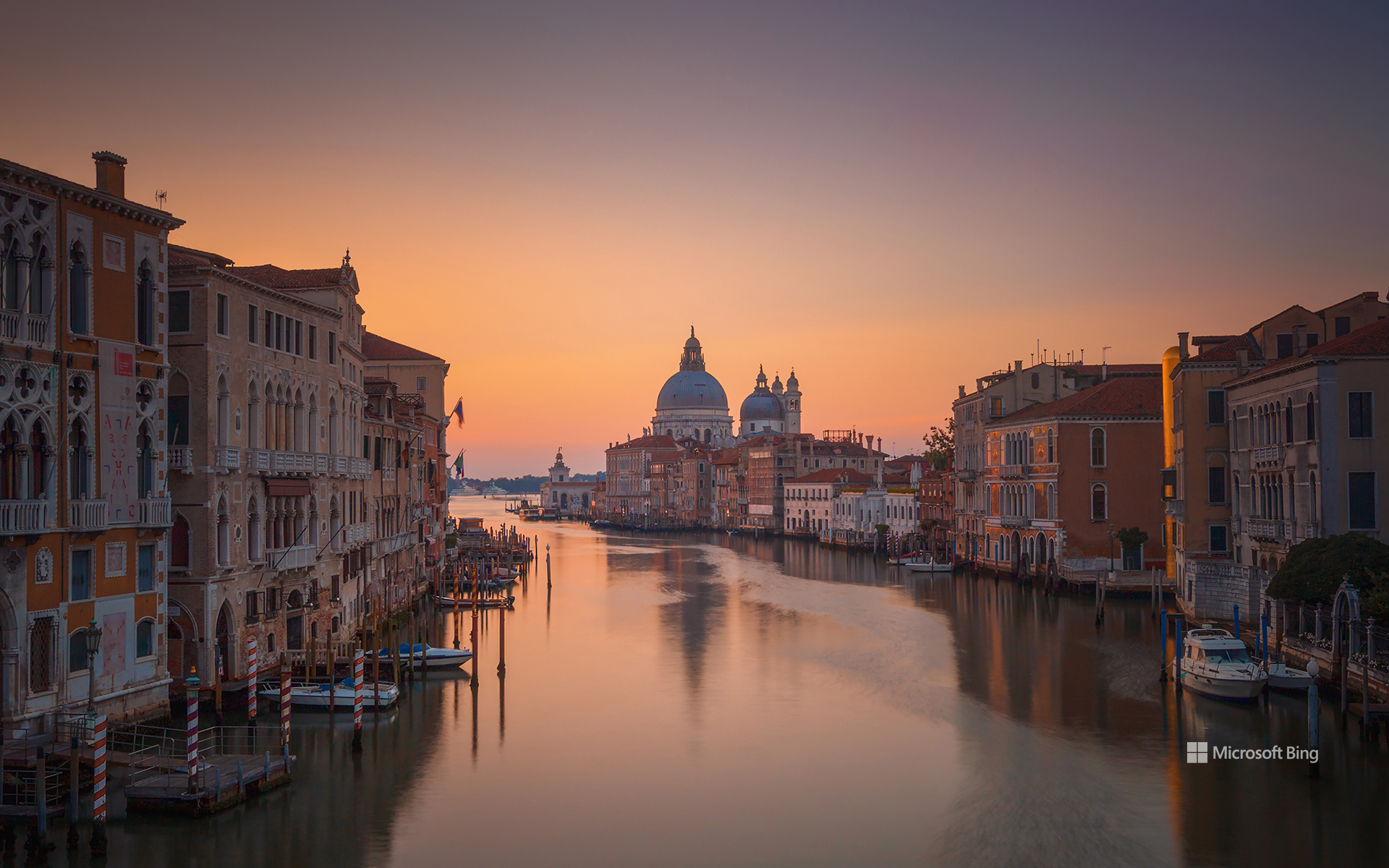
大运河,威尼斯,意大利 Grand Canal in Venice, Italy (© Juan Romero/Cavan Images)
水上通衢 The road that runs on water
威尼斯大运河,意大利
如果一座城市最繁忙的街道根本没有路,会是什么样?在意大利威尼斯,交通沿着大运河往来。这条长2.4英里的水道以巨大的反S形蜿蜒穿过城市。当地人称它为“大运河”,它是威尼斯主要的水上交通通道,水上巴士、水上出租车、贡多拉、警用艇和其他船只都在此穿行。大运河沿着一条古河道延伸,这条河过去曾流入威尼斯潟湖。
大运河两岸分布着近170座历史建筑,其中许多由富裕的威尼斯家族在13至18世纪建造。宫殿和住宅直接从水边拔地而起,使大运河沿岸几乎没有空间修建传统人行道。
尽管大运河十分重要,横跨其上的桥梁却只有四座:里亚托桥、赤足桥、宪法桥和学院桥。几个世纪以来,乘船一直是横渡大运河的主要方式。如今,沿河而行,可以在流动的视野中欣赏威尼斯的建筑与历史。在这里,就连堵船时也有美景相伴——还有贡多拉船夫。
Grand Canal in Venice, Italy
What if a city's busiest street had no road? In Venice, Italy, traffic flows along the Grand Canal, a 2.4-mile waterway that winds through the city in a giant reverse S-shape. Known to locals as the Canalazzo, it is Venice's main water-traffic corridor, carrying vaporetti, water taxis, gondolas, police boats, and other vessels. The canal follows the course of an ancient river that once flowed into the Venetian Lagoon.
Nearly 170 historic buildings line its banks, many built by wealthy Venetian families between the 13th and 18th centuries. With palaces and houses rising directly from the water, the Grand Canal has little room for conventional sidewalks.
Despite its importance, only four bridges cross it: Rialto, Scalzi, Constitution, and Accademia. For centuries, boats were the main way to cross. Today, a journey along the canal offers a moving look at Venice's architecture and history. Here, even a traffic jam comes with a view—and a gondolier.
哥本哈根新港运河沿岸的彩色房屋,首都大区,丹麦 Colorful homes line Nyhavn Canal, Copenhagen, Denmark (© emicristea/Getty Images)

哥本哈根新港运河沿岸的彩色房屋,首都大区,丹麦 Colorful homes line Nyhavn Canal, Copenhagen, Denmark (© emicristea/Getty Images)
绚丽多彩的哥本哈根 Copenhagen in full color
丹麦哥本哈根新港运河
哥本哈根新港运河是一条标志性水道,鲜艳色彩与深厚历史在此交融。它于17世纪70年代在克里斯蒂安五世统治时期挖建,曾是重要门户,货船可由此将货物直接卸入城市中心。远在成为今天明信片般完美的地标之前,这座港口曾以粗犷闻名:水手云集、酒馆喧闹,与色彩明快的山墙联排屋并立。
如今,运河滨水区已变成活力十足的步行中心。传统历史建筑内开设了热闹的咖啡馆和餐厅,谈笑声、音乐声与丹麦经典美食的香气弥漫码头。游客可以欣赏永久停泊在岸边的历史木船,也可以登上游船,从最佳视角观赏城市如画的滨水风光。
除了美景,新港还承载着丰厚的文化遗产。汉斯·克里斯蒂安·安徒生曾居住于此,并从这座不断变化的港口汲取童话灵感。运河虽仅约1,500英尺长,却给人开阔之感。历史、色彩与港口生活在这里汇聚成充满活力的空间,自然而然地邀人驻足流连。
Nyhavn Canal, Copenhagen, Denmark
In Copenhagen, Nyhavn Canal is a burst of color and history. In Denmark's capital, bright, gabled houses lean toward the water, their reflections rippling beside old wooden ships.
Carved out in the 1670s under King Christian V, this 17th-century canal once served as a busy gateway where cargo vessels unloaded goods straight into the city's heart. Sailors crowded its taverns, and the harbor gained a rough reputation long before it became the postcard-perfect place seen today. Now, those same traditional buildings house lively cafés and restaurants, filling the quay with chatter, music, and the scent of Danish classics. Canal boats glide past, offering a front-row view of the city, while historic ships remain moored as reminders of its seafaring past.
Hans Christian Andersen once called Nyhavn home, writing stories inspired by this ever-changing waterfront. Though it's only about 1,500 feet long, the canal feels expansive—an energetic stretch where history, color, and harbor life come together in a scene that invites you to linger.
斯皮格尔运河上的灯光装饰, 阿姆斯特丹, 荷兰 Light decorations on Spiegelgracht canal, Amsterdam, Netherlands (© Amith Nag Photography/Getty Images)

斯皮格尔运河上的灯光装饰, 阿姆斯特丹, 荷兰 Light decorations on Spiegelgracht canal, Amsterdam, Netherlands (© Amith Nag Photography/Getty Images)
静谧水波,闪耀灯影 Still waters, bright lights
阿姆斯特丹的斯皮格尔运河,荷兰
你有没有想过,运河如何影响城市的演变?几千年来,人们修筑运河,用于运输、控水和连接各地。从古代美索不达米亚和埃及,到中世纪的欧洲,运河让威尼斯、布鲁日等城市成为繁荣的贸易枢纽。到了17世纪,荷兰更进一步,规划出影响城市格局的水道,阿姆斯特丹便是其中的典范。
阿姆斯特丹被誉为"北方威尼斯",城市纵横交错的运河全长约60英里,构成了被联合国教科文组织列入世界遗产的运河区。大多数运河两侧都有道路,如今这些水道成为旅游和休闲的胜地。市中心的斯皮格尔运河,是今日画面中的主角,以艺术画廊、古董店和静谧的水面闻名,“镜子运河”之名正源于此。夜色中,桥梁与树木披上节日的光辉,灯影在水面上闪烁。圣诞临近,这些运河仿佛一条条闪亮的历史长链,见证着过去的光芒仍在当下熠熠生辉。
Spiegelgracht canal in Amsterdam, Netherlands
Have you ever wondered how canals changed the way cities developed? For thousands of years, people have built canals to transport goods, control water flow, and connect places. From ancient Mesopotamia and Egypt to medieval Europe, they transformed cities like Venice and Bruges into trade hubs. The Netherlands took this even further—by the 17th century, they were designing waterways that shaped cities such as Amsterdam.
It's no wonder Amsterdam is nicknamed the 'Venice of the North.' The city's 60-mile-long network of canals forms part of the UNESCO-listed Canal District. Mostly flanked by roads on both sides, these routes are now used for tourism and recreation. In the center of the city is the Spiegelgracht canal seen in today's image. It is famous for its art galleries, antique shops, and serene reflections that inspired its name, 'Mirror Canal.' As night falls, bridges and trees glow with festive lights, their reflections shimmering across the calm water. With Christmas just around the corner, these canals resemble glowing strings of history—proof that the past still shines bright in the present.
在大运河上举办的赛船节, 意大利威尼斯 The Regata Storica on the Grand Canal in Venice, Italy (© Alexander Duffner/Alamy)
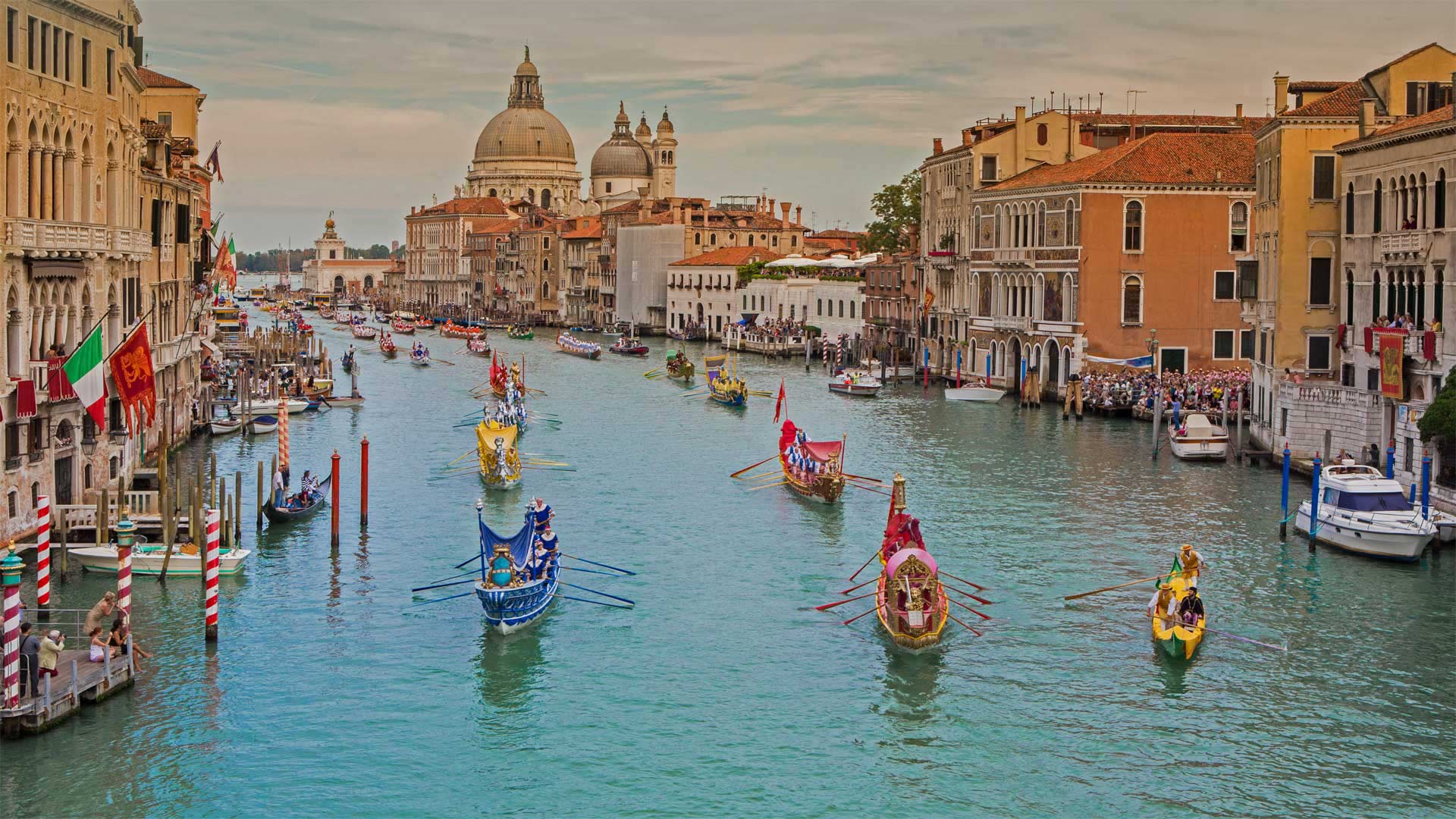
在大运河上举办的赛船节, 意大利威尼斯 The Regata Storica on the Grand Canal in Venice, Italy (© Alexander Duffner/Alamy)
Venice's grand regatta
Every year, on the first Sunday of September, Venice celebrates the Regata Storica along the city's most famous canal. The event is the highlight of the Venetian rowing calendar and consists of two parts: a historical boat parade and a series of rowing races. Festivities begin with a regal water pageant comprising a flotilla of colorful boats from the 16th century. Gondoliers are dressed in period costume as they ferry the Doge, his wife, and other high-ranking Venetian officials up the Grand Canal in a faithful recreation of Venice's storied maritime past. The regatta commemorates the welcome given in 1489 to Caterina Cornaro, the wife of the King of Cyprus, who renounced her throne in favor of Venice.
After the parade, it's time for the racing. Competitions are divided by age categories and feature different types of historical boats. The last and most popular race is the gondolini regatta. A lighter and faster version of the gondola from which it takes its shape, the gondolino is rowed by two oarsmen—standing as per Venetian tradition—who power their way up the Grand Canal toward the finish line at the famous 'machina,' the spectacular floating stage in front of the Ca' Foscari palace on the city's waterfront.
威尼斯大帆船赛
每年9月的第一个星期日,威尼斯都会沿着城市最著名的运河庆祝皇家历史。这项活动是威尼斯赛艇日历上的亮点,由两部分组成:历史性的划船游行和一系列赛艇比赛。庆祝活动以一个由16世纪的彩色船只组成的舰队组成的皇家水上盛会开始。吊船工人们穿着古装,将多格、他的妻子和其他威尼斯高级官员渡上大运河,忠实地再现威尼斯传奇的海上历史。这次帆船赛是为了纪念1489年塞浦路斯国王的妻子卡特琳娜·科纳罗(Caterina Cornaro)受到的欢迎,她放弃了王位,取而代之的是威尼斯。
游行结束后,是比赛的时间了。比赛按年龄分类,以不同类型的历史船只为特色。最后也是最受欢迎的比赛是贡多里尼赛船会。这是一种更轻、速度更快的平底船,由两名按照威尼斯传统站立的划手划船,他们沿着大运河向著名的“机器”(machina)终点前进,这是一个壮观的浮动舞台,位于城市海滨的卡福斯卡里宫(Ca’Foscari palace)前。