内藏山国立公园的秋景,韩国 Autumn in Naejangsan National Park, South Korea (© Twenty47studio/Getty Images)
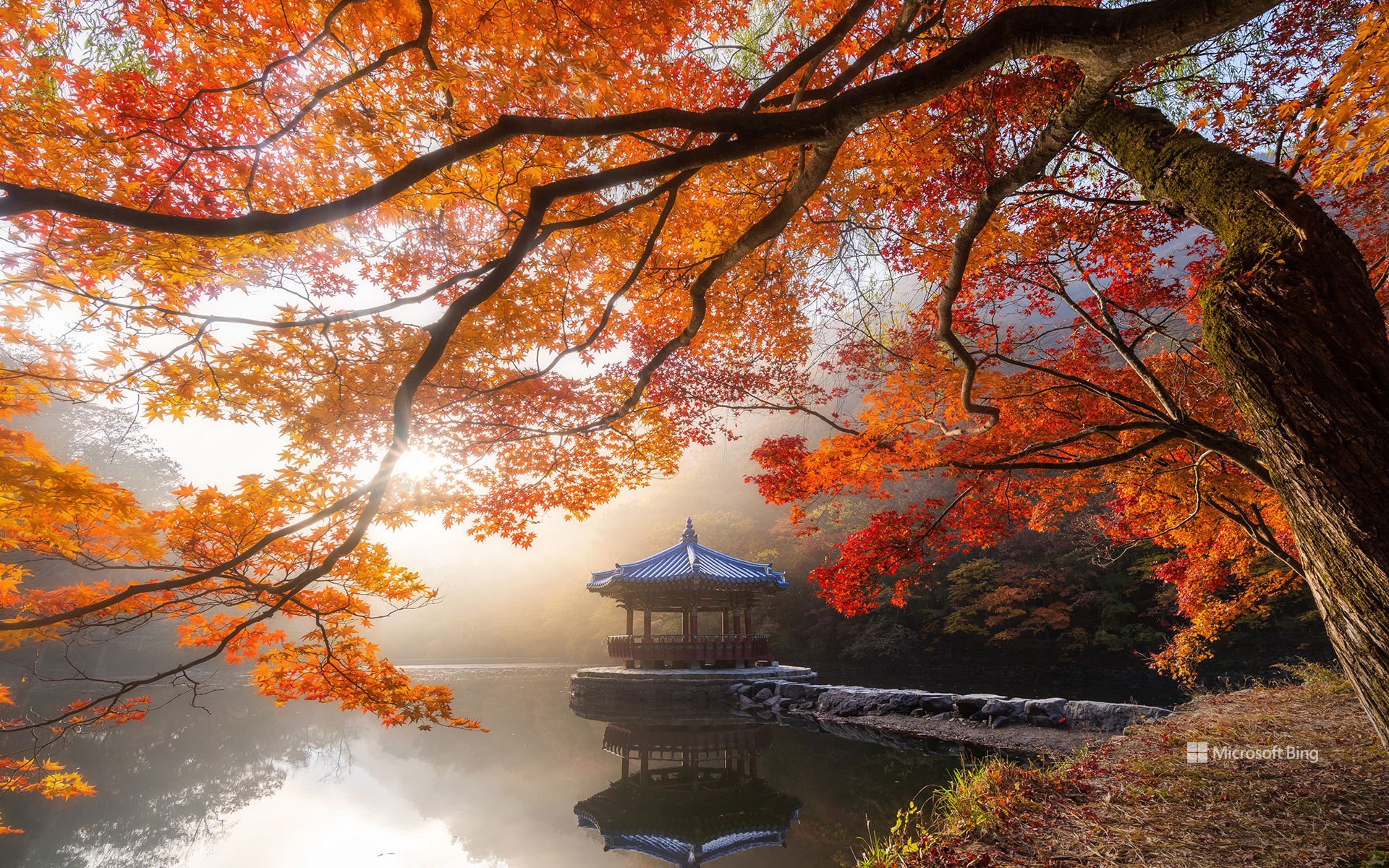
内藏山国立公园的秋景,韩国 Autumn in Naejangsan National Park, South Korea (© Twenty47studio/Getty Images)
静水映斑斓 Still waters, vivid colors
韩国内藏山国立公园的秋景
在韩国,很少有地方能像内藏山国立公园一样尽显秋日的魔力,这里的山坡闪耀着猩红、橙色、黄色和金色的绚丽光彩。公园位于韩国西南部,尤以鲜艳的枫叶色彩闻名,是韩国首屈一指的赏秋胜地之一。其名称意为“山中藏有许多秘密”,体现了这一地区丰富多样的景观。
内藏山的神仙峰海拔约2,500英尺,九座各具特色的山峰环绕着山谷。游客可以沿徒步小径穿过林地和山口,乘坐内藏山缆车则可从高处眺望色彩斑斓的山脊。公园内还有历史悠久的内藏寺和白羊寺,为这片景观增添了深厚的文化意蕴。
其他亮点还包括金城溪谷、道德瀑布和金仙瀑布。内藏山拥有约760种本土植物,除了备受赞誉的秋色外,还蕴藏着丰富的生物多样性,是一个四季都值得探索的目的地。
Autumn in Naejangsan National Park, South Korea
Few places in South Korea capture the magic of autumn quite like Naejangsan National Park, where mountainsides glow in brilliant shades of scarlet, orange, yellow, and gold. Located in the country's southwest, the park is particularly famous for its vivid maple colors, making it one of Korea's premier destinations for fall scenery. Its name, meaning 'many secrets in the mountains,' reflects the varied landscapes found throughout the region.
Naejangsan rises to about 2,500 feet at Sinseonbong Peak, with nine distinctive peaks surrounding its valleys. Visitors can follow hiking trails through woodlands and mountain passes, while the Naejangsan Cable Car offers elevated views of the colorful ridgelines. The park is also home to the historic temples of Naejangsa and Baegyangsa, adding a rich cultural dimension to the landscape.
Other highlights include Geumseongyegok Valley and the Dodeokpokpo and Geumseonpokpo waterfalls. With around 760 species of native plants, Naejangsan offers rich biodiversity beyond its celebrated autumn colors, making it a destination worth exploring in every season.
华城堡的古城墙,水原,韩国 Old city wall of Hwaseong Fortress, Suwon, South Korea (© aomam/Getty Images)

华城堡的古城墙,水原,韩国 Old city wall of Hwaseong Fortress, Suwon, South Korea (© aomam/Getty Images)
设计与秩序相结合 Design meets discipline
韩国水原华城堡的古城墙
当夜幕降临在韩国水原,这里所呈现的华城堡古城墙证明了一点:功能并不一定会削弱美感,反而可以孕育出美。华城建于1794年至1796年间,由朝鲜王朝的正祖下令修建,它不仅仅是一道防御屏障,更是一种“以石为策”的体现——一场以务实为导向、兼具深层个人动机的改革尝试,旨在打造一个更加精简、高效运作的国家。正祖修建华城,一方面是为了纪念他的父亲,另一方面也意在强化这个追求更智慧治理体系、而不仅仅依赖加厚城墙的王国。
这座走在时代前沿的韩国城防杰作,将创新巧妙地融入于外表之中。华城堡全长约3.5英里(约5.7公里),并未刻意对抗地形,而是顺应山势与地貌自然延展。城墙沿线设置的棱堡扩大了防御覆盖范围,瞭望塔兼具信号传递功能,隐蔽城门便于灵活通行,滑轮等装置则显著提升了建造效率。1997年,华城被联合国教科文组织列入世界文化遗产名录,整体保存状况极为完整,并且至今仍在“运转”之中——它不仅可行、可观,更融入了当地的日常生活。白天是防御体系的历史见证,夜晚则化作充满诗意的文化景观。
Old city wall of Hwaseong Fortress, Suwon, South Korea
As night settles over Suwon, South Korea, the old city wall pictured here shows that function doesn't necessarily cancel out beauty—it can create it. Built between 1794 and 1796 under King Jeongjo of the Joseon Dynasty, Hwaseong Fortress was more than a barrier. It was policy in stone: a reform minded push for a leaner, better-run state, driven by practicality and a deeply personal motive. Jeongjo ordered its construction to honor his father while strengthening a kingdom that wanted smarter systems, not just thicker walls.
Ahead of its time, this masterpiece of Korean fortification hid innovation in plain sight. Rather than wrestling with the landscape, the roughly 3.5-mile wall follows its curves. Bastions widened defensive coverage, watchtowers doubled as signaling points, concealed gates allowed discreet movement, and pulley systems quickened construction. Recognized as a UNESCO World Heritage Site in 1997, the site is remarkably intact—and still very much in motion. Hwaseong remains walkable, watchable, and woven into daily life. Defense by day, poetry by night.
北汉山国立公园,韩国 Bukhansan National Park, South Korea (© TRAVEL TAKE PHOTOS/Shutterstock)
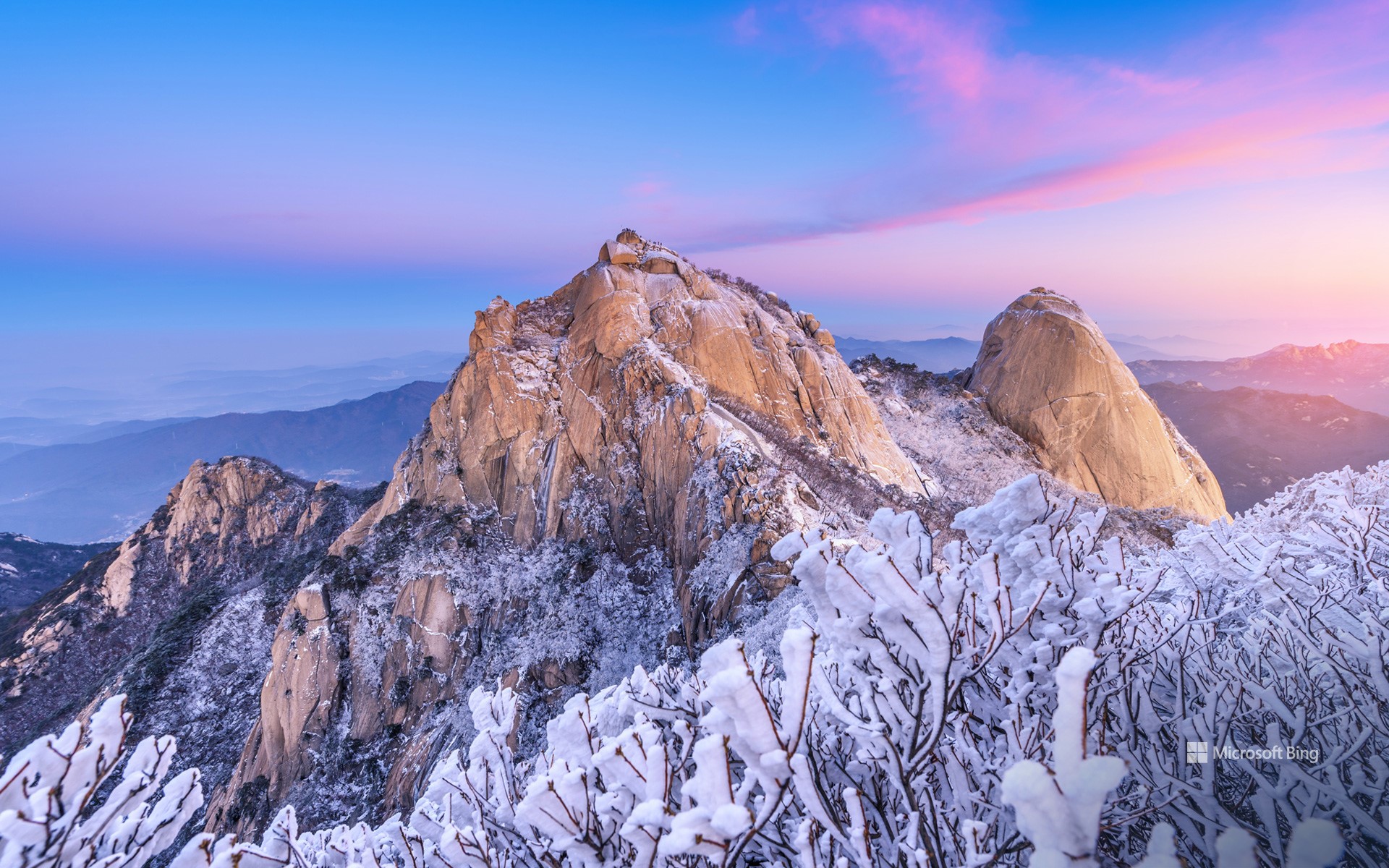
北汉山国立公园,韩国 Bukhansan National Park, South Korea (© TRAVEL TAKE PHOTOS/Shutterstock)
北汉山的花岗岩山峰 Take this peak for granite
北汉山国立公园,韩国
北汉山国家公园位于繁华的韩国首都首尔以北几英里处,是市民和国际游客的度假胜地。该公园建于1983年,拥有茂密的森林、古老的寺庙和北汉山的三座花岗岩山峰。水鹿、野猪、花栗鼠和松鼠自由自在地在公园的山脊和山谷中游荡。细心的人还能听到啄木鸟的哒哒声或栖息在树上的各种鸣禽的鸣叫声。该公园还是北汉山城的所在地,其现有建筑可追溯到1711年。当时修建这座城池的目的是为了保护首尔免受外部威胁。
Bukhansan National Park, South Korea
Just a few miles north of South Korea's capital city of Seoul, Bukhansan National Park is a retreat for city dwellers and international visitors. Forests and ancient temples sit side-by-side in the park, beneath the three granite peaks of Bukhan Mountain, or Bukhansan. Among the park's ridges and valleys, water deer, wild boar, chipmunks, and squirrels roam freely. A careful ear might pick out the rat-a-tat of woodpeckers or the chirpy melody of songbirds perched in the trees. The park also boasts Bukhansanseong Fortress, whose current structure was completed in 1711.
城山日出峰,济州岛上的凝灰岩锥,韩国 Seongsan Ilchulbong, a tuff cone on Jeju Island, South Korea (© Quynh Anh Nguyen/Getty Images)

城山日出峰,济州岛上的凝灰岩锥,韩国 Seongsan Ilchulbong, a tuff cone on Jeju Island, South Korea (© Quynh Anh Nguyen/Getty Images)
一个酷炫的凝灰岩火山口 A 'tuff'-tastic crater
济州岛,韩国
济州岛上充满奇观,火山、古老石像、瀑布和岩石海岸,还有今天图片中的主角,城山日出峰,是岛上罕见的凝灰岩锥,由5000年前的一次海底火山喷发而形成。城山日出峰于2007年被列入联合国教科文组织世界自然遗产名录。
Jeju Island, South Korea
The South Korean island of Jeju is full of wonders. If you don't have a chance to visit its volcanic landscape, ancient stone statues, waterfalls, and rocky coastline, you can dive into the island's fascinating chronicles from the comfort of your computer. The star of today's image, Seongsan Ilchulbong (Sunrise Peak), is the island's rare tuff cone formation, created by an underwater volcanic eruption about 5,000 years ago. Tuff cones are also called ash cones, referring to the accumulated ash settling in a cone formation after the lava's forceful explosion. Seongsan Ilchulbong was added to the UNESCO World Natural Heritage List in 2007.
黄前山上盛开的皇家杜鹃花, 韩国 Royal azaleas in bloom on Hwangmaesan Mountain, South Korea (© Stock for you/Shutterstock)
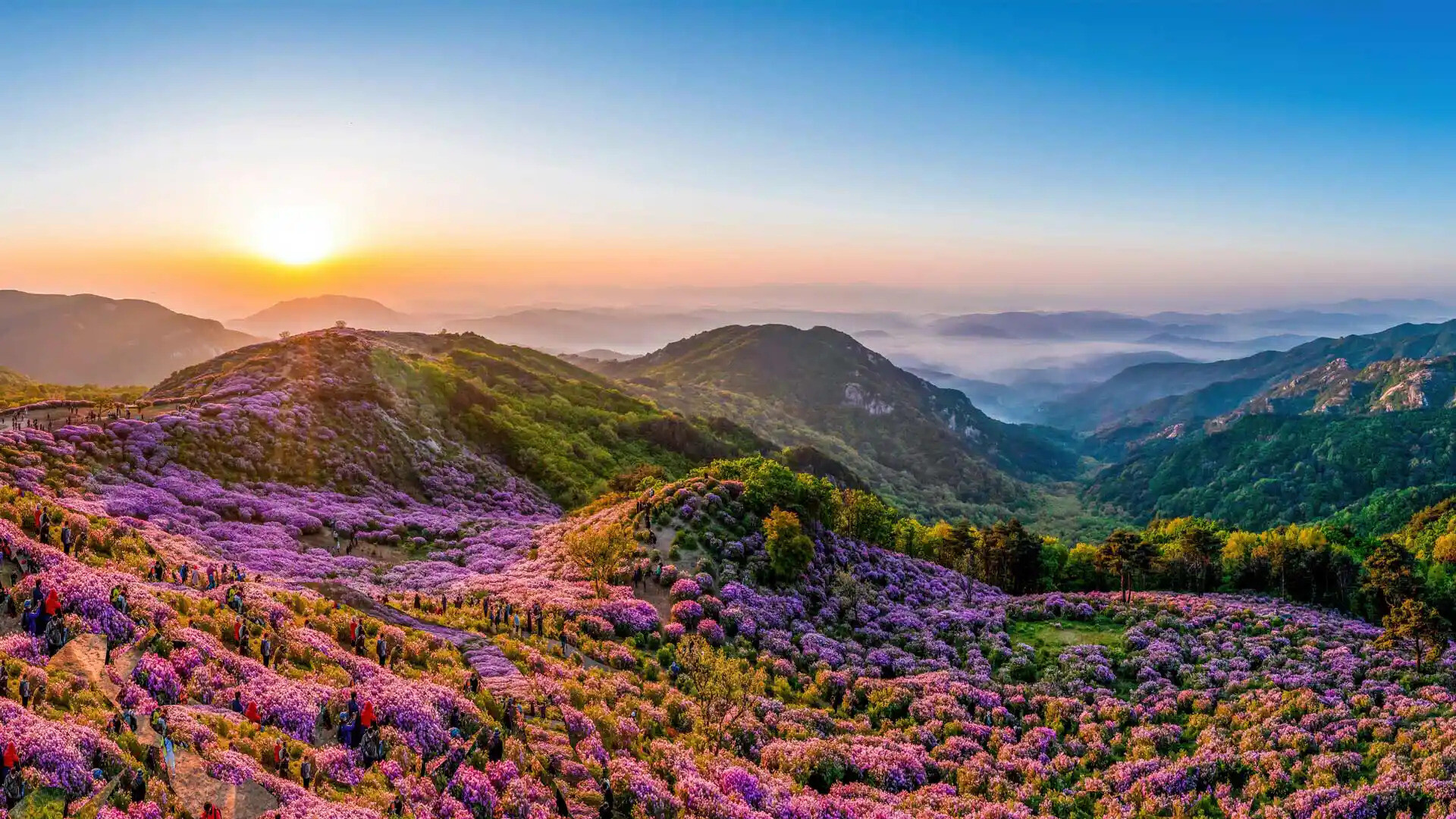
黄前山上盛开的皇家杜鹃花, 韩国 Royal azaleas in bloom on Hwangmaesan Mountain, South Korea (© Stock for you/Shutterstock)
绝对的紫色山峰 Positively purple peaks
韩国黄前山上盛开的杜鹃花
随着夏天的临近,大片皇家杜鹃花将韩国黄前山的两侧涂成了鲜艳的紫色。游客们成群结队地观看这片引人注目的粉红色和紫色的花朵地毯,它是随着奶牛和绵羊吃掉草和植物而逐渐形成的,但留下了遍布山上的有毒杜鹃花。
对于那些想攀登的人来说,黄前山还拥有巨大的岩层、令人惊叹的景色,以及一个传说,任何在山顶祈祷的人都会实现他们的愿望。它的海拔高度约为3650英尺,为徒步旅行者和露营者提供了一个逃离城市生活的宁静之地。那些想在杜鹃花中漫步的人应该在五月杜鹃花盛开的时候去那里。但是,如果穿着得体,在峰会上仍然会感到寒冷。
Azaleas blooming on Hwangmaesan Mountain, South Korea
Vast colonies of royal azaleas paint the sides of South Korea’s Hwangmaesan Mountain a vibrant purple as summer approaches. Sightseers flock to see this striking pink and purple carpet of flowers which was created gradually as dairy cows and sheep ate the grass and plants, but left behind the poisonous azaleas which spread across the mountain.
For those who want to climb it, Hwangmaesan also features massive rock formations, stunning views, and a legend that anyone who prays at the summit will have their wish granted. It reaches an altitude of around 3,650 feet and offers a peaceful escape from city life for hikers and campers. Those who want to walk among the azaleas should head there in May, when they come into bloom. But dress appropriately, it still gets chilly up at the summit.
仙岩寺中的升仙桥,韩国曹溪山道立公园 Seungseon Bridge at Seonam Temple in Jogyesan Provincial Park, South Korea (© Aaron Choi/Getty Images)
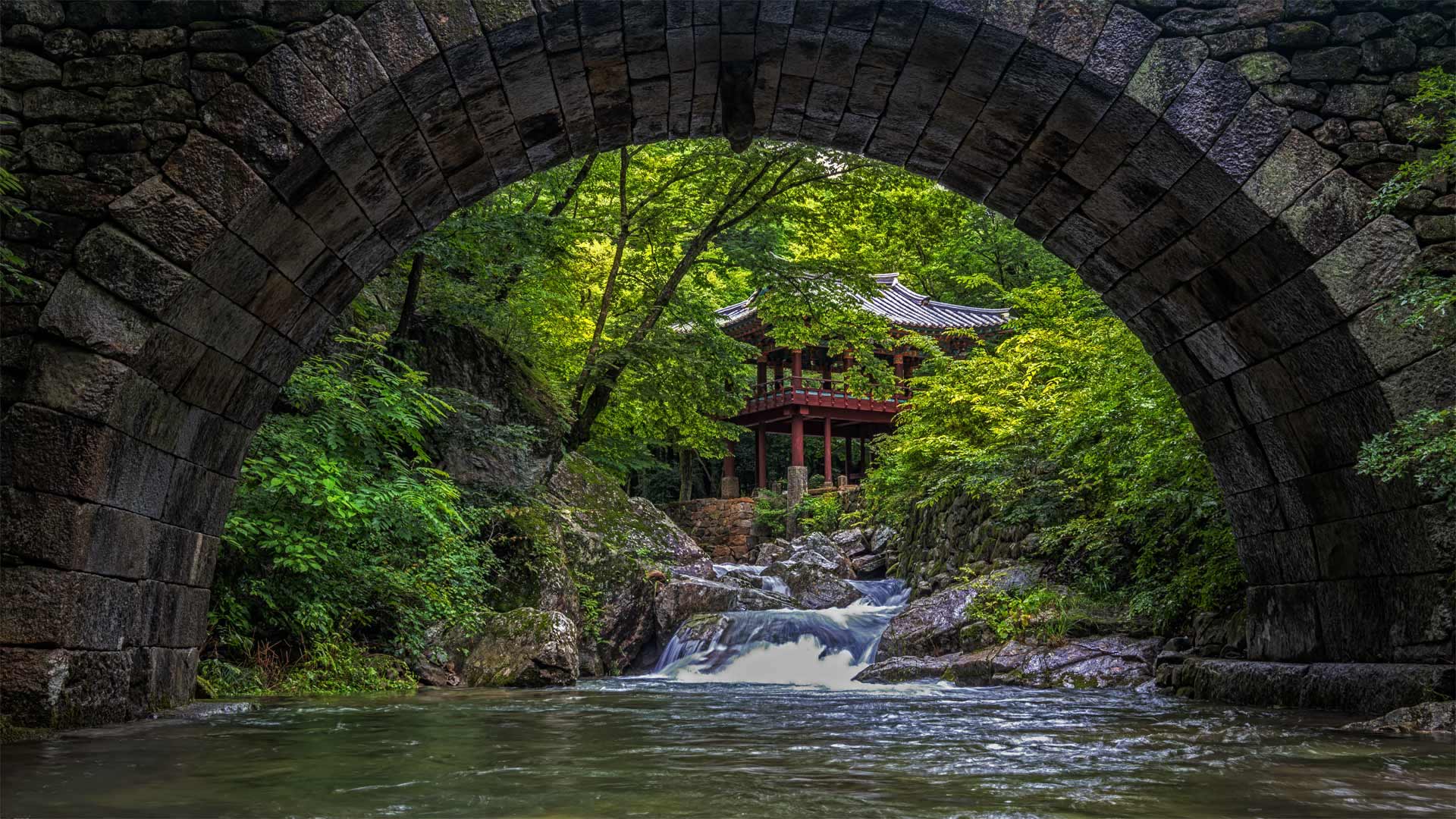
仙岩寺中的升仙桥,韩国曹溪山道立公园 Seungseon Bridge at Seonam Temple in Jogyesan Provincial Park, South Korea (© Aaron Choi/Getty Images)
连接过去和现在 Bridging past and present
Seonam Temple, South Korea
The Seonam Temple, or Seonamsa, in Jogyesan Provincial Park, South Korea, is famed for expressing calm serenity. Just downstream, Buddhist monks built this gently arched bridge by hand centuries ago. Stones around the base record the names of visitors for posterity. Called the Seungseon Bridge ('the Ascending Immortals'), it's fitting to approach the temple itself on foot, at one with nature. The site is hidden away in ancient trees, with tranquil ponds and streams, gentle hiking trails, and gorgeous pagodas. The temple still ekes out its day in the traditional way, with mellow bells and meditation. The monks also cultivate wild tea plants and are happy to share the benefits of the harvest. You are at peace as soon as you arrive at Seonamsa, and there's little to distract you from the present moment.
The original temple is believed to have been built in the 9th century, but over the years war and a major fire caused extensive damage, and it had to be rebuilt in the 19th century. Now the Seonam Temple is a UNESCO World Heritage Site, along with six other 'sansa,' or Buddhist monasteries, dotted in the mountains throughout the southern provinces of the Korean Peninsula. Visitors are invited to stay overnight at the temple and follow the monks' daily practice, but you can also dip in for a day to absorb the peace and tranquility. Flowers in spring and colorful leaf displays in fall make those the most popular times to visit.
韩国色南寺
位于韩国Jogyesan省立公园的Seonam庙(Seonamsa)以表达平静而闻名。就在下游,佛教僧侣在几个世纪前手工建造了这座轻轻的拱桥。基地周围的石头为后人记录了游客的名字。这座名为Seungseon Bridge(“升天神仙”)的桥适合步行接近寺庙本身,与大自然融为一体。该遗址隐藏在古树丛中,有宁静的池塘和溪流,温和的徒步小道,还有华丽的宝塔。这座寺庙仍然以传统的方式,用柔和的钟声和冥想来维持它的一天。僧侣们还种植野生茶树,并乐于分享收获的好处。你一到达梭南沙就很平静,没有什么可以分散你对当下的注意力。
据信,原来的寺庙建于9世纪,但多年来,战争和一场大火造成了巨大的破坏,不得不在19世纪重建。现在,色南寺与其他六座“三萨”或佛教寺院一起被联合国教科文组织列为世界遗产,分布在朝鲜半岛南部各省的山区。游客被邀请在寺庙过夜,并遵循僧侣们的日常修行,但你也可以泡一天来吸收和平与宁静。春天的鲜花和秋天五颜六色的树叶展览使这些地方成为最受欢迎的游览时间。