斋浦尔附近琥珀堡内的 Sattais Katcheri 大厅,拉贾斯坦邦,印度 Sattais Katcheri Hall in Amber Fort near Jaipur, Rajasthan, India (© R.M. Nunes/Getty Images)
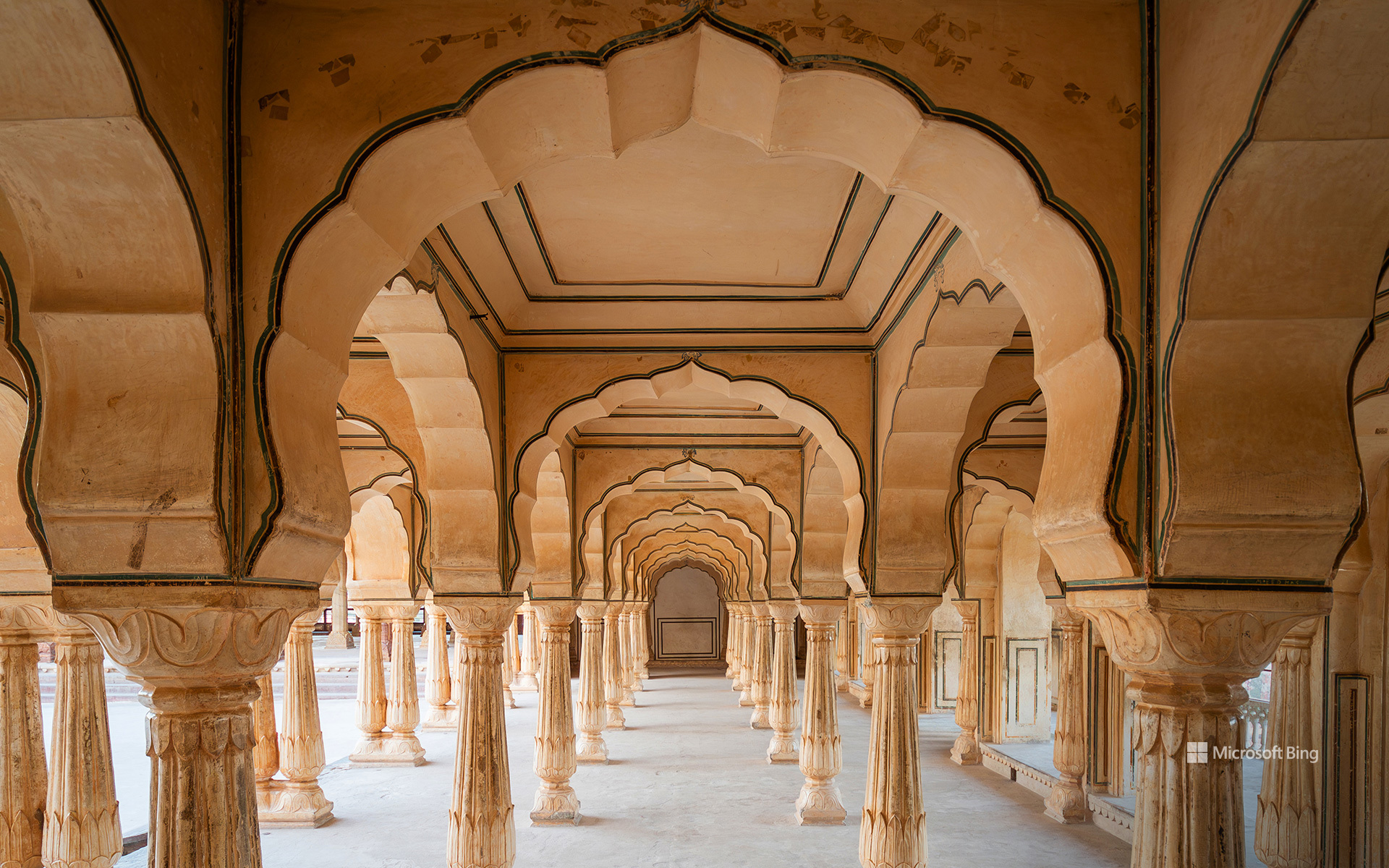
斋浦尔附近琥珀堡内的 Sattais Katcheri 大厅,拉贾斯坦邦,印度 Sattais Katcheri Hall in Amber Fort near Jaipur, Rajasthan, India (© R.M. Nunes/Getty Images)
可览美景的历史胜地 History with a view
印度拉贾斯坦邦斋浦尔附近的琥珀堡
大多数初次到访印度拉贾斯坦邦斋浦尔的游客都知道这座城市有“粉红之城”的美誉,但更早的王都以琥珀堡为中心。这个王朝的大部分政治与建筑史正是在那里书写的。琥珀堡的营建历时一个多世纪,始于1592年拉贾·曼·辛格一世统治时期,之后由历代卡奇瓦哈统治者续建;他们统治的王国后来成为斋浦尔土邦。王室于 1727 年迁往新规划的斋浦尔城,但琥珀堡仍继续承担礼仪功能。
从建筑上看,这座堡垒将拉杰普特式防御特色与受莫卧儿风格启发的拱门、庭院、彩绘表面和大理石装饰融为一体。图中的Sattais Katcheri大厅因其27根柱子而得名。这座建筑被认为曾用于行政事务。堡内还有觐见厅、王室庭院以及装饰华丽的镜宫。探索这片宏大的建筑群,感受“Padharo Sa”的热情好客,也别忘了留点肚子品尝一盘达尔巴蒂楚尔玛——烤小麦面团、扁豆和一种香甜松散的甜点。
Amber Fort near Jaipur, Rajasthan, India
Most first-time visitors know Jaipur, in Rajasthan, India, as the Pink City, but the earlier royal capital was centered on Amber Fort. That's where much of the dynasty's political and architectural history was shaped. The fort developed over more than a century, beginning under Raja Man Singh I in 1592 and continuing under later Kachwaha rulers who controlled the kingdom that eventually became Jaipur State. The royal family moved to the newly planned city of Jaipur in 1727, but Amber continued to serve ceremonial functions.
Architecturally, the fort combines defensive Rajput features with Mughal-inspired arches, courtyards, painted surfaces, and marble detailing. The Sattais Katcheri Hall, seen in the image, takes its name from its 27 pillars. The structure is associated with administrative purposes. The fort also includes audience halls, royal courtyards, and the ornate Sheesh Mahal. Explore the sprawling complex, experience the warmth of 'Padharo Sa,' and save room for a plate of dal baati churma—baked wheat dumplings, lentils, and a sweet crumbly dessert.
安科拉附近的加比特凯尼海滩,卡纳塔克邦,印度 Gabit Keni Beach near Ankola, Karnataka, India (© Amith Nag Photography/Getty Images)
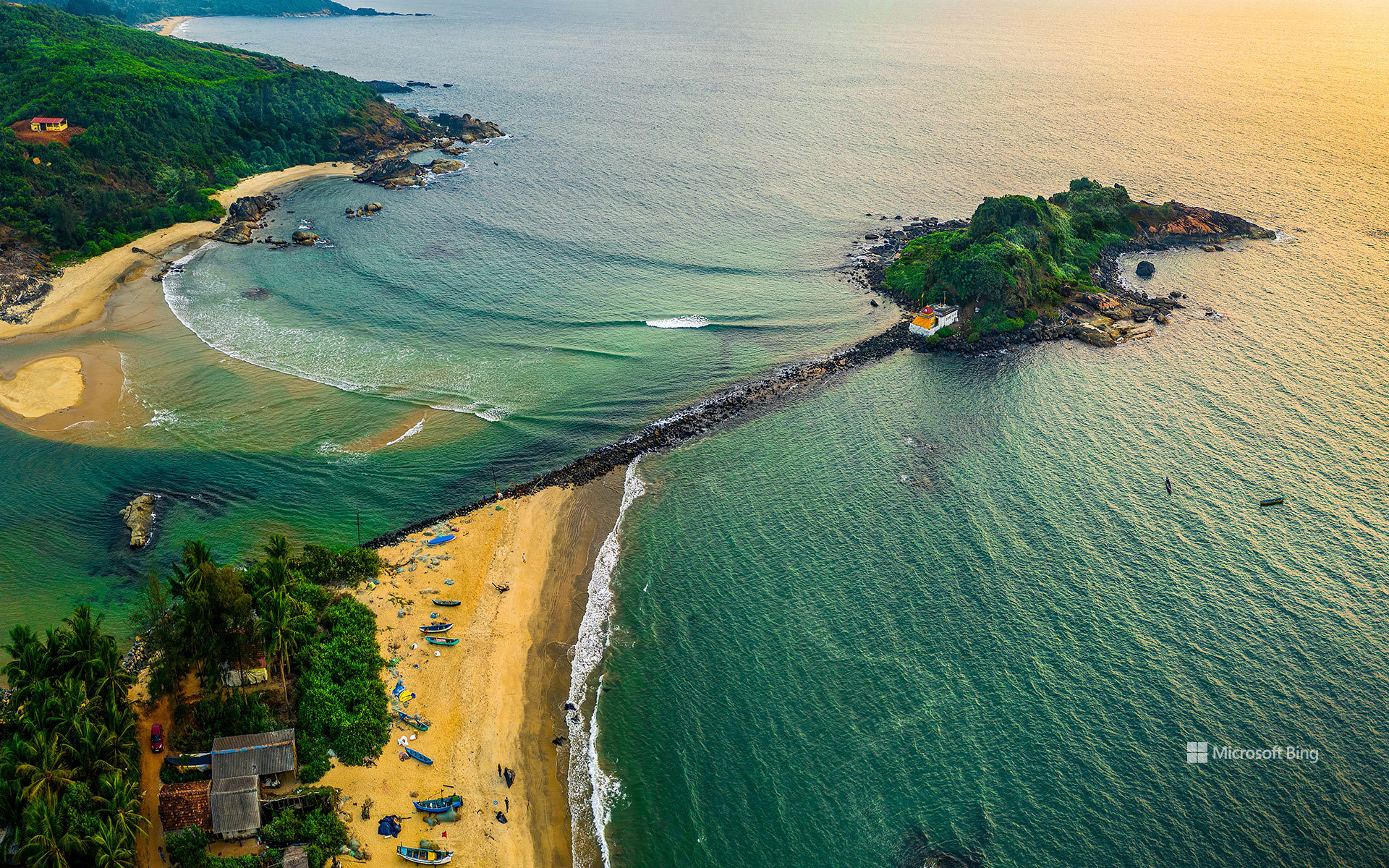
安科拉附近的加比特凯尼海滩,卡纳塔克邦,印度 Gabit Keni Beach near Ankola, Karnataka, India (© Amith Nag Photography/Getty Images)
印度西海岸的生活 Life on India's west coast
安科拉附近的加比特凯尼海滩,卡纳塔克邦,印度
提到印度南部,人们常会想到香料贸易路线、古典音乐、民间舞蹈,以及数百年来连接印度与世界的海岸线。沿着这条海岸向西进入卡纳塔克邦,便会抵达安科拉附近一处更宁静的停靠点:加比特凯尼海滩。这里的生活围绕阿拉伯海展开,渔船在黎明前出海,载着当天的渔获归来。
这片海滩以加比特渔民社区命名。探索北卡纳达县时,这里是个轻松顺路的停靠点,尤其适合与戈卡尔纳、卡尔瓦尔和历史悠久的米尔詹堡一同游览。观鸟者可能在溪流附近看到海岸鸟类,摄影者则常在清晨光线更柔和时驻足。何不尝尝当地美食?安科拉周边餐馆里,新鲜鱼咖喱、炸鱿鱼和鲜虾菜肴都很受欢迎。离开之前,不妨留出时间享用一顿新鲜海鲜;它或许会和这片海滩一样令人难忘。
Gabit Keni Beach near Ankola, Karnataka, India
When people think of South India, they often picture spice trade routes, classical music, folk dances, and a coastline that has connected India with the world for centuries. Follow that coastline west into Karnataka and you'll reach a quieter stop near Ankola: Gabit Keni Beach. Life here revolves around the Arabian Sea, with fishing boats setting out before dawn and returning with the day's catch.
The beach is named after the Gabit fishing community. It's an easy stop while exploring the Uttara Kannada district, especially alongside Gokarna, Karwar, and the historic Mirjan Fort. Birdwatchers may spot coastal birds near the stream, while photographers often stop by during the softer light of early morning. Why not sample local cuisine? Fresh fish curries, squid fry, and prawn dishes are popular at eateries around Ankola. Before you leave, make time for a fresh seafood meal—it may end up being as memorable as the beach itself.
从风之宫殿俯瞰斋浦尔市景,拉贾斯坦邦,印度 View to Jaipur from Hawa Mahal palace, Rajasthan, India (© byheaven/Getty Images)

从风之宫殿俯瞰斋浦尔市景,拉贾斯坦邦,印度 View to Jaipur from Hawa Mahal palace, Rajasthan, India (© byheaven/Getty Images)
石间的清风 A breeze in stone
从印度拉贾斯坦邦风之宫俯瞰斋浦尔
如果建筑能够“呼吸”,那会是怎样一番景象?坐落于斋浦尔市中心的风之宫(Hawa Mahal)便实现了这一点——它吸纳清风、排出热气,将建筑设计转化为一场静谧的科学实验。与其说它是一座宫殿,倒不如说是一次精准的“吐故纳新”。它确实名副其实:一座实至名归的“风之宫殿”。
这座由红粉砂岩砌筑的地标建筑始建于1799年,由萨瓦伊·普拉塔普·辛格国王(Maharaja Sawai Pratap Singh)下令修建,建筑师拉尔·钱德·乌斯塔德(Lal Chand Ustad)操刀设计。其建造初衷是让皇室女性在遵循“深闺制度”(Purdah)而不抛露露面的前提下,能够观察阶前街市(Johari Bazaar)的众生百态。建筑立面拥有953扇名为Jharokhas的小窗,它们能像漏斗一样将微风汇聚并送入内部,实现自然降温。更令人惊叹的是,这座五层建筑并未采用传统地基,而是完全依托其金字塔状的稳固结构屹立不倒。
宫殿在街道一侧并未设置正门,访客需从城市皇宫(City Palace)一侧进入。内部以斜坡代替台阶,以便于行走攀爬。其酷似王冠的外观意在致敬奎师那神(Lord Krishna),设计风格则完美融合了穆斯林风格的拱廊与拉其普特式的精巧细节。风之宫向世人证明了一点:当设计与自然律动相契合,一切美感与功能便随之而来。
瓜廖尔堡, 中央邦, 印度 Gwalior Fort, Madhya Pradesh, India (© ImagesofIndia/Shutterstock)

瓜廖尔堡, 中央邦, 印度 Gwalior Fort, Madhya Pradesh, India (© ImagesofIndia/Shutterstock)
岩石中的秘密 Secrets in stone
瓜廖尔堡, 中央邦, 印度
位于印度中央邦的瓜廖尔,不仅是一座城市,更是印度历史篇章中浓墨重彩的一页。高耸入云的瓜廖尔堡建于公元6世纪是一座历经无数王朝兴衰、充满传奇色彩的山地堡垒。凭借其坚固与宏伟,这座堡垒被誉为“印度的直布罗陀”,并曾获莫卧儿皇帝巴布尔盛赞,称其为“印度所有堡垒中的明珠”。从托马尔王朝到莫卧儿王朝,瓜廖尔堡见证了无数权力更迭、战争纷争与宫廷秘事,也流传着关于隐藏宝藏的神秘传说。
这座古堡有六座宫殿,其中两座是由1486年至1516年在位的拉贾·曼·辛格·托马尔建造的。其建筑风格融合了印度教和莫卧儿风格。主要景点包括外观铺有蓝绿色瓷砖的曼曼迪尔宫,以及供奉着阿尼鲁杜和湿婆神的萨斯-巴胡庙。特利庙是一座没有柱廊的长方形神殿,在同类建筑中独树一帜。城堡中还有密道和隐秘的金库,据说里面藏有大量财宝。
当夕阳洒落在城墙之上,夜幕降临,一场声光秀让古堡重新焕发生机,诉说着国王、勇士与王朝的故事。雄伟的瓜廖尔堡吸引着无数游客,也让历史在他们离开后仍久久回荡。
Gwalior Fort, Madhya Pradesh, India
Gwalior, in Madhya Pradesh, is not just a city; it is a chapter of India's history. Towering over the skyline, Gwalior Fort is a 6th-century hill fort shaped by generations of rulers and wrapped in legend. Nicknamed 'the Gibraltar of India,' this fort was praised by Mughal emperor Babur as the 'pearl among the fortresses of Hind' for its strength and grandeur. The fort has seen rulers from the Tomars to the Mughals and is linked to battles, royal intrigue, and hidden treasures.
The fort has six palaces, two of which were built by Raja Man Singh Tomar, who reigned from 1486 to 1516. The architecture reflects a blend of Hindu and Mughal styles. Key landmarks include the Man Mandir Palace, with its turquoise-tiled exterior, and the Sas-Bahu Temples, dedicated to Lord Aniruddha and Lord Shiva. Teli Temple, a rectangular shrine without pillared pavilions, stands out among other such structures. Secret passages and hidden vaults hint at treasures long rumored to be stored inside.
杰伊瑟尔梅尔的骆驼, 拉贾斯坦邦, 印度 Camels at Jaisalmer, Rajasthan, India (© f9photos/Getty Images)

杰伊瑟尔梅尔的骆驼, 拉贾斯坦邦, 印度 Camels at Jaisalmer, Rajasthan, India (© f9photos/Getty Images)
蹄声、色彩与传承 Hooves, hues, and heritage
普什卡骆驼节
每到秋季,印度拉贾斯坦邦的沙漠小镇普什卡都会因一场普什卡骆驼节而热闹非凡。这一节庆与印度教的卡提克月相对应,通常在公历10月下旬至11月初举行。今年的庆典自今日起至11月5日,成为了当地一年中最令人期待的季节。
最初,这里是世界上最大的骆驼和牛只交易市场之一,而今已逐渐演变为文化与社区的盛大节日。除了牲畜交易,游客还能欣赏到趣味竞赛,如“打陶罐”、最长胡须比赛,甚至还有新娘秀。农村家庭在五彩缤纷的集市间穿梭,摊位上摆满了纺织品、衣物和闪亮的手镯。盛会以热闹的骆驼赛跑拉开帷幕,接着是传统歌曲、舞蹈和各类表演。最受瞩目的活动之一是骆驼展示,参与者依次骑上骆驼,热闹非凡,烘托出浓郁的节日氛围。近年来,集市还增添了新亮点,比如由当地普什卡俱乐部与外国游客组成球队进行的一场友谊足球赛,让节庆气氛更加多元。
Camels at Jaisalmer, Rajasthan, India
Every fall, the desert town of Pushkar in Rajasthan, India, comes alive with one of the most colorful gatherings—the Pushkar Camel Fair. Timed with the Hindu lunar month of Kartik, it usually takes place between late October and early November on the Gregorian calendar. This year, the celebrations stretch from today until November 5, marking the region's most anticipated season.
What began as one of the world's largest camel and cattle markets has gradually transformed into a grand celebration of culture and community. Alongside the trading of cattle and camels, visitors now enjoy quirky competitions like 'matka phod' (pot breaking), longest mustache contest, and even bridal shows. Rural families explore vibrant stalls overflowing with textiles, clothes, and glittering bracelets, while the fair itself kicks off with a high-spirited camel race, followed by traditional songs, dances, and lively performances. Among the highlights is the camel showcase, where participants take turns riding the animals in an animated display that adds to the festive charm. In recent years, the fair has introduced new attractions too, including a friendly football match between the local Pushkar Club and teams of foreign tourists.
奇陶尔加尔堡, 拉贾斯坦邦, 印度 Chittorgarh Fort, Rajasthan, India (© chetansoni/Shutterstock)

奇陶尔加尔堡, 拉贾斯坦邦, 印度 Chittorgarh Fort, Rajasthan, India (© chetansoni/Shutterstock)
忠勇的雕刻石 Carved stones of courage
奇陶尔加尔堡, 拉贾斯坦邦, 印度
奇陶尔加尔堡坐落在印度拉贾斯坦邦一座海拔超过590英尺的山丘上,占地约690英亩。它骄傲地见证着著名武士家族——拉杰普特人的英勇事迹。拉杰普特人的名字源自梵语“rajaputra”,意为“国王之子”,他们以其高贵的血统和尚武传统而闻名于整个印度北部。这座堡垒的石墙见证了几个世纪以来拉贾斯坦邦吟游诗人的歌谣中流传的勇气、骄傲和浪漫。据传说,印度史诗《摩诃婆罗多》中的英雄比姆是这座堡垒的奠基者。
奇陶尔加尔堡是印度最大的堡垒之一,拥有65座历史建筑,包括四座宫殿、19座大型寺庙、20座水库、四座纪念碑和几座胜利塔。这座堡垒周长约8.1英里,最长3.1英里。从平原出发,沿着一条陡峭的之字形山路蜿蜒而上,全长约半英里,从横跨甘比里河的石灰岩桥开始。沿着这条路攀登,穿过古老的城门,您仿佛能听到战争和传说的回响——仿佛在邀请您踏入一段鲜活的历史篇章。
Chittorgarh Fort, Rajasthan, India
High on a hill rising over 590 feet in Rajasthan, India, Chittorgarh Fort spans approximately 690 acres. It stands as a proud witness to the valor of the famed warrior clans—the Rajputs. Their name comes from the Sanskrit 'rajaputra,' meaning 'son of a king,' and they are celebrated for their noble lineage and martial traditions across northern India. The fort's stone walls have witnessed centuries of courage, pride, and romance, remembered in the songs of Rajasthan's bards. According to legend, Bhim, a hero from the Hindu epic 'Mahabharata,' first laid its foundations.
As one of the largest forts in India, Chittorgarh encompasses 65 historic structures, including four palaces, 19 large temples, 20 reservoirs, four memorials, and several victory towers. This fort has a circumference of about 8.1 miles and a maximum length of 3.1 miles. It is reached by a steep, zigzag ascent of just over half a mile from the plains, beginning with a limestone bridge over the Gambhiri River. Climbing this path and passing through its ancient gates, you can almost hear the echoes of battles and legends—inviting you to step into a living chapter of history.
希莫加附近的 Champaka Sarasi 池塘,卡纳塔克邦,印度 Champaka Sarasi pond near Shivamogga, Karnataka, India (© Amith Nag Photography/Getty Images)
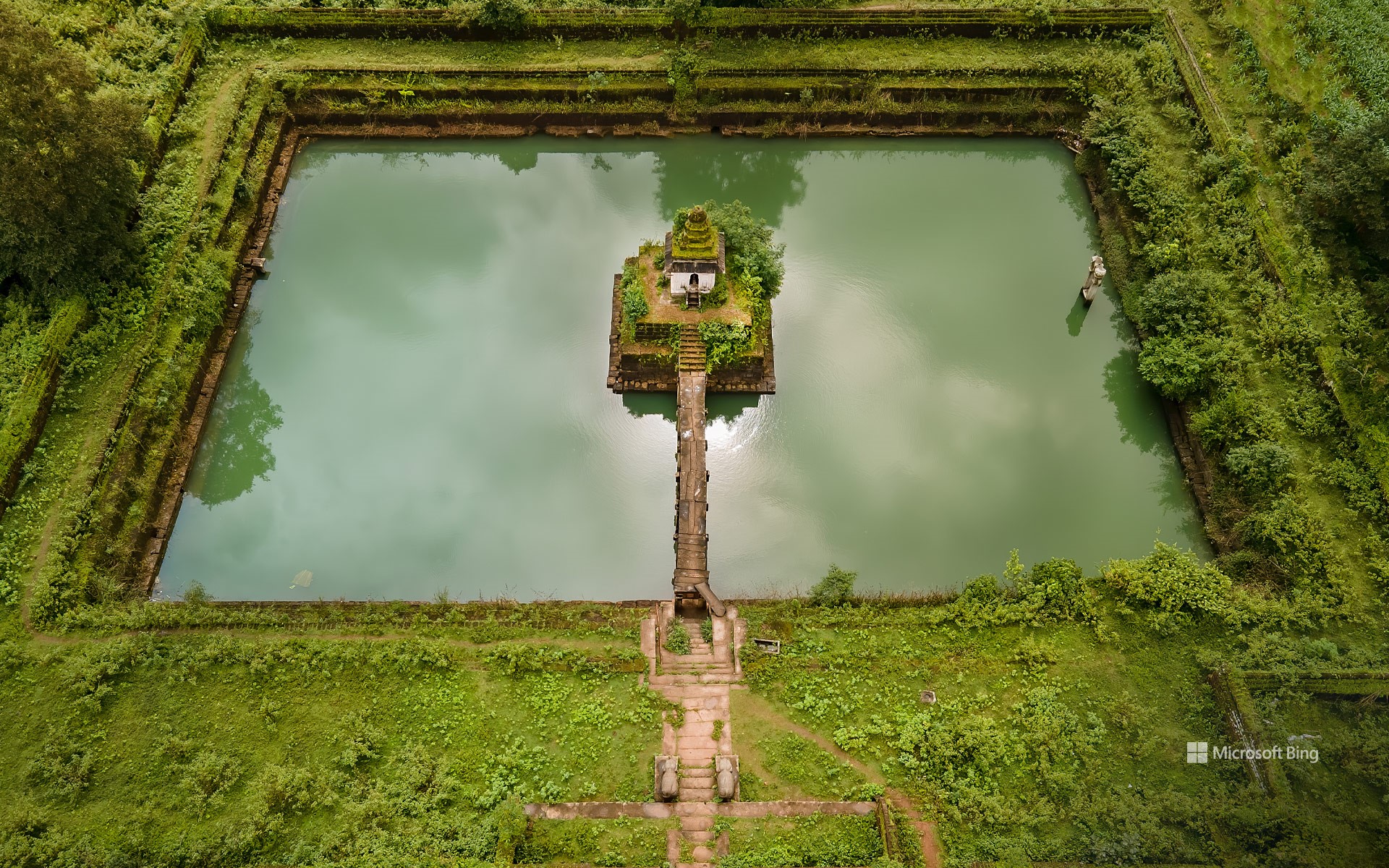
希莫加附近的 Champaka Sarasi 池塘,卡纳塔克邦,印度 Champaka Sarasi pond near Shivamogga, Karnataka, India (© Amith Nag Photography/Getty Images)
静水流深的传说 A tale of still waters
Champaka Sarasi,希莫加,印度
从瀑布到寺庙,位于印度南部卡纳塔克邦的希瓦莫加,拥有众多等待探索的奇观。这座城市历史悠久,在印度史诗《罗摩衍那》和《摩诃婆罗多》中均有提及。这两部史诗以诗歌形式创作,背景设定在印度古代印度教王国。希瓦莫加这个名字本身具有宗教意义,源自梵语“Shiva-Mukha”,意为“湿婆的面容”,湿婆是印度教三大主神之一。这里有许多寺庙,包括供奉湿婆的沙拉瓦蒂寺,以及位于科达查德里山的一座寺庙,登临此地可俯瞰西高止山脉的壮丽景色。
今日图片中展示的Champaka Sarasi,是一座历史悠久的纪念性池塘。它所承载的故事远不止于平静的水面。这座池塘由凯拉迪纳王朝的重要统治者之一的文卡塔帕·纳亚卡建造,以纪念他的爱妻占帕卡。池塘中央还有一座小型石庙,里面供奉着湿婆林伽,这是对湿婆的抽象或非具象描绘。希瓦莫加还以壮丽的瀑布闻名,其中最著名的是印度第二高的垂直瀑布,乔格瀑布。
Champaka Sarasi, Shivamogga, Karnataka, India
From waterfalls to temples, Shivamogga, in the South Indian state of Karnataka, offers experiences waiting to be discovered. Steeped in timeless lore, the city is mentioned in the Ramayana and the Mahabharata, epics composed as poems and set in the ancient Hindu kingdoms of India. The region's name itself holds a spiritual significance, derived from the Sanskrit words 'Shiva-Mukha,' meaning the 'face of Shiva,' the Hindu god. It is home to several temples, including the Sharavati Temple, dedicated to Shiva, and a temple in the Kodachadri hills that offers vistas of the Western Ghats mountain range.
Adding to this landscape is Champaka Sarasi, the monumental pond featured in today's image. It tells a story far beyond its waters. It was built by Venkatappa Nayaka, a member of the Nayakas of Keladi, an important ruling dynasty of early modern Karnataka. The pond was constructed in memory of the king's beloved wife, Champaka. It also has a small stone temple at its center, housing a Shiva linga, an abstract or non-figurative depiction of Shiva. Shivamogga is also renowned for its waterfalls, including Jog Falls, the second-highest plunge waterfall in India.
Sattais Katcheri,琥珀堡,拉贾斯坦邦,印度 Sattais Katcheri (Court of 27 pillars), Amber Fort, Rajasthan, India (© Yury Taranik/Shutterstock)
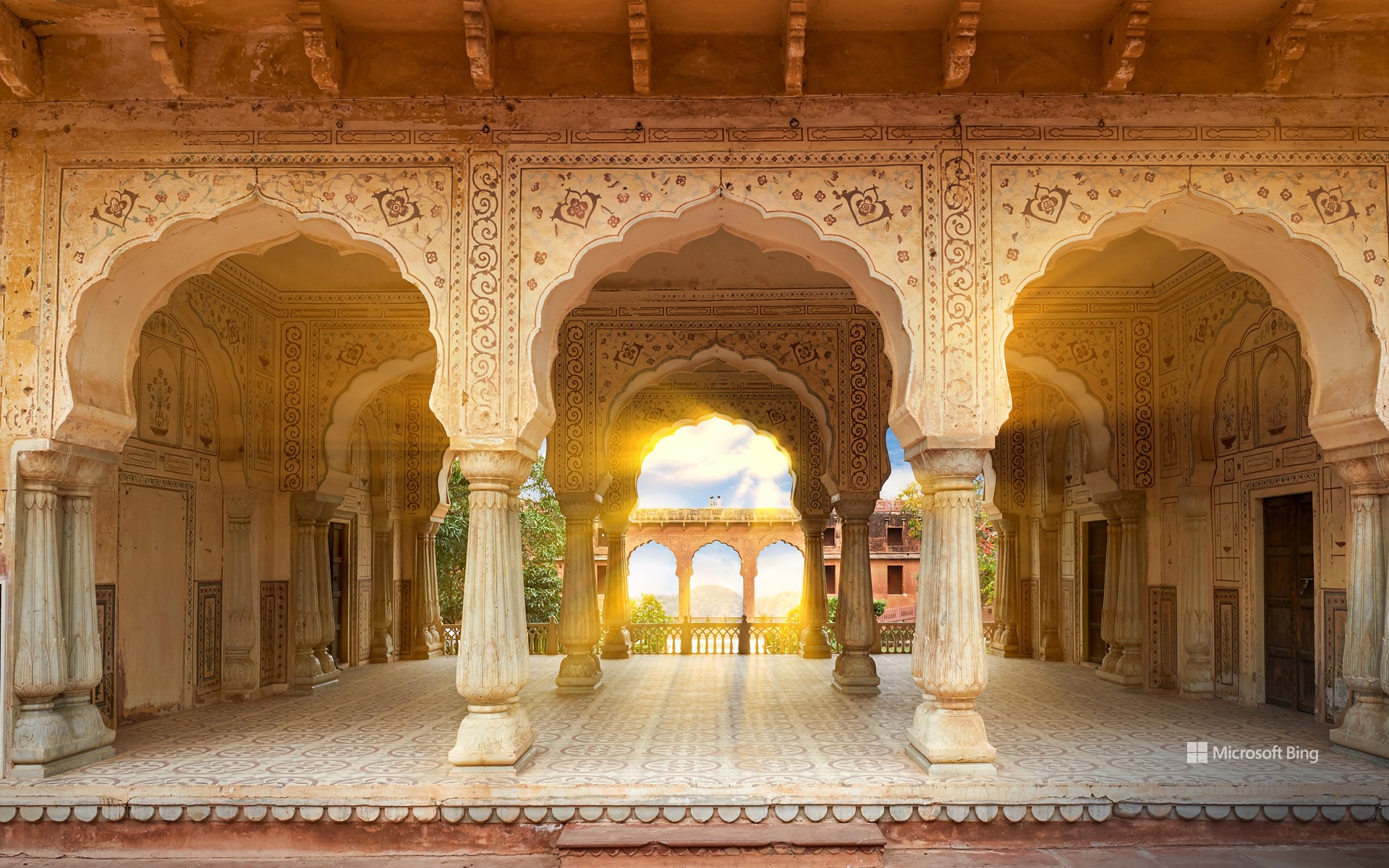
Sattais Katcheri,琥珀堡,拉贾斯坦邦,印度 Sattais Katcheri (Court of 27 pillars), Amber Fort, Rajasthan, India (© Yury Taranik/Shutterstock)
柱式遗产 A pillared legacy
琥珀堡,安梅尔,斋浦尔,拉贾斯坦邦,印度
漫步在印度拉贾斯坦邦斋浦尔地区的街道上,你会被宏伟的宫殿和高耸的堡垒所吸引,它们塑造了该地区的景观。其中最引人注目的是琥珀堡,它坐落在距离斋浦尔主城约7英里的一座小山上。在这座堡垒华丽的城墙内有一个名为“Sattais Katcheri”的建筑,意思是“27根柱子的宫廷”,这就是今天图片中的建筑。琥珀堡建于1592年,曾是该地区统治者的居所。琥珀堡以其独特的印度神庙、拉杰普特和莫卧儿建筑风格而闻名,由淡黄色和粉红色砂岩以及白色大理石建成。这座杰作共分四层,每层都有自己的庭院。每晚的灯光音响秀将城堡的魅力展现得淋漓尽致。作为联合国教科文组织认定的世界遗产,琥珀堡可以让游客尽情探索其丰富的历史和皇家风范。
Amber Fort, Jaipur, Rajasthan, India
Grand palaces and towering forts shape the landscape of the Indian state of Rajasthan. Among the most prominent is Amber Fort, also known as Amer Fort or Amber Palace, which is perched on a small hill about 7 miles from the main city of Jaipur. Within its regal walls lies the Sattais Katcheri, which means 'court of 27 pillars,' featured in today's image. Amber Fort was built in 1592 and it served as the residence of the Maharajas, or rulers, of the area. Famous for its unique blend of Hindu, Rajput, and Mughal architectural styles, it is constructed from pale yellow and pink sandstone alongside white marble. This masterpiece is spread across four levels, each with its own courtyard. Part of the wider Hill Forts of Rajasthan UNESCO World Heritage Site, Amber Fort invites visitors to explore a rich blend of history and royalty.
可可海滩上的渔船,果阿邦,印度 Fishing boats at Coco Beach in Goa, India (© Abhinav Sah/Shutterstock)
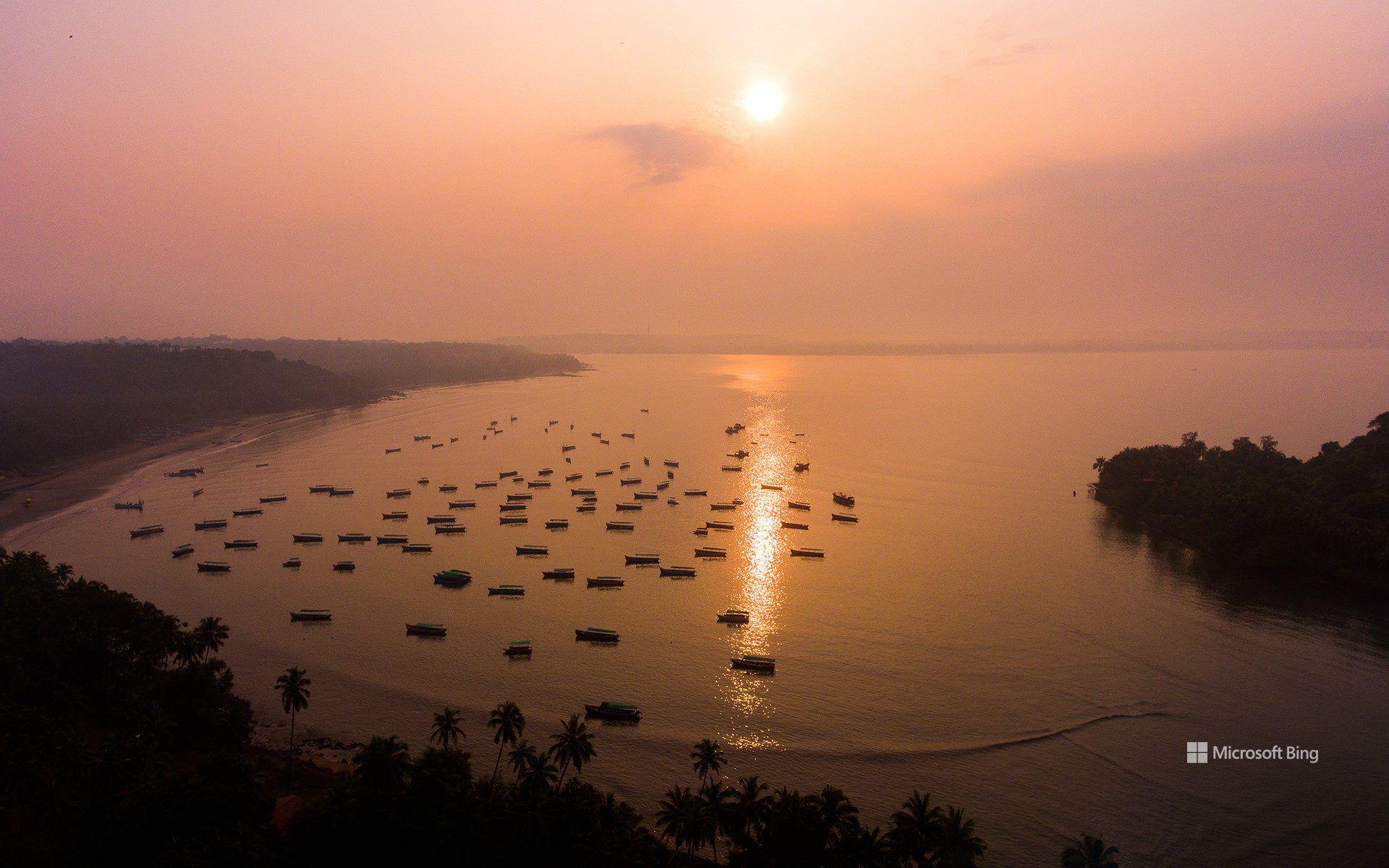
可可海滩上的渔船,果阿邦,印度 Fishing boats at Coco Beach in Goa, India (© Abhinav Sah/Shutterstock)
沙滩的秘密和日落 Sandy secrets and sunsets
可可海滩上的渔船,果阿邦,印度
欢迎来到海滩爱好者的梦想之地:果阿邦。这个印度邦以金色海岸而闻名,吸引着来自世界各地的游客。旅游业是当地经济的核心产业,125公里的海岸线被沙滩覆盖,沙滩上热闹非凡。今天的照片展示了可可海滩,这是一个隐藏在尼鲁尔村庄的明珠,该村庄位于果阿邦的北部地区。这里气氛宁静,却有许多有趣的娱乐项目。您可以一边晒日光浴,体验钓鱼、划船、观赏海豚和游泳等冒险活动,一边沉浸在当地的文化氛围中。独特的历史意义使这个海滩更加与众不同。它在20世纪50年代至60年代的果阿邦解放运动中发挥了重要作用。这是当地人为结束葡萄牙统治,将果阿邦与印度统一而进行斗争的地方之一。所以,可可海滩才不是一个普通的海滩,这是一个有故事的地方,历史与大海在这里交汇。
阿格拉的泰姬陵,安拉阿巴德,印度 Taj Mahal in Agra, Uttar Pradesh, India (© Tanarch/Getty Images)
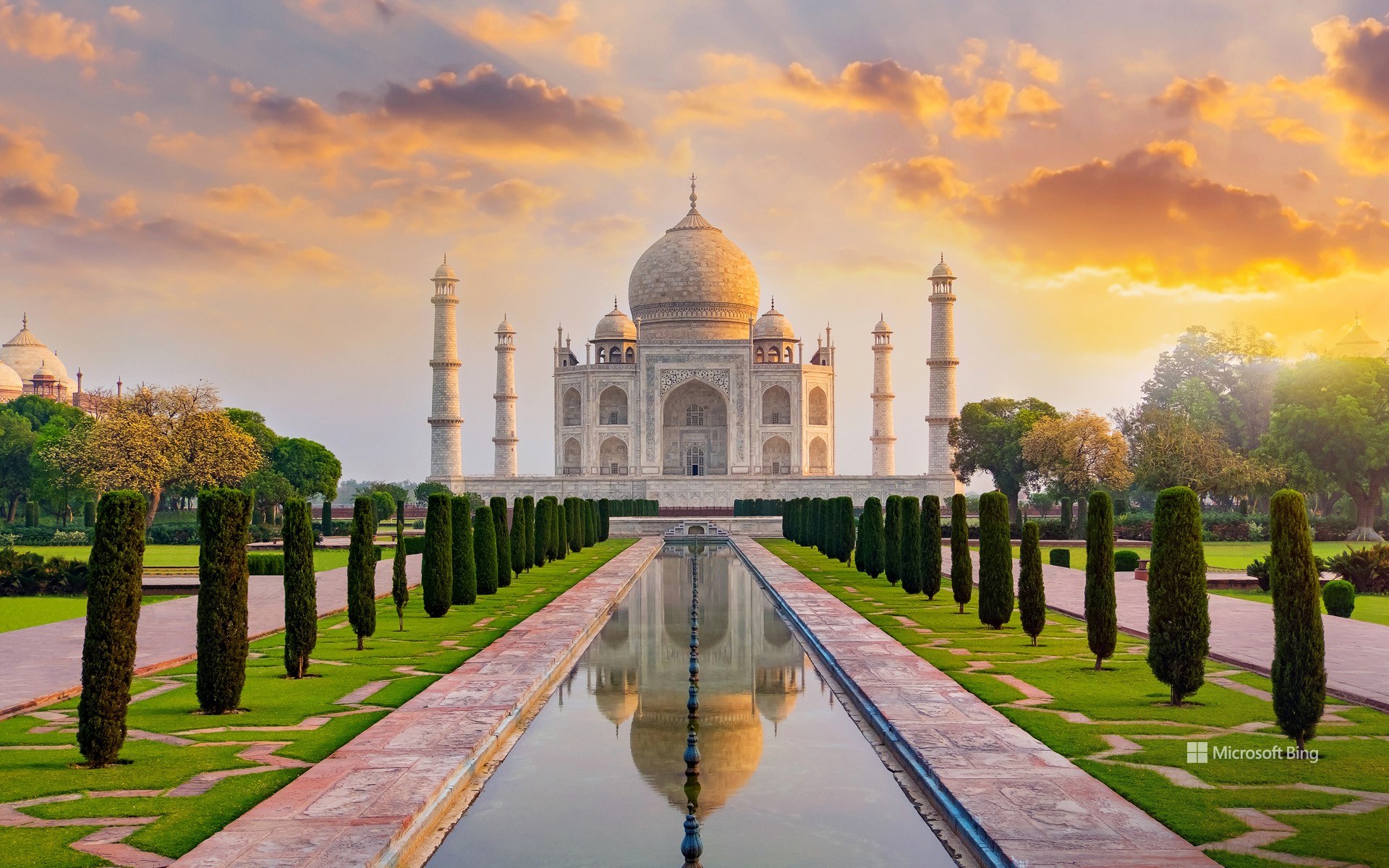
阿格拉的泰姬陵,安拉阿巴德,印度 Taj Mahal in Agra, Uttar Pradesh, India (© Tanarch/Getty Images)
盛大的爱情见证 Grand gesture of love
泰姬陵,阿格拉,北方邦,印度
今天,让我们来探索世界七大奇迹之一的泰姬陵。它坐落在印度北方邦阿格拉的亚穆纳河畔,乳白色的大理石陵墓惊艳了无数人。图片中的泰姬陵是1631年莫卧儿王朝的第五位皇帝沙贾汗下令建造的,目的是纪念他深爱的妻子蒙泰姬·玛哈尔。这座陵墓是占地42英亩的建筑群的核心,该建筑群还包括一座清真寺、答辩厅以及被高墙环绕着的美丽花园。陵墓呈醒目的矩形布局,两侧是巨大的拱门和壁龛,融合了印度伊斯兰和莫卧儿建筑风格。其设计灵感来源于一些著名的建筑,例如乌兹别克斯坦撒马尔罕的古尔·埃米尔陵墓、德里的胡马雍陵以及沙贾汗的贾玛清真寺等。它的外圆顶高约145英尺,内圆顶高75英尺多,是一项令人难以置信的建筑壮举。作为穆斯林艺术的瑰宝和全球杰作,泰姬陵于1983年被联合国教科文组织列为世界遗产。
Taj Mahal, Agra, Uttar Pradesh, India
Let's explore the Taj Mahal, on the banks of the Yamuna River in Agra, Uttar Pradesh, India. This ivory-white marble mausoleum was commissioned in 1631 by Shah Jahan, the fifth Mughal emperor, to honor his late wife, Mumtaz Mahal. It is one of the New Seven Wonders of the World.
This tomb is the centerpiece of a sprawling 42-acre complex, which also includes a mosque, a guest house, and beautifully landscaped gardens surrounded by a grand wall. The tomb is flanked by giant arches and alcoves that merge Indo-Islamic and Mughal architectural styles. It's also an incredible architectural feat, with the outer dome reaching around 145 feet high and the inner one standing more 75 feet. Celebrated as a jewel of Muslim art and a global masterpiece, the Taj Mahal was named a UNESCO World Heritage Site in 1983.